
The Quest for the Perfect Crab Sandwich

BaguetteMy quest began simply enough about five years ago. On vacation in Cannon Beach, Oregon, my husband and I wandered into the Wayfarer Restaurant. While enjoying the magnificent view of Haystack Rock, I stumbled on the one menu item I had to have. It was listed quite simply. “Crab Sandwich.”

When it arrived, it was the perfect combination of sweet dungeness crab baked with melting local cheddar cheese, a hint of garlic and herbs, and a buttery, chewy, crunchy baguette. Combined with a glass of Sokol Blosser Evolution, a crisp, tropical white wine, it was heaven. I was sad when it was gone.

On my return home, I decided it would be easy to recreate in my kitchen. Unfortunately, while I got several of my tries close, I could never quite get it right. It was, however, a fun five years of trying. We returned frequently to Cannon Beach, which is just down the road aways, and every time we were there, I stopped by on my super secret taste test quest.

I am happy to report that, on Monday night, to the delight and joy of my family, I got it exactly right, and maybe, just maybe, even a little better than the Wayfarer. If you’d like to try out the Wayfarer’s crab sandwich, stop by the next time you are on the Oregon Coast. If that’s not in your schedule, here’s the recipe I spent five years attempting to steal recreate.

Crab and Cheddar Sandwiches

Per sandwich you will need:

  • One small sandwich baguette or part of a large baguette, sliced lengthwise but not quite all the way through (like a hotdog bun)
  • Three to six ounces of lump crab meat. If you don’t want to clean it out of a crab yourself, I buy the fresh lump crabmeat in a container in the fish section of my local Top Foods.
  • One tablespoon each plain cream cheese and herbed cream cheese (or a little bit of Boursin herb cheese)
  • Three tablespoons of Plugra butter, melted
  • One clove of garlic, pressed through a garlic press
  • 2-3 tablespoons of shredded Tillamook medium cheddar cheese
  1. Preheat the oven to 350 degrees.
  2. Melt the butter, and combine with minced garlic.
  3. Brush butter on both sides of baguette, and place on a baking sheet.
  4. In a small bowl, combine both types of cream cheese until well mixed.
  5. Drain crab and toss with cream cheese.
  6. Place crab mixture in baguette.
  7. Sprinkle with cheese.
  8. Bake for 15 minutes, until cheese is melted and filling is warm.

Serve the sandwiches with a simply dressed salad of greens and a crisp white wine such as Sokol Blosser Evolution or an unoaked Chardonnay. At the Wayfarer, they serve it with pommes frites, thin sliced and crispy with a hint of garlic and salt. It would also work well with Sauvignon Blanc, Pinot Gris (or Grigio), or an American sparkler such as Argyle’s fantastic Blanc-de-Blancs (an all Chardonnay sparkling wine) or vintage Brut. While I enjoy this sandwich with Dungeness crab, I am sure it will work equally well with your local favorite. Just make sure when  you eat the sandwich, you step away from all distractions and really take the time to enjoy it.

Zucchini Abundance

blossomI’m starting to think my CSA is getting lazy. Every week for the last month, the box has been chock full of zucchini – and some other stuff. Zucchini seems to be every gardener’s pride. It’s also their nightmare. The stuff multiplies in ways you can barely believe whenever you grow it. I’ve always wondered why, when so many people give tons of zucchini away to their neighbors every year, they continue to grow so much of it.

Still, to me, zucchini symbolizes abundance and sharing.

No one ever says, “Nope, I am not going to share my zucchini with anyone else because then I might not have enough.”

At least, I’ve never heard anyone say such a thing. It’s because when we give zucchini away, we always know that there will be more. It comes in such abundance that we freely share, sometimes with complete strangers.

Imagine how the world would be if we were that certain in the ongoing abundance of our other resources. What if we could trustingly share with others, knowing for sure our own needs would be covered, as well. Would we then need to hoard wealth? If zucchini were currency, then there would no longer be haves and have nots. What a wonderful world that would be.

Zucchini Tips

What on earth can you do with all of that zucchini? Once you’ve shared as much as you can with friends and neighbors to the point that they hide behind closed curtains with lights off when they see you coming, most people are still stuck with more zucchini than they could possibly eat before it  goes bad.

  • Grate the zucchini and store it in one cup measurements in a Ziploc bag in the freezer. Use it throughout the year for zucchini bread, and to add to sauces, soups, and stews.
  • Zucchini is a terrific stealth vegetable. When you grate it and mix it into the foods you cook, your kids get fresh vegetables without even knowing they have them.
  • Make an Italian soup. I like to combine browned Italian sausage, chopped onions and garlic, canned tomatoes, chicken broth, zucchini and carrot chunks, and kidney beans for a quick and delicious soup. Add chopped herbs such as oregano, as well as a little salt and fresh cracked pepper to taste. For a little extra zip, toss in a few dried red pepper flakes. Serve it with a grating of hard Italian cheese and some crusty bread for a full meal.
  • Low carbers can turn fresh grated zucchini into mock hash browns in lieu of potatoes. Grate and fry in olive oil or butter to brown, and then sprinkle on a little sea salt.

Zucchini Blossoms
Many people don’t realize that zucchini blossoms are edible. The plants grow with male and female flowers. The female flowers turn into zucchini, and the male blossoms pollinate them. Leave the blossoms with the thick stems, and instead choose only the thin-stemmed flowers, leaving a few behind to pollinate the plant. If you’d like to reduce your zucchini yield, you can also harvest the female blossoms. Harvest just after the blossoms have opened. Remove the pistils and gently clean the blossoms using a soft dry brush or damp paper towel. Use the delicate flowers the same day you pick them. You can stuff them with ricotta or soft goat cheese and herbs, batter them a mixture of equal parts flour and sparkling water with a little salt for flavor, and deep fry them. They impart a delicate flavor that is out of this world. Serve this light treat with a fizzy white, such as an Italian Muscato d’Asti or Prosecco.

The Tao of Tomatoes

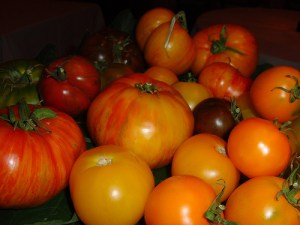
tomatoMy husband believes he does not like tomatoes. I disagree. What he doesn’t like are the mealy, flavorless red fruits I sometimes purchase at the grocery store that are not locally in season and have traveled hundreds of miles to get to my plate. If you want tomatoes in the off season and don’t have a hothouse, then such things are a necessary evil, but they fail to live up to the glory of a real, fresh, seasonal tomato.

Last night, my husband ate such a tomato. In a rather surprised voice, he told me it was good. He did not gag once while eating it.

There’s something very special (dare I say hedonistic?) about eating a sun-ripened, heirloom tomato that was just plucked from the vine hours ago at its peak of ripeness. Instead of the mushy, insipid tomato you buy at a grocery store, that heirloom tomato is firm, juicy, and sweet like a berry.

Heirloom Tomato Salad

Have some really fresh tomatoes just waiting to be plucked? Try this simple salad.

1. Create a vinaigrette by mixing one part vinegar (balsamic works well with tomatoes, though you may use any kind such as red wine or Champagne vinegar) with three parts olive oil. Add a squeeze of fresh lemon juice, about a half teaspoon of minced shallot, and sea salt and fresh cracked pepper to taste. Whisk to emulsify.

2. Thinly slice your heirloom tomatoes and arrange them on a platter.

3. Pour your vinaigrette over the tomatoes.

4. Sprinkle with small pieces of fresh basil.

5. Allow to sit at room temperature for about two hours to allow flavors to mingle.

Tomato Tips

If you have such an amazing, fresh tomato in your possession, consider the following tips in order to allow it to reveal itself to you in all its glory.

1. Never, ever, ever store a tomato in the refrigerator. It causes the tomato to lose sweetness and texture. Instead, store it stemside down in a cool, dry location at a consistent temperature, and eat it soon after picking.

2. Select tomatoes that have a deep orangey-red color, firm yet supple flesh, and a substantial heft for their size. Give the tomato a sniff on the blossom end, smelling for a rich tomato scent.

3. When cooking, many canned tomatoes work as well if not better than fresh. My favorite canned tomatoes are Muir Glen organic tomatoes, which have great flavor with no tinny notes.

4. A teeny bit of sea salt on freshly sliced tomato can bring out the flavors.

Pesto

pestoToday is CSA day. For those of you who don’t know, CSA stands for community supported agriculture. Many organic farms in local communities offer members the opportunity to purchase a share in the farm. This can run anywhere from about $400 for a season to $1,000. Then, once growing season starts, the farm supplies you with a box of freshly picked vegetables every week.

This is my first year trying community supported agriculture. I like the idea of keeping my money in my community and receiving fresh, organic vegetables that haven’t traveled hundreds of miles before they make it to my kitchen. Very few foods taste better than a fresh vegetable picked at its peak of ripeness.

Having a CSA delivery every week has changed the way I cook this summer. I used to plan my meals and then go to the store to get what I needed to cook them. Now, I wait for my CSA box and then plan my meals around what is in them. Since Tuesday is CSA delivery day, I will see what treasures arrive today and then create simple meals. Last night I used the last of my previous week’s CSA, making a seafood chowder with red potatoes, fresh carrots, and local seafood.

Scapes

My first CSA box contained scapes. While they look like octopus tentacles, scapes are actually the green tops of garlic bulbs that rise above the ground as the bulb develops. They have a subtle garlicky flavor and make a fantastic seasoning. You can chop them and use them to season foods such as oven-roasted potatoes, or you can create a terrific pesto.

Pesto

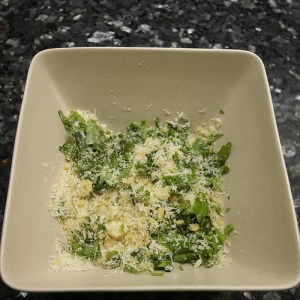
Pesto is a simple, fresh sauce that is easy to make. All it requires are herbs, virgin olive oil, nuts, hard cheese, and garlic. The traditional pesto contains basil, olive oil, pine nuts, parmesan cheese, and garlic. Pulse the ingredients in a food processor and voila, pesto. To make it, use two tablespoons of oil, 3/4 cup of grated cheese, 1/4 cup of pine nuts, three cloves of garlic and a small bunch of basil. You can also hand chop the ingredients and mix them together. If you do use the food processor, pulse it a few times to chop but not homogenize your ingredients.

That’s it. Use your basic pesto to top warm pasta, jazz up eggs, or as a sauce for grilled chicken or fish. Your only limit is your creativity. You can also replace any ingredient with something else. Consider this: arugula and walnuts in place of pine nuts and basil. It’s up to you, and it’s so easy to do.

Want to make scape pesto? Use scapes, parmesan, toasted slivered almonds, olive oil, and a touch of sea salt.

Pair pesto dishes with a nice unoaked white wine, such as a Sauvignon Blanc or a dry Riesling. Try the 2010 Airfield Yakima Valley Sauvignon Blanc for just $13 per bottle, or a Chateau Ste. Michelle Columbia Valley Riesling Cold Creek Vineyard for around $15.