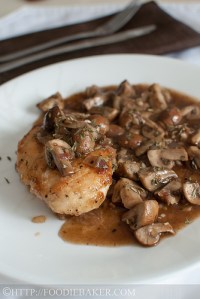
Coq au Vin

coqJim and I were working side-by-side in the kitchen last night. Actually, since I was in the midst of the world’s worst hot flash, he was cooking and I was instructing. Jim isn’t much of a cook – something he’ll freely admit. He can follow instructions pretty precisely and do okay. He’s awesome on the grill. He sometimes comes across something he decides is a “magic ingredient” and begins adding it to absolutely everything he cooks (such as the great Emeril Lagasse Kicked Up Gahlic Salad Dressing explosion of 2002 where he combined the salad dressing and green beans, wrapping it in a tortilla because, hey – it’s a burrito). But really what Jim does is heat stuff up so that it is warm enough to ward off bacteria and food-borne illness. This is how many people cook – with the goal of getting the food cooked, rather than making it flavorful.

On the other hand, building flavor is pretty easy if you know a few cooking techniques. If you can get food to the proper temperature in order to serve it, if you can combine ingredients in a recipe to make a dish, then you can begin to build flavors in your food. Best of all, it won’t take that much longer than just following the recipe ingredient by ingredient and your food will improve by leaps and bounds.

One of the best ways to build flavor is via the Maillard reaction. I know – it sounds all fancy, but it’s really pretty simple. When meat browns, it happens due to the Maillard reaction. When bread browns, same thing. Essentially, what you need to know about the Maillard reaction is this: it adds flavor to food. At its most basic, the Maillard reaction occurs when heat is added to foods containing amino acids and carbohydrates. In food terms, it adds tremendous savoriness meats and other foods.

For example, how do you like your steak? I am a medium rare gal, myself, but I know some people who like their steak super rare in the middle. Yet these same people wouldn’t consider eating a cut of meat that is entirely uncooked. When you are served a rare steak in a restaurant, it arrives crisp and brown on the outside, but when you cut into it, it is nearly raw. And most of the flavor on that steak comes from the brown part on the outside (as well as seasonings), which has browned due to the Maillard reaction.

To promote the Maillard reaction in your cooking:

  • Don’t crowd the pan. That inhibits the reaction and instead causes steaming. I work in batches.
  • Leave whatever you are cooking in contact with the heat without moving it for several minutes until it browns. Do this with vegetables, mushrooms, onions, meats. This allows for tremendous flavor development.
  • If you are thickening with flour, add it to the heated fat in the pan and then let it cook for a few minutes to develop flavor.
  • When you add liquids to a pain that you’ve browned meat and/or vegetables in to make a sauce, don’t waste the flavor that is stuck to the pan. Use the side of a wooden spoon to scrape the browned bits off the bottom of the pan.

Let’s look at the application of the Maillard Reaction in a recipe for coq au vin.

Coq au Vin

  • 6 thick slices bacon, chopped
  • One chicken, cut into pieces, skin left on
  • Salt and black pepper to taste
  • 1 lb button mushrooms, quartered
  • 1-1/2 cup pearl onions (fresh or frozen)
  • One onion, diced
  • One carrot, peeled and diced
  • One celery stalk, peeled and diced
  • 4 cloves garlic, sliced
  • 6 tbsp flour (or sweet rice flour for gluten-free)
  • Two cups dry red wine
  • Two cups gluten-free chicken stock
  • 2 Tbsp thyme
  1. Preheat oven to 350 degrees.
  2. In a large, oven proof pot such as a dutch oven, cook bacon over medium high heat until crisp. Remove bacon from fat with a slotted spoon and set aside.
  3. Season chicken pieces with salt and pepper. Working in batches, cook the chicken pieces in the bacon fat until skin is browned on both sides.
  4. Remove chicken from pan and set aside. Add the mushrooms to the oil in the pan. Allow them to stay in contact with the pan for about four minutes to brown before stirring them. Continue to stir and cook for a few more minutes. Remove from oil with a slotted spoon and set aside.
  5. Add pearl onions to the pan, allowing them to stay in contact with the pan and brown for a few minutes before stirring. Once cooked, remove them from the pan and set aside.
  6. Add mirepoix to pan (diced onions, carrots, celery). Cook in the oil without stirring until they are browned. Once browned, stir and cook until tender.
  7. Add garlic and continue to cook, stirring until garlic releases its scent – about 30 seconds.
  8. Sprinkle the flour over the vegetables and stir to cook flour about four minutes.
  9. Pour wine into pan, scraping the bottom of the pan and stirring as you do. Cook for a few minutes to remove alcohol flavors.
  10. Add chicken stock and thyme. Stir to combine.
  11. Return chicken, mushrooms, pearl onions, and bacon to the pan, making sure you add any juices that have accumulated, as well. Stir to combine and bring to a simmer.
  12. Cover pan and place in preheated oven. Cook 60 minutes, until chicken is tender. Serve with egg noodles or rice if you prefer gluten-free.
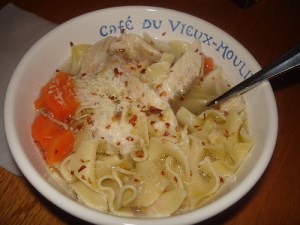
Chicken Soup with Homemade Noodles – Love in a Bowl

chickensoupFor me, cooking for my family and friends is about more than just the Zen I achieve in the kitchen. It’s also about putting love on a plate. Food that is made with love has a certain extra something that you don’t get when you open a can or microwave a meal. I spend time considering ingredients, deciding how to build flavors, and planning which foods will complement one another on a plate. I try to create foods that the people I am cooking for will love. I put my heart and soul into my food, and hopefully it comes across in the way I intended it – as a plate or bowl full of pure love.

Today, I made a simple dish, but for me it is the epitome of love in a bowl: chicken soup. This simple meal can be tremendously satisfying when you take the time to develop flavors. Making it even more satisfying, I made some basic egg noodle dough and rough cut noodles that floated in the soup. As sometimes happens, fate stepped in and I had a bunch of ingredients in my refrigerator that lent itself well to chicken soup – and that I needed to get rid of. The result was delicious, and the thickly cut egg noodles made it hearty and satisfying, as well.

Homemade Egg Noodles

  • 1-1/2 cup of flour
  • 1/2 tsp salt
  • 2 large eggs
  1. Sift the flour and salt into a bowl. Make a well in the center of the flour, and crack the eggs into it.
  2. I mix the noodles with my (very clean) hands, gradually incorporating the flour into the eggs until I have a rough dough.
  3. Turn the dough out onto a floured surface and knead it until it is smooth and elastic, about 5 minutes.
  4. Allow the dough to sit for 10 minutes to relax the glutens.
  5. If using a pasta roller, roll to desired width and roughly cut into egg noodles.
  6. If using a rolling pin, roll the dough to desired thickness and cut into strips.
  7. Set aside for a few hours to dry slightly.

Chicken Soup with Egg Noodles

  • 1 pound boneless, skinless chicken – I prefer thighs for flavor and texture
  • Salt and fresh cracked black pepper to taste
  • Lite (in color – not calories) olive oil
  • 1 carrot, peeled and diced
  • 1 stalk celery, diced
  • 1 onion, diced
  • 1 bulb fennel, diced
  • 5 cloves of garlic, minced
  • Chicken stock
  • 1/2 lb crimini mushrooms, chopped
  • Thyme
  • Juice of one or two lemons
  • Salt and black pepper to taste
  1. Cut chicken into bite sized chunks. Season with salt and pepper.
  2. Heat a few swirls of lite olive oil in a large pot over medium high heat until it shimmers.
  3. Working in batches, cook chicken in the pot. Don’t overcrowd the pan. Allow the chicken full contact with the pot bottom until  it starts to brown. As the meat browns, it caramelizes the sugars in the protein, known as the Maillard reaction. Once the meat has caramelized on one side, turn it over to allow it to continue to cook through. Your chicken will not react with caramelization if the pan is too crowded, so work in two or three batches.
  4. Remove the cooked chicken from the pot with a slotted spoon and set it aside on a plate.
  5. Add the carrots, celery, onion, and fennel to remaining oil in the pot, distributing evenly across the bottom. Allow vegetables to stay in contact with the pot without stirring until it begins to brown (but not burn), about 4-5 minutes. This allows the flavors to caramelize and will add richness to your soup.
  6. Stir in garlic, cooking just until the garlic is fragrant. If you cook it for more than about 30 seconds, the garlic can burn and become bitter.
  7. Add chicken stock to fill pot about half way, scraping the bottom of the pan as you do to lift all of the flavors that have caramelized there.
  8. Add mushrooms, lemon juice and a few teaspoons of thyme.
  9. Return chicken to the pan, pouring any juices that have collected on the plate into the soup, as well.
  10. Bring soup to a boil, and add the noodles.
  11. Return to a boil and cook until noodles are el dente – about 6 to 7 minutes.
  12. Taste and season as needed with salt and pepper.

That’s the chicken soup I made today, but mine is never the same twice. I just used what I had available in my refrigerator. The good thing about chicken soup is that you can change it to suit your own tastes. Change the thyme for rosemary. Add different seasonal vegetables like zucchini or green beans. Add rice instead of egg noodles. Once you can make a basic chicken soup, the possibilities are endless to make your own love in a bowl.

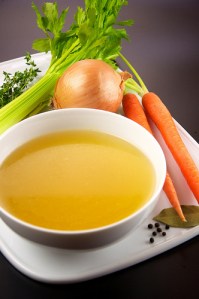
Roasted Poultry Stock

stockHow to Make Roasted Poultry Stock

  1. Preheat your oven to 450.
  2. Arrange about four pounds of turkey and chicken wings in a roasting pan in a single layer, and roast for one hour.
  3. Remove the poultry from the pan and add one cup of water to the pan, scraping to remove all of the flavorful browned bits from the bottom.
  4. In a large stockpot, saute two ribs of celery, two carrots, and two onions roughly chopped in a few tablespoons of oil until tender. Add poultry, water from roasting pan, and about one gallon of water to the pot and bring to a simmer.
  5. Meanwhile, wrap 1/2 teaspoon of peppercorns, several sprigs of parsley, several sage leaves, two bay leaves, and several sprigs of fresh thyme in cheesecloth and tie with kitchen twine. Drop it in the simmering water.
  6. Simmer, uncovered, for three hours. Allow to cool and strain out solids. Store in the refrigerator in a tightly sealed container.

You can use homemade stock in gravy, soups, sauces, and stews. It has much better flavor than canned broths.

Ginger Maple Applesauce

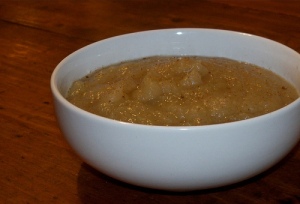
Homemade ApplesauceYesterday was the perfect fall morning at the Olympia farmers’ market. There was a crisp chill in the air, which significantly reduced crowd size. Still, given the offerings available this time of year at the market, the chill was worth it. Along with a dizzying array of organic apples from Washington’s bumper apple crops, there were large ears of corn, juicy plums, chanterelles, squash, pole beans, red and white raspberries, concord grapes, and many others. One of my favorite types of produce from fall in Washington State is pluots. A cross between a plum and an apricot, the pluot is like a juicy, sweet plum. If you come across these tasty stone fruit, give them a try. I think you’ll love them.

As far as I am concerned, however, the star of the show for fall is apples. I love apple season with a passion approaching my love for writing. In fact, as soon as the days grow shorter and the leaves start to change color, I begin cooking with apples. The dogs love it. They gather at my feet as I peel and chop, accepting tiny slices of apple they chew with great gusto. (Tip – never give your pets apple seeds, which contain traces of cyanide.) At the market yesterday, the variety was amazing. Braeburn, Fuji, Jazz, Lady Alice, Gravenstein, Pink Lady, Rose, Honeycrisp…it’s an apple lovers paradise.

I enjoy baking apple pies, crisps, cakes, and turnovers. I also like making a simple applesauce, which I will be making today from the organic Honeycrisp, Pink Lady, and Jazz apples I bought yesterday.

When cooking with apples, I take a minimalist approach. I like to let the flavors of the fruit shine through. This doesn’t mean lots of sugar or heavy spices. Instead I use just enough to enhance the natural flavors of the apples instead of overpowering them.  Some of my favorite spices to use include fresh grated nutmeg, cinnamon, allspice, cloves, and fresh grated ginger. I also usually use just a touch of lemon zest and lemon juice to prevent the apples from turning brown and bring out the tart notes.

Another trick for baking with apples is using a few different varieties in one dish. For instance, in my pies I often mix Granny Smith and Pink Lady apples. In fact, Pink Lady apples are my favorite eating and baking apples, followed closely by Honeycrisp.

Today, I will be making a simple applesauce. Recipe below.

Ginger Maple Applesauce

  • 4 Pink Lady apples – Peeled, cored, and chopped
  • 4 Honeycrisp apples,  peeled, cored, and chopped
  • 4 Jazz apples, peeled, cored, and chopped
  • 1 cup water
  • 1/2 cup pure maple syrup
  • 2 T. fresh ginger root, grated
  1. Place apples and water in a large pot and simmer on the stove top, covered until apples begin to break down, about 15 to 20 minutes.
  2. Remove from heat and stir, mashing apples together.
  3. Stir in ginger root and maple syrup.
  4. If you prefer a smooth applesauce instead of a rustic one, cool and process in a food processor or food mill.

Potato Leek Soup

potatosoupIt’s been a little blustery here in the Pacific Northwest the past several days. Weather like this makes me want to cook comforting foods that warm the belly. I am also in possession of my last CSA box, which contains beautiful organic leeks and potatoes.

It’s amazing and wonderful the earth gives us warmer, heavier foods as the weather changes. I started in spring with scapes and baby lettuce that made light spring and summer dishes, and have progressed through the season to these wonderful fall delights. Local, seasonal vegetables add variety to the menu, encouraging you to make the most of them as the earth offers them up.

The cold weather and the vegetables are telling me – it’s time to warm things up. While I’ll miss the gorgeous juicy tomatoes, I’m pretty happy with the potatoes and leeks, too. After all, on a blustery fall day when faced with a box of organic, fresh potatoes and leeks, what else is there to make but potato leek soup?

The good news about potato leek soup is it doesn’t have to be difficult. I think all told with my vegetable chopping prep and 20 minutes of simmering on the stove, this recipe took me 30 minutes. My version is minimalist and rustic, allowing the ingredients to speak for themselves.

When cooking with leeks, you need to clean them well because dirt gets trapped between the layers. To clean, chop the leeks and place them in a bowl of cold water. Swirl the leeks around in the water and then empty into a colander. Repeat this two to three times to remove all of the dirt. Allow the leeks to drain in a colander while you chop your potatoes.

Easy Potato Leek Soup

  • 1/2 pound of bacon, chopped
  • 4 leeks, chopped, including green parts
  • 1/4 c. flour (sweet rice flour for gluten-free)
  • 4-5 potatoes, unpeeled, cut into 1″ pieces (any work – but I especially love Yukon golds)
  • 6 c. gluten-free chicken stock
  • Sea salt and fresh cracked pepper, to taste
  • Chopped chives
  1. Cook bacon in a large dutch oven until crisp. Remove bacon from oil with a slotted spoon and set to drain on paper towel.
  2. Add leeks to bacon grease and saute until they begin to soften, about five minutes.
  3. Add flour and stir to combine, cooking for about two minutes to remove raw flour flavor.
  4. Stir in chicken stock, scraping the bottom of the pan to remove all browned bits.
  5. Add potatoes and bring to a simmer.
  6. Allow to simmer for about 20 minutes, until potato softens.
  7. Remove from heat and process about half of the soup in a blender, leaving the other half chunky. Add pureed soup back to pot and stir to combine. Alternatively, you can puree all of the soup for a smoother preparation.
  8. Taste and season with salt and pepper to taste.
  9. Serve topped with crisped bacon and chopped chives.
  10. This is great with a nice salad and a crusty bread.

Note: When you puree hot soup in a blender, be really careful. I once saw my mother spray lentil soup from a food processor all over the kitchen ceiling. This can happen because the pressure of steam builds up during pureeing if you don’t allow it to escape. When pureeing hot soup in a blender or food processor, place a folded towel over your hand to protect it, and allow steam to escape every few seconds.

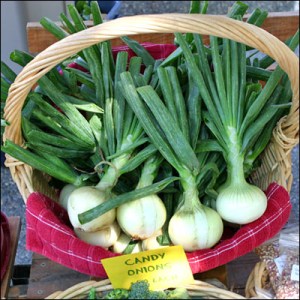
Cipollini Onions

cipolliniI scored a true bonanza in this week’s CSA box: cipollini onions. These small, flat onions have an amazing sweetness with less bite than typical onions, and they roast up to a creamy, toasted sweetness. I enjoy roasting them with potatoes or tossing them with a balsamic glaze. If you’ve never tried cipollini onions before, look for them and give them a try. You’ll see exactly why they are my very favorite onion.

Roasted Red Potatoes and Cipollini

Ingredients

  • 2 lbs. baby red potatoes
  • 1 lb. peeled cipollini onions
  • 3 tbsp. olive oil
  • Sea salt and fresh cracked black pepper
  • 2 tbsp. chopped fresh rosemary

Method

  1. Preheat the oven to 400 degrees.
  2. Toss onions and potatoes in olive oil and spread on a baking sheet.
  3. Sprinkle with salt, pepper, and rosemary.
  4. Bake for 40 minutes, until potatoes are soft.

Balsamic Glazed Cipollini (Cipollini Agrodolce)

Ingredients

  • 2 lb. cipollini onions, peeled
  • 1/2 c. unsalted butter (or olive oil for dairy free)
  • 1 tbsp. sugar
  • 1 c. quality balsamic vinegar
  • 1 c. water
  • 1 tsp. chopped fresh rosemary
  • Dash salt

Method

  1. In a 12″ saute pan, melt the butter until it bubbles and foams.
  2. Add the onions, browning on them on all sides, about 10 minutes.
  3. Add sugar, vinegar, and water.
  4. Reduce heat. Cover and simmer for about 30 minutes, until onions are el dente.
  5. Remove lid and simmer until liquid reduces to syrup.
  6. Sprinkle with rosemary and salt to taste.

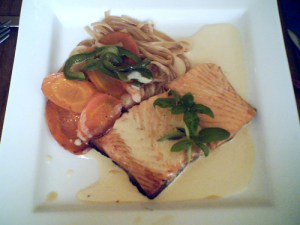
Cooking Salmon

salmonI have a shameful secret. Although I live in the Pacific Northwest, I do not enjoy salmon. It’s nothing personal. It’s more that I just do not like any fish that tastes fishy. That pretty much precludes anything except for halibut, and sometimes even that is over the top as far as I am concerned.

On the other hand, I live in a household of fish lovers, and we frequently entertain other fish lovers. Therefore, in spite of my personal taste, I’ve had to learn to cook salmon. I have two recipes that glean particular praise and are relatively easy. Even I don’t mind eating salmon prepared this way. Love might be going a bit far because I simply do not like fish, but others do love these and I can eat them without gagging. Thanks to Cooks Illustrated, where I learned the perfect method for grilling salmon using a two-level heat system.

Some tips for selecting salmon.

  • Select the freshest fish you can get, and cook it within 24 hours. The flesh should be bright pink, and it should not smell “fishy,” but rather clean and slightly briny.
  • Rinse and dry the fish before you cook it.
  • For best flavor, choose wild caught Pacific salmon. If you’d like a real treat, use these recipes with Copper River salmon when it becomes available in the spring.
  • I prefer cooking filets to steaks. Use pliers to remove any small bones, and cut the salmon into individual-sized pieces to cook.
  • These are grilling recipes. You can alter them for sauteing on the stovetop, however. Heat your pan over medium high heat, add a little olive oil, and saute starting skin side down. It should take about 3 minutes per side. Glaze before flipping the salmon. You can also use an indoor grill like the Foreman grill. Glaze the salmon before placing on the grill. It will take about 2-4 minutes to cook the salmon through.
  • Other glazes that work well with salmon include honey and reduced balsamic vinegar with a little sugar added.

Salmon with Cherry Orange Glaze
Ingredients

  • Juice of one orange and 2 strips of orange zest about 1″ x 1/2″
  • Juice of one lemon
  • One cinnamon stick
  • 3-4 whole cloves
  • 1/2 cup cherry preserves
  • 1 cup chicken broth
  • 1/2 cup port
  • 1/4 cup marmalade
  • 2 teaspoons of cornstarch
  • 1 tablespoon water
  • 1/8 teaspoon of cayenne (or to taste)
  • Salmon filets, cut into individual sized pieces
  • Salt and fresh cracked pepper to taste

Method

  1. Over a high heat, bring orange juice and zest, lemon juice, cinnamon, cloves, cherry preserves, and chicken broth to a boil. Lower heat to medium and allow to simmer and reduce by about 1/4 – about 10 minutes.
  2. Remove cinnamon, cloves, and orange zest.
  3. Add port and marmalade and simmer about five minutes.
  4. Dissolve the cornstarch in water and whisk into glaze. Simmer to thicken, about 15 seconds.
  5. Add cayenne and taste for seasoning. Add salt and pepper as needed.
  6. Cool sauce.
  7. Season salmon fillets, and preheat your grill over high heat. Turn off one half of the grill and leave the other on high.
  8. Carefully clean the grill and oil it.
  9. Place salmon on grill over the hot side, flesh side down for one minute.
  10. Flip salmon to skin-side and glaze the top. Allow to cook for 3-4 minutes, until salmon is opaque about 1/2 to 3/4 through the fish. Glaze the salmon with sauce.
  11. Oil the side of the grill with the burners turned off. Flip the salmon flesh side down again onto the oiled part of the grill. Allow salmon to cook through and begin to caramelize, about two minutes. Serve immediately with glaze on the side.
  12. Reglaze the salmon, and serve.

Maple Glazed Salmon
Ingredients

  • 1/2 cup pure maple syrup
  • 1/4 cup soy sauce
  • Dash cayenne
  • Salmon filets cut into individual portions
  • Salt and pepper to taste

Method

  1. Preheat grill on high.
  2. Combine maple syrup and soy sauce in a shallow pan.
  3. Place salmon fillets, flesh-side down, in soy/maple mixture and allow to marinate at room temperature, about 15 minutes.
  4. Remove salmon from marinade and pour marinade into a pan. Bring marinade to a boil and simmer to reduce until thick and syrupy. Add cayenne.
  5. Season salmon with salt and pepper.
  6. Clean the grill and turn heat off on one side.
  7. Oil the grill on the hot side.
  8. Place salmon, flesh side down on hot oiled grill, about one minute.
  9. Flip the salmon to skin side down on the hot side and grill for about 3-4 minutes. Glaze salmon.
  10. Oil the cooler side of the grill. Flip the salmon onto the oiled grill, flesh side down, and allow to cook until glaze begins to caramelize, about two minutes.

A classic northwest pairing? Salmon and Pinot Noir. Try a powerful Oregon Pinot from Beaux Frerers.

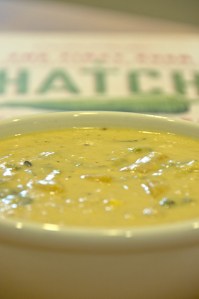
Sweet Corn Chowder

cornchowderOne of my favorite weekend activities is a trip through the farmers’ market. I enjoy watching the produce offerings change throughout the seasons, starting with tender baby greens in early spring, progressing to glistening berries in June, to colorful vegetables like radishes and carrots throughout the summer, finally winding down to fragrant apples, squash, pumpkins and heartier winter vegetables in October and November. Regular walks through the farmer’s market show you the natural progression of the food harvest cycle, and allow you to find ways to eat seasonally as earlier generations must have done in the days before produce was shipped all across the country and available year-round.

This week’s offerings are among my favorite of the summer. Ears of sweet corn, small red potatoes, sweet onions, fennel, colorful heirloom tomatoes, cucumbers, green beans, and summer squash. Finding corn on the cob at the farmer’s market is bittersweet. It means the end of summer is quickly approaching, giving way to the crisp days of autumn and the start of the new school year. In a month or so, my urge to cook apples will kick in, and my kitchen will be filled with applesauce, pie, and spicy, crunchy apple crisp.

I have found the perfect meal to make the most of the seasonal vegetables available at the farmer’s market right now. While sweet corn is, of course, amazing by itself on the cob, tossed on the grill, and then lightly buttered, if you’re looking for another way to serve it while incorporating much of the other seasonal bounty, then I suggest making a sweet corn chowder.

Sweet Corn Chowder

Ingredients

  • 1/2 pound thick cut pepper bacon, diced
  • 2 sweet onions, diced
  • One carrot, peeled and diced
  • One stalk fennel, diced (if you don’t like fennel, you can replace this with celery)
  • 1/4 cup flour (or sweet rice flour for gluten-free)
  • 8 cups gluten-free chicken stock
  • Diced red potatoes (2-3 medium or several small)
  • 2 Tbsp. chopped fresh thyme
  • 1/8 to 1/4 tsp. red pepper flakes (or to taste – this is optional, but I like a little kick in the chowder to complement the sweet)
  • 4 ears sweet corn, husked and cut from cob, with juices reserved.
  • 1/4 cup heavy cream (optional – eliminate for dairy free)
  • Salt and fresh cracked black pepper to taste

Method

  1. In a large stock pot, cook bacon until it is crisp. Remove the bacon from the pan with a slotted spoon, leaving the oil. Reduce heat to medium high.
  2. Add onion, carrots and fennel to the pan and saute stirring occasionally until vegetables soften and start to caramelize, about 5 minutes.
  3. Add flour to the vegetables and stir constantly to keep it from sticking, about 2-3 minutes.
  4. Add chicken stock, scraping the bottom of the pan with a wooden spoon to remove any brown bits on the bottom. Stir constantly for a few minutes until flour and liquid are well combined and liquid starts to simmer and thicken slightly.
  5. Add potatoes, thyme, and red pepper flakes. Reduce heat and simmer until potatoes soften, about 1o to 15 minutes.
  6. Add bacon, sweet corn and juices and simmer for a few minutes to soften corn and incorporate flavors.
  7. Add heavy cream, and stir to incorporate.
  8. Taste for seasoning and add salt and pepper to taste.

Serve the chowder with a crusty bread and a dry Riesling (Columbia Cellermaster’s Riesling is a great choice), unoaked Chardonnay, or a Pinot Grigio.

Seared Scallops with Mushroom Risotto

risottoI may have mentioned before that I have a habit of reverse engineering meals I enjoy in restaurants so I can make them at home. After my reconnaissance missions to wonderful eateries around the area, I head into the kitchen where I play with ingredients until I achieve reasonable facsimile. No restaurant is immune. I’m just as likely to attempt to reverse engineer an Applebee’s quesadilla burger (Tanner’s favorite, and I just made it the other night!) as a fancy schmancy meal from Snidely McSnooty’s.

One of my favorite restaurant meals comes from the Lobster Shop in Tacoma. Our whole family enjoys visiting the restaurant along the water on Ruston Way. When they have it, we almost always select the center cut king crab legs (thank you Sig Hansen!), but when those are not on the menu, I’m all over their weathervane scallops with mushroom risotto. The risotto is creamy and earthy while the perfectly seared scallops are sweet and tender. I’ve made the dish several times at home, adapting it as I go along. While it’s never quite the same twice, I can give you a basic recipe. Try it at home. You’ll be glad you did!

Seared Scallops with Mushroom Risotto

Ingredients

  • 2 packages of dried porcini mushrooms (you can find them in the produce aisle at the grocery, usually right by the regular mushrooms)
  • 7 cups of chicken stock
  • 1/2 stick unsalted butter (or 4T duck fat for dairy-free)
  • 1/4 lb pancetta, chopped
  • One onion, minced
  • 1-1/2 cup Aborio rice
  • 1/2 cup dry white wine
  • 2 to 3 cups assorted fresh mushrooms, sliced ( I like crimini and chanterelles)
  • 3 to 4 Tbsp. dried or chopped fresh thyme
  • Fresh cracked black pepper to taste
  • 1 cup hard Italian cheese (I like parmigiano reggiano or asiago – or omit for dairy-free)
  • 3 Tbsp. heavy cream (omit for dairy-free)
  • Salt to taste
  • One pound of large sea scallops
  • Salt and fresh cracked pepper to taste
  • 2 Tbsp. clarified unsalted butter
  • 1/2 scallop, minced
  • Dash of white wine
  • 1 cube unsalted butter, cut into 1/2″ pieces and chilled.
  • Dash heavy cream

Method:

  1. Heat chicken stock to boiling. Add dried mushrooms and set aside to soak for about two hours.
  2. Remove mushrooms from the stock and chop. Set aside. Strain dregs out of stock and reheat the stock on stovetop to simmering.
  3. Heat a large, heavy pot over medium heat. Melt butter (or duck fat) in pot until it begins to bubble.
  4. Add pancetta and cook until crisp, stirring occasionally.
  5. Add the onion, and saute until it softens, about two to three minutes.
  6. Add rice and saute, stirring constantly to toast rice and coat it with oil, about two minutes.
  7. Add wine, stirring constantly.
  8. Add mushrooms and thyme after the rice absorbs the liquid from the wine, and immediately begin adding stock.
  9. Add stock about one ladleful at a time, stirring constantly. Constant stirring will help develop a creamy texture, which is especially important if you are omitting cheese and butter. As the rice absorbs the liquid, add another ladleful. After about 15 to 20 minutes, the rice should be el dente. You should have about one cup of stock left.
  10. Stir in cheese until melted, and then add 3 Tbsp. heavy cream (omit this step for dairy free). Stir to combine. Taste for seasoning, and add salt and pepper as needed.
  11. Set scallops to drain in a colander.
  12. Heat a 12″ saute pan over medium-high heat on the stovetop. Add cold clarified butter or duck fat to the hot pan, and allow it to heat to bubbling.
  13. Meanwhile, pat scallops m completely dry with a paper towel and season lightly with salt and pepper.
  14. Place scallops in the pan and do not move or touch them. Do not overcrowd the pan, or scallops will not sear. If you must, cook them in two batches.
  15. After scallops have been in contact with the pan without moving for about two minutes, use tongs to peek at the bottom side of one. If it is browned and caramelized, then flip the scallops. Sear the other side.
  16. Remove scallops from the pan and place them on a plate, tented with foil.
  17. Return the pan to medium heat and pour the remaining stock into the pan, carefully scraping the browned bits off of the bottom of the pan with a wooden spoon. Add a dash of white wine.
  18. Add shallots, and allow to simmer until liquid reduces by about half or a little more.
  19. Whisk in one of the 1/2 inch pieces of butter. When it is fully incorporated, whisk in a few more. Continue to whisk butter in a few pieces at a time until it is all added (omit this step for dairy-free and instead reduce stock further until desired thickness).
  20. Whisk in a dash of heavy cream (omit this step for dairy free).
  21. Spoon risotto onto the plate. Top with sea scallops, and spoon the pan sauce over the top. Serve immediately.

This is good garnished with steamed asparagus, or serve it with a simply dressed salad of mache or spring greens. For a wine, have an earthy Pinot Noir, which pairs perfectly with the mushrooms and sets off the sweetness of the scallops nicely. I enjoy Oregon Pinot Noirs. Try one of Argyle Winery’s Spirit House Pinot Noir or their very affordable Willamette Valley Pinot Noir.

Homemade Mayo – How to Make it and Why You Should

mayoIf you’ve ever looked at the ingredients on the back of a commercial mayonnaise, you might be surprised to find chemicals, preservatives, and high-fructose corn syrup (HCFS). In fact, “light” mayonnaise that contains lower amounts of fat often incorporates an array of surprising ingredients your great grandmother wouldn’t have even recognized as food. From commercial mayonnaise, here are a few ingredients on the label: CALCIUM DISODIUM EDTA, SUGAR, HCFS, NATURAL AND ARTIFICIAL FLAVORS.

While I receive kind of scary letters from the corn growers PR people when I mention HCFS in an article or blog post, I feel I must here. HCFS is an artificial sweetener made from fructose and sucrose. It has been linked to the growing obesity problem, and it is always best to limit all forms of sugar, including HCFS. Some experts believe HCFS is even more responsible for obesity than table sugar because of the way your body processes it, and some evidence suggests it contributes to liver scarring and cirrhosis. As with everything, the key is moderation. Unfortunately, because HCFS (more recently called corn sugar, but don’t let the new label fool you. It’s still HCFS.) is so ubiquitous in processed foods due to how cheaply it is produced and how plentiful it is, the negative health effects may prove to be exponential.

Homemade mayonnaise, however, contains only a few natural ingredients that just about everyone recognizes as something you can eat: egg yolks, oil, acid (lemon juice or vinegar typically), and salt. If you’d like to flavor it, you can add chopped fresh herbs, citrus zest, minced fresh garlic, or chipotle. Making it is an easy process. You can use your blender, a whisk, or a food processor. I’m going to describe the food processor method here, although it is easy to adapt for any equipment once you know the process.

Homemade Mayo

Ingredients:

  • Yolk of one egg
  • 1 tablespoon plus 2 teaspoons acid (lemon juice, lime juice, red wine vinegar, white vinegar, etc.)
  • 1 cup of oil (macadamia, olive oil, avocado oil)
  • Pinch to 1/2 teaspoon of salt

Method:

  1. Place egg, acid, and salt in the bowl of a food processor. Process a few seconds to combine.
  2. Your food processor should have a tube in the feed chute you use to push vegetables in. In the removable circular tube in the middle, there should be a small hole in the bottom. Fit the tube into the feed chute, and turn on the food processor. Pour a few drips of oil in the tube with the processor running. When that oil has been incorporated in the mayonnaise, pour a little more. Next, fill the tube with the oil and let it run in a slow stream into the egg mixture as the processor continues to run, until you have incorporated all of the oil.
  3. That’s it. Making mayonnaise is quite simple, and the homemade product tastes fresh and delicious. If you do not have the round feed tube with the small hole in the bottom, or if you are using a whisk, then you need to begin incorporating the oil very slowly while whisking constantly. Start with a drop or two of oil, add another drop or two, and then begin to add the oil in a very thin, slow stream while whisking constantly. If you add the oil too quickly, the mayonnaise will fail to emulsify.

Variations

  • Chipotle-lime mayonnaise: Replace at least 2 teaspoons of acid with fresh squeezed lime, add 1/2 tsp of lime zest, and a dash of dried chipotle.
  • Lemon-basil mayonnaise: Replace 2 teaspoons of acid with lemon and add 1/2 tsp of lemon zest. Roughly chop seven a small bunch of fresh basil and process it with the mayonnaise at the end to blend.
  • Garlic mayonnaise: Use red wine vinegar for your acid, and add the full 1/2 tsp of salt.Take one to two cloves of fresh garlic and put them through a garlic press. Put them in with the egg mixture and pulse the food processor to blend. Proceed to add your oil as instructed.

Tips

  • Mayonnaise will keep up to one week when tightly covered and refrigerated.
  • Use the freshest eggs possible.
  • You can use whole eggs, which creates a lighter, less creamy mayonnaise. You may need to adjust your oil slightly, so keep an eye as you process to determine when it is done.
  • If your mayonnaise fails to emulsify the first time you try it (and occasionally I still have a batch go awry), try it again, adding the oil just a little bit more slowly and making sure you do not stop whisking or processing as your incorporate it.
  • You can incorporate other oils such as extra-virgin olive oil or walnut oil; however, remember they are very intensely flavored. If you do use these oils, I suggest only adding a few tablespoons to 1/4 cup of them in order to avoid overpowering the mayonnaise.

Getting creative with the acids you use will change the flavor and character of your mayonnaise.