Perfect Steakhouse Steak

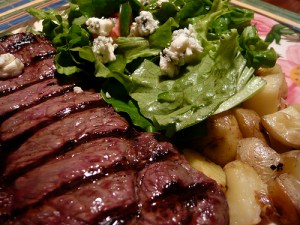
Steak dinnerHere’s the thing about cooking steak. Sure, it tastes pretty good most of the time no matter what you do to it, but there are methods you can use that render it otherworldly. It’s the reason steakhouses are so popular. They have equipment that allows them to cook the steak to the perfect level of doneness, with a caramelized brown crust on the outside and the perfect juicy, pink interior.

Many people find these results difficult to achieve at home. I started experimenting with a method Cook’s Illustrated recommended for cooking filet mignon and found it transfers well to all steaks, especially thick ones.

I am a huge fan of Cook’s Illustrated. Even if you never cook one of their recipes, reading their magazine and cookbooks from cover to cover will provide you with an amazing cooking education.

What Cook’s Illustrated recommends to make perfect filet mignon is to par-cook it at a low temperature oven and finish it with a sear on a very hot stovetop. For a 1 to 1-1/2 ” thick filet mignon, 20 minutes at about 275° F does the trick. For other cuts like thick cut rib-eyes or porterhouses, you will need between 30 and 45 minutes depending on the size and thickness of the steak. When you remove them from the oven, they should be slightly browned on the outside but still have a distinctly pinkish cast. A quick touch to the steak should be quite soft and yielding, but not squishy.

I like filet mignon for its tenderness, but I am not a huge fan of its flavor. Because of this, I feel it is a steak ripe for a good pan sauce. I like to make mine with a tawny Port-tarragon sauce.

Filet Mignon with Port-Tarragon Sauce

Ingredients

  • 2 to 4 1-1/2″ to 2″ thick filet mignon steaks
  • Salt and fresh cracked black pepper to taste
  • 3 Tbsp. clarified butter
  • 1/2 to 1 shallot, finely minced
  • 1/4 to  1/2 cup tawny Port
  • 1 stick of unsalted butter, cut into 1″ pieces and chilled so it is very cold
  • 2 to 4 Tbsp. chopped fresh tarragon

Method

  1. Preheat oven to 275° F.
  2. Place steaks on a rack placed over a baking sheet and season with salt and fresh cracked black pepper.
  3. Cook steaks for 20 – 25 minutes.
  4. Heat butter in a saute pan over high heat. If you like, you can also use grapeseed oil. Though it lacks the flavor of butter, it has a high smoke point.
  5. Saute steaks for two minutes on each side without moving them until it is time to flip them.
  6. Remove steaks from pan and set aside, tented with foil.
  7. Reduce heat to medium and deglaze the pan with Tawny port, taking care to scrape all of the browned bits off the bottom with a wooden spoon.
  8. Add shallot and allow to simmer until liquid is reduced and syrupy. It should coat the back of a spoon.
  9. Whisk in butter, staring with one piece and allowing it to fully incorporate before adding a second. Add 3-4 pieces of butter separately, and then add a few at a time, whisking continuously, until butter is incorporated and sauce is thick and creamy.
  10. Remove from heat and stir in the tarragon.
  11. Spoon over steaks, and serve immediately.

Serve with a nicely aged Cabernet Sauvignon or Bordeaux blend wine. A young Cab may be a bit too heavy for the delicate sauce. A personal favorite is Spring Valley Uriah, a Washington State wine that incorporates a variety of Bordeaux varietals in a Merlot base. Januik Winery, another Washington State winery, also makes consistently good Cabernet Sauvignon wines.

Homemade Mayo – How to Make it and Why You Should

mayoIf you’ve ever looked at the ingredients on the back of a commercial mayonnaise, you might be surprised to find chemicals, preservatives, and high-fructose corn syrup (HCFS). In fact, “light” mayonnaise that contains lower amounts of fat often incorporates an array of surprising ingredients your great grandmother wouldn’t have even recognized as food. From commercial mayonnaise, here are a few ingredients on the label: CALCIUM DISODIUM EDTA, SUGAR, HCFS, NATURAL AND ARTIFICIAL FLAVORS.

While I receive kind of scary letters from the corn growers PR people when I mention HCFS in an article or blog post, I feel I must here. HCFS is an artificial sweetener made from fructose and sucrose. It has been linked to the growing obesity problem, and it is always best to limit all forms of sugar, including HCFS. Some experts believe HCFS is even more responsible for obesity than table sugar because of the way your body processes it, and some evidence suggests it contributes to liver scarring and cirrhosis. As with everything, the key is moderation. Unfortunately, because HCFS (more recently called corn sugar, but don’t let the new label fool you. It’s still HCFS.) is so ubiquitous in processed foods due to how cheaply it is produced and how plentiful it is, the negative health effects may prove to be exponential.

Homemade mayonnaise, however, contains only a few natural ingredients that just about everyone recognizes as something you can eat: egg yolks, oil, acid (lemon juice or vinegar typically), and salt. If you’d like to flavor it, you can add chopped fresh herbs, citrus zest, minced fresh garlic, or chipotle. Making it is an easy process. You can use your blender, a whisk, or a food processor. I’m going to describe the food processor method here, although it is easy to adapt for any equipment once you know the process.

Homemade Mayo

Ingredients:

  • Yolk of one egg
  • 1 tablespoon plus 2 teaspoons acid (lemon juice, lime juice, red wine vinegar, white vinegar, etc.)
  • 1 cup of oil (macadamia, olive oil, avocado oil)
  • Pinch to 1/2 teaspoon of salt

Method:

  1. Place egg, acid, and salt in the bowl of a food processor. Process a few seconds to combine.
  2. Your food processor should have a tube in the feed chute you use to push vegetables in. In the removable circular tube in the middle, there should be a small hole in the bottom. Fit the tube into the feed chute, and turn on the food processor. Pour a few drips of oil in the tube with the processor running. When that oil has been incorporated in the mayonnaise, pour a little more. Next, fill the tube with the oil and let it run in a slow stream into the egg mixture as the processor continues to run, until you have incorporated all of the oil.
  3. That’s it. Making mayonnaise is quite simple, and the homemade product tastes fresh and delicious. If you do not have the round feed tube with the small hole in the bottom, or if you are using a whisk, then you need to begin incorporating the oil very slowly while whisking constantly. Start with a drop or two of oil, add another drop or two, and then begin to add the oil in a very thin, slow stream while whisking constantly. If you add the oil too quickly, the mayonnaise will fail to emulsify.

Variations

  • Chipotle-lime mayonnaise: Replace at least 2 teaspoons of acid with fresh squeezed lime, add 1/2 tsp of lime zest, and a dash of dried chipotle.
  • Lemon-basil mayonnaise: Replace 2 teaspoons of acid with lemon and add 1/2 tsp of lemon zest. Roughly chop seven a small bunch of fresh basil and process it with the mayonnaise at the end to blend.
  • Garlic mayonnaise: Use red wine vinegar for your acid, and add the full 1/2 tsp of salt.Take one to two cloves of fresh garlic and put them through a garlic press. Put them in with the egg mixture and pulse the food processor to blend. Proceed to add your oil as instructed.

Tips

  • Mayonnaise will keep up to one week when tightly covered and refrigerated.
  • Use the freshest eggs possible.
  • You can use whole eggs, which creates a lighter, less creamy mayonnaise. You may need to adjust your oil slightly, so keep an eye as you process to determine when it is done.
  • If your mayonnaise fails to emulsify the first time you try it (and occasionally I still have a batch go awry), try it again, adding the oil just a little bit more slowly and making sure you do not stop whisking or processing as your incorporate it.
  • You can incorporate other oils such as extra-virgin olive oil or walnut oil; however, remember they are very intensely flavored. If you do use these oils, I suggest only adding a few tablespoons to 1/4 cup of them in order to avoid overpowering the mayonnaise.

Getting creative with the acids you use will change the flavor and character of your mayonnaise.

Smoked Baby Back Ribs

ribsby Karen Frazier

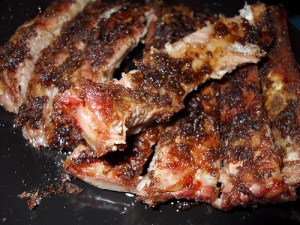
Everyone has their own way of making ribs, and some of them are pretty darn good. I enjoy my ribs tender, juicy and smoky with a hit of heat. At worst, ribs come off of the barbecue dried and stringy. When well done, however, they can be a thing of beauty.

In our house, we take our ribs very seriously. We begin the journey to perfect ribs the night before, and when rib day dawns, we plan to be home for at least five hours, carefully tending the ribs as they cook low and slow on a smoky gas grill.

If you’re in a hurry, don’t try this at home. If, however, you’re willing to wait for a good thing, then by all means give this rib grilling process a try. You’ll be very glad you did.

Step One: Choosing Your Ribs

You can use this process with either baby back or spare ribs. I prefer the baby back, which tend to be more flavorful and tender than the spare ribs. Find the meatiest racks you can – some meat cutters really skimp. Watch for bones showing through the meat. If you see them, you just may have skimpy ribs. The place with the meatiest baby backs I’ve come across? Costco. I plan for a half rack per female, a 1/4 rack per kid (except teens), and a full rack per teen or man. I usually have leftovers, but these ribs reheat well.

Step Two: Brining – The Night Before

Brining is the best thing to happen to grilled meat since the invention of barbecue sauce. It adds moisture and flavor into the meat, helping to prevent drying as you cook them. To make a brine, I add 1/2 cup of kosher salt (or 1/4 cup table salt) and 1/4 cup of Swerve sweetener per gallon of water. Find a large container or a cooler and fill with as much brine as you need to soak your ribs. Brine them for one hour the night before you plan to cook them.

Step Three: Rubbing – The Night Before

Remove ribs them from the brine, and dry them off. Then, use generous amounts of rub on both sides of the ribs. Wrap the ribs in plastic and refrigerate overnight.

Many commercial rib rubs exist. I don’t like them. They tend to be over-salty and not nearly as flavorful as a rub you make yourself. While my rib rub differs based on mood, I have a basic formula I follow using dried herbs and spices.

Two tablespoons each:

Cumin
Salt
Oregano
Chili powder
One tablespoon each:
Ground black pepper
Ground white pepper
Four tablespoons each:
Swerve sweetener
Sweet paprika
One teaspoon each:
Cayenne
You can adjust your proportions, double it, triple it – whatever you need to do. Plan on about 1/4 cup of rib rub for each rack.

Step Four: Smoke – The Night Before

If you use a regular grill, smoke preparation also begins the night before. Choose wood chips or chunks you like, and set them to soak overnight. I prefer chuks to chips for their ability to smoke longer, and applewood for its subtle flavors. You probably have a favorite. I don’t recommend hickory, which I believe is too aggressive at asserting its own flavor into the ribs.

We have a smoker, which we use to smoke our ribs. We keep it low and slow – about 275 for about four or five hours.

Step Five: Barbecue Prep – Rib Day

Congratulations! You’ve made it to rib day and you are mere hours away from the best ribs of your life. For a gas grill, set it on the lowest temperature possible, and close the lid. You want to heat it to a consistent temperature of about 275 degrees, where it should remain for most of the day. The key to ribs is low and slow. Once the grill reaches a temperature of 275 degrees, turn off one of the burners, leaving the other on low. This should allow you to keep the ribs at consistent temperature.
Make foil packets in which you place your wood chips. We like to set two or three foil packets around the grill for full saturation. Place slits in the top for the smoke to escape, and grant easy access so you can add more wood chips as needed. Place the packets underneath the grill plates and allow them to heat as you preheat your grill.

For a smoker: Turn it on to 275. Bam! You’re done.

Step Six: Cook the Ribs

If you own a smoker, this section is pretty short: smoke your ribs, low and slow, at about 250-275 until they fall off the bone (about 4-6 hours). If you own a grill, read on.

If you own rib racks, use them. This keeps the ribs from direct contact with the grill and facilitates the development of tender, fall-off-the-bone meat. You can find them at many kitchen speciality stores, and they are quite inexpensive. Otherwise, place ribs on the part of the grill where the burner has been turned off. You are going to use indirect heat to grill your ribs.

Close the lid and walk away. Every 30 minutes, check the temperature of the ribs to make sure they are still grilling low, and rotate the position of the ribs so they cook evenly. Check smoke packets to see if supplies need to be replenished, as well. Have a beer and wait.

At between 3-1/2 and 5 hours, the ribs should start to get really tender. Poke them with a fork, or give the end of a rack a small twist with tongs and see if it is falling off the bone. When it is, they’re done.
We usually stop here and eat our ribs; however, I know many people really, really, really like barbecue sauce or glaze. If you’ve carefully tended your smoke and barbecue temperature, however, these ribs will not need them. They should be smoky, sweet, and juicy.

Still, if you absolutely must, proceed to step seven.

Step Seven (Optional): Glaze the Ribs

I actually love my ribs with just the dry rub and no glaze. If you brine them and keep them on low and slow, they will be tender and moist.

If you like your ribs a little wetter, then glaze them. You could use commercial barbecue sauce, although what a waste of perfectly good ribs that would be. You could also make your own barbecue sauce, as I outlined here. However, I believe even a homemade tomato-based barbecue sauce will overwhelm the sweet smokiness of these  ribs. Therefore, if your ribs must be covered in something other than deliciousness, I recommend making a glaze.

How do you make a glaze? Add:

  • A base liquid (chicken stock, wine, beer, cola, or something)
  • Something sweet (stevia, Swerve sweetener, honey)
  • Acid (balsamic vinegar, red wine vinegar, lemon juice, etc.)
  • Salt
  • A dash of heat (cayenne, jalapenos, red pepper flakes, hot sauce)

Simmer it altogether on the stove until it becomes syrupy, tasting to adjust flavor. Brush the glaze on the ribs and stick them under the broiler for a few minutes to set the glaze.

Crockpot BBQ Beans

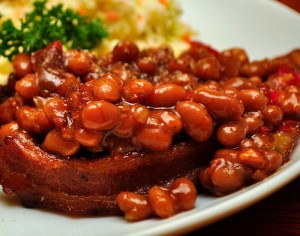
beansI’m not going to lie. There are days when cooking is not an option. While I’ve managed to find ways to spend less than an hour in the kitchen cooking most meals, some days that is not even in the cards. I had a meal planned for today – a pork roast beautifully brined, artfully flavored with a sweet/spicy rub, and cooked low and slow in the oven until it was fork tender before I brushed it with a sweet maple glaze.

The best laid plans, however. We were invited to a barbecue tonight, and Jim has to work. Whenever there’s a barbecue, my friends ask me to bring one thing: my beans. I have to admit, they are pretty darn good and never quite the same way twice because I pretty much dump a bunch of stuff together, stick it in the crockpot, and let it cook all day.

Homemade Barbecue Sauce

Since I had the roast that needed to be cooked today, I stuck it in one of my crockpots with some barbecue sauce. It is currently becoming pulled pork for Jim’s next few work meals. I like to make my own BBQ sauce. Though I can’t tell you proportions (I dump), when I make BBQ sauce it may contain some (or all) of the following: Muir Glen organic tomato sauce, tomato paste, liquid smoke, smoked paprika, whiskey, chili powder, cayenne, minced garlic, minced onion, vinegar, minced shallot, salt, fresh cracked black pepper, pepper flakes, molasses, brown sugar. Typically, I start with tomato sauce and paste, liquid smoke, garlic, onion, paprika, vinegar, chili powder, whiskey, and molasses or brown sugar in a pot on the stove. Then I start tasting and adding stuff, and I let it simmer and thicken. Usually it comes out pretty well.

Beans for the Barbecue

My beans that are so popular at barbecues don’t actually have a recipe. I learned basic concepts from Etta Kirk, a family friend, and then I started to adapt them. My process is typically pretty similar each time, though proportions vary widely and sometimes I get creative and toss in something extra like a little whiskey or liquid smoke.

Ingredients

  • 1-2 large cans of your favorite commercial baked beans. I like Bush’s country-style.
  • 1 can of kidney beans, drained
  • 1 lb. of ground beef, browned
  • 4-5 slices of bacon, browned and crumbled
  • One sweet onion
  • One each red and green peppers
  • 2-3 jalapeno peppers, seeded
  • Several cloves of garlic
  • Barbecue sauce (see above) (around 1/2 cup)
  • Dijon or sweet hot mustard (usually a couple tablespoons)
  • Brown sugar or molasses (about 1/4 cup)

Method

  1. In a large crockpot, mix baked beans, kidney beans, ground beef, bacon, barbecue sauce, mustard, and brown sugar or molasses.
  2. Roughly chop vegetables and place them in the bowl of a food processor with garlic. Pulse the processor for several one second pulses until vegetables are finely minced. Add them to the beans and stir well.
  3. Cook in the crockpot on high for four hours or low for eight hours.
  4. The best part about this is you can create it to your taste. Make your own BBQ sauce, or choose your favorite commercially prepared offering. Processing the vegetables and garlic to a nearly pureed state makes them spread their flavor through the beans, giving it a hit of nice heat. You can also put the beans in a foil baking dish, cover them with foil, and cook them on the barbecue for several hours as you cook low and slow meats such as ribs.