Seared Scallops with Mushroom Risotto

risottoI may have mentioned before that I have a habit of reverse engineering meals I enjoy in restaurants so I can make them at home. After my reconnaissance missions to wonderful eateries around the area, I head into the kitchen where I play with ingredients until I achieve reasonable facsimile. No restaurant is immune. I’m just as likely to attempt to reverse engineer an Applebee’s quesadilla burger (Tanner’s favorite, and I just made it the other night!) as a fancy schmancy meal from Snidely McSnooty’s.

One of my favorite restaurant meals comes from the Lobster Shop in Tacoma. Our whole family enjoys visiting the restaurant along the water on Ruston Way. When they have it, we almost always select the center cut king crab legs (thank you Sig Hansen!), but when those are not on the menu, I’m all over their weathervane scallops with mushroom risotto. The risotto is creamy and earthy while the perfectly seared scallops are sweet and tender. I’ve made the dish several times at home, adapting it as I go along. While it’s never quite the same twice, I can give you a basic recipe. Try it at home. You’ll be glad you did!

Seared Scallops with Mushroom Risotto

Ingredients

  • 2 packages of dried porcini mushrooms (you can find them in the produce aisle at the grocery, usually right by the regular mushrooms)
  • 7 cups of chicken stock
  • 1/2 stick unsalted butter (or 4T duck fat for dairy-free)
  • 1/4 lb pancetta, chopped
  • One onion, minced
  • 1-1/2 cup Aborio rice
  • 1/2 cup dry white wine
  • 2 to 3 cups assorted fresh mushrooms, sliced ( I like crimini and chanterelles)
  • 3 to 4 Tbsp. dried or chopped fresh thyme
  • Fresh cracked black pepper to taste
  • 1 cup hard Italian cheese (I like parmigiano reggiano or asiago – or omit for dairy-free)
  • 3 Tbsp. heavy cream (omit for dairy-free)
  • Salt to taste
  • One pound of large sea scallops
  • Salt and fresh cracked pepper to taste
  • 2 Tbsp. clarified unsalted butter
  • 1/2 scallop, minced
  • Dash of white wine
  • 1 cube unsalted butter, cut into 1/2″ pieces and chilled.
  • Dash heavy cream

Method:

  1. Heat chicken stock to boiling. Add dried mushrooms and set aside to soak for about two hours.
  2. Remove mushrooms from the stock and chop. Set aside. Strain dregs out of stock and reheat the stock on stovetop to simmering.
  3. Heat a large, heavy pot over medium heat. Melt butter (or duck fat) in pot until it begins to bubble.
  4. Add pancetta and cook until crisp, stirring occasionally.
  5. Add the onion, and saute until it softens, about two to three minutes.
  6. Add rice and saute, stirring constantly to toast rice and coat it with oil, about two minutes.
  7. Add wine, stirring constantly.
  8. Add mushrooms and thyme after the rice absorbs the liquid from the wine, and immediately begin adding stock.
  9. Add stock about one ladleful at a time, stirring constantly. Constant stirring will help develop a creamy texture, which is especially important if you are omitting cheese and butter. As the rice absorbs the liquid, add another ladleful. After about 15 to 20 minutes, the rice should be el dente. You should have about one cup of stock left.
  10. Stir in cheese until melted, and then add 3 Tbsp. heavy cream (omit this step for dairy free). Stir to combine. Taste for seasoning, and add salt and pepper as needed.
  11. Set scallops to drain in a colander.
  12. Heat a 12″ saute pan over medium-high heat on the stovetop. Add cold clarified butter or duck fat to the hot pan, and allow it to heat to bubbling.
  13. Meanwhile, pat scallops m completely dry with a paper towel and season lightly with salt and pepper.
  14. Place scallops in the pan and do not move or touch them. Do not overcrowd the pan, or scallops will not sear. If you must, cook them in two batches.
  15. After scallops have been in contact with the pan without moving for about two minutes, use tongs to peek at the bottom side of one. If it is browned and caramelized, then flip the scallops. Sear the other side.
  16. Remove scallops from the pan and place them on a plate, tented with foil.
  17. Return the pan to medium heat and pour the remaining stock into the pan, carefully scraping the browned bits off of the bottom of the pan with a wooden spoon. Add a dash of white wine.
  18. Add shallots, and allow to simmer until liquid reduces by about half or a little more.
  19. Whisk in one of the 1/2 inch pieces of butter. When it is fully incorporated, whisk in a few more. Continue to whisk butter in a few pieces at a time until it is all added (omit this step for dairy-free and instead reduce stock further until desired thickness).
  20. Whisk in a dash of heavy cream (omit this step for dairy free).
  21. Spoon risotto onto the plate. Top with sea scallops, and spoon the pan sauce over the top. Serve immediately.

This is good garnished with steamed asparagus, or serve it with a simply dressed salad of mache or spring greens. For a wine, have an earthy Pinot Noir, which pairs perfectly with the mushrooms and sets off the sweetness of the scallops nicely. I enjoy Oregon Pinot Noirs. Try one of Argyle Winery’s Spirit House Pinot Noir or their very affordable Willamette Valley Pinot Noir.
Crockpot BBQ Beans

beansI’m not going to lie. There are days when cooking is not an option. While I’ve managed to find ways to spend less than an hour in the kitchen cooking most meals, some days that is not even in the cards. I had a meal planned for today – a pork roast beautifully brined, artfully flavored with a sweet/spicy rub, and cooked low and slow in the oven until it was fork tender before I brushed it with a sweet maple glaze.

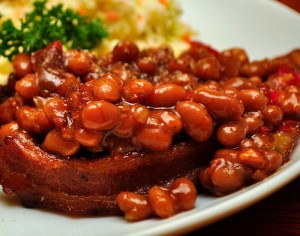
The best laid plans, however. We were invited to a barbecue tonight, and Jim has to work. Whenever there’s a barbecue, my friends ask me to bring one thing: my beans. I have to admit, they are pretty darn good and never quite the same way twice because I pretty much dump a bunch of stuff together, stick it in the crockpot, and let it cook all day.

Homemade Barbecue Sauce

Since I had the roast that needed to be cooked today, I stuck it in one of my crockpots with some barbecue sauce. It is currently becoming pulled pork for Jim’s next few work meals. I like to make my own BBQ sauce. Though I can’t tell you proportions (I dump), when I make BBQ sauce it may contain some (or all) of the following: Muir Glen organic tomato sauce, tomato paste, liquid smoke, smoked paprika, whiskey, chili powder, cayenne, minced garlic, minced onion, vinegar, minced shallot, salt, fresh cracked black pepper, pepper flakes, molasses, brown sugar. Typically, I start with tomato sauce and paste, liquid smoke, garlic, onion, paprika, vinegar, chili powder, whiskey, and molasses or brown sugar in a pot on the stove. Then I start tasting and adding stuff, and I let it simmer and thicken. Usually it comes out pretty well.

Beans for the Barbecue

My beans that are so popular at barbecues don’t actually have a recipe. I learned basic concepts from Etta Kirk, a family friend, and then I started to adapt them. My process is typically pretty similar each time, though proportions vary widely and sometimes I get creative and toss in something extra like a little whiskey or liquid smoke.

Ingredients

  • 1-2 large cans of your favorite commercial baked beans. I like Bush’s country-style.
  • 1 can of kidney beans, drained
  • 1 lb. of ground beef, browned
  • 4-5 slices of bacon, browned and crumbled
  • One sweet onion
  • One each red and green peppers
  • 2-3 jalapeno peppers, seeded
  • Several cloves of garlic
  • Barbecue sauce (see above) (around 1/2 cup)
  • Dijon or sweet hot mustard (usually a couple tablespoons)
  • Brown sugar or molasses (about 1/4 cup)

Method

  1. In a large crockpot, mix baked beans, kidney beans, ground beef, bacon, barbecue sauce, mustard, and brown sugar or molasses.
  2. Roughly chop vegetables and place them in the bowl of a food processor with garlic. Pulse the processor for several one second pulses until vegetables are finely minced. Add them to the beans and stir well.
  3. Cook in the crockpot on high for four hours or low for eight hours.
  4. The best part about this is you can create it to your taste. Make your own BBQ sauce, or choose your favorite commercially prepared offering. Processing the vegetables and garlic to a nearly pureed state makes them spread their flavor through the beans, giving it a hit of nice heat. You can also put the beans in a foil baking dish, cover them with foil, and cook them on the barbecue for several hours as you cook low and slow meats such as ribs.

Zucchini Abundance

blossomI’m starting to think my CSA is getting lazy. Every week for the last month, the box has been chock full of zucchini – and some other stuff. Zucchini seems to be every gardener’s pride. It’s also their nightmare. The stuff multiplies in ways you can barely believe whenever you grow it. I’ve always wondered why, when so many people give tons of zucchini away to their neighbors every year, they continue to grow so much of it.

Still, to me, zucchini symbolizes abundance and sharing.

No one ever says, “Nope, I am not going to share my zucchini with anyone else because then I might not have enough.”

At least, I’ve never heard anyone say such a thing. It’s because when we give zucchini away, we always know that there will be more. It comes in such abundance that we freely share, sometimes with complete strangers.

Imagine how the world would be if we were that certain in the ongoing abundance of our other resources. What if we could trustingly share with others, knowing for sure our own needs would be covered, as well. Would we then need to hoard wealth? If zucchini were currency, then there would no longer be haves and have nots. What a wonderful world that would be.

Zucchini Tips

What on earth can you do with all of that zucchini? Once you’ve shared as much as you can with friends and neighbors to the point that they hide behind closed curtains with lights off when they see you coming, most people are still stuck with more zucchini than they could possibly eat before it  goes bad.

  • Grate the zucchini and store it in one cup measurements in a Ziploc bag in the freezer. Use it throughout the year for zucchini bread, and to add to sauces, soups, and stews.
  • Zucchini is a terrific stealth vegetable. When you grate it and mix it into the foods you cook, your kids get fresh vegetables without even knowing they have them.
  • Make an Italian soup. I like to combine browned Italian sausage, chopped onions and garlic, canned tomatoes, chicken broth, zucchini and carrot chunks, and kidney beans for a quick and delicious soup. Add chopped herbs such as oregano, as well as a little salt and fresh cracked pepper to taste. For a little extra zip, toss in a few dried red pepper flakes. Serve it with a grating of hard Italian cheese and some crusty bread for a full meal.
  • Low carbers can turn fresh grated zucchini into mock hash browns in lieu of potatoes. Grate and fry in olive oil or butter to brown, and then sprinkle on a little sea salt.

Zucchini Blossoms
Many people don’t realize that zucchini blossoms are edible. The plants grow with male and female flowers. The female flowers turn into zucchini, and the male blossoms pollinate them. Leave the blossoms with the thick stems, and instead choose only the thin-stemmed flowers, leaving a few behind to pollinate the plant. If you’d like to reduce your zucchini yield, you can also harvest the female blossoms. Harvest just after the blossoms have opened. Remove the pistils and gently clean the blossoms using a soft dry brush or damp paper towel. Use the delicate flowers the same day you pick them. You can stuff them with ricotta or soft goat cheese and herbs, batter them a mixture of equal parts flour and sparkling water with a little salt for flavor, and deep fry them. They impart a delicate flavor that is out of this world. Serve this light treat with a fizzy white, such as an Italian Muscato d’Asti or Prosecco.

The Tao of Tomatoes

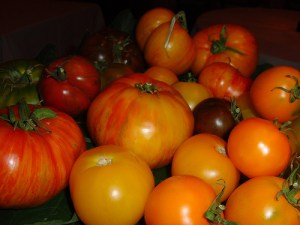
tomatoMy husband believes he does not like tomatoes. I disagree. What he doesn’t like are the mealy, flavorless red fruits I sometimes purchase at the grocery store that are not locally in season and have traveled hundreds of miles to get to my plate. If you want tomatoes in the off season and don’t have a hothouse, then such things are a necessary evil, but they fail to live up to the glory of a real, fresh, seasonal tomato.

Last night, my husband ate such a tomato. In a rather surprised voice, he told me it was good. He did not gag once while eating it.

There’s something very special (dare I say hedonistic?) about eating a sun-ripened, heirloom tomato that was just plucked from the vine hours ago at its peak of ripeness. Instead of the mushy, insipid tomato you buy at a grocery store, that heirloom tomato is firm, juicy, and sweet like a berry.

Heirloom Tomato Salad

Have some really fresh tomatoes just waiting to be plucked? Try this simple salad.

1. Create a vinaigrette by mixing one part vinegar (balsamic works well with tomatoes, though you may use any kind such as red wine or Champagne vinegar) with three parts olive oil. Add a squeeze of fresh lemon juice, about a half teaspoon of minced shallot, and sea salt and fresh cracked pepper to taste. Whisk to emulsify.

2. Thinly slice your heirloom tomatoes and arrange them on a platter.

3. Pour your vinaigrette over the tomatoes.

4. Sprinkle with small pieces of fresh basil.

5. Allow to sit at room temperature for about two hours to allow flavors to mingle.

Tomato Tips

If you have such an amazing, fresh tomato in your possession, consider the following tips in order to allow it to reveal itself to you in all its glory.

1. Never, ever, ever store a tomato in the refrigerator. It causes the tomato to lose sweetness and texture. Instead, store it stemside down in a cool, dry location at a consistent temperature, and eat it soon after picking.

2. Select tomatoes that have a deep orangey-red color, firm yet supple flesh, and a substantial heft for their size. Give the tomato a sniff on the blossom end, smelling for a rich tomato scent.

3. When cooking, many canned tomatoes work as well if not better than fresh. My favorite canned tomatoes are Muir Glen organic tomatoes, which have great flavor with no tinny notes.

4. A teeny bit of sea salt on freshly sliced tomato can bring out the flavors.