Roasted Poultry Stock

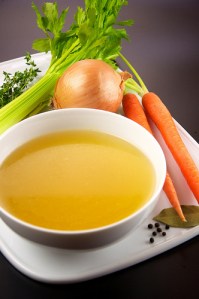
stockHow to Make Roasted Poultry Stock

  1. Preheat your oven to 450.
  2. Arrange about four pounds of turkey and chicken wings in a roasting pan in a single layer, and roast for one hour.
  3. Remove the poultry from the pan and add one cup of water to the pan, scraping to remove all of the flavorful browned bits from the bottom.
  4. In a large stockpot, saute two ribs of celery, two carrots, and two onions roughly chopped in a few tablespoons of oil until tender. Add poultry, water from roasting pan, and about one gallon of water to the pot and bring to a simmer.
  5. Meanwhile, wrap 1/2 teaspoon of peppercorns, several sprigs of parsley, several sage leaves, two bay leaves, and several sprigs of fresh thyme in cheesecloth and tie with kitchen twine. Drop it in the simmering water.
  6. Simmer, uncovered, for three hours. Allow to cool and strain out solids. Store in the refrigerator in a tightly sealed container.

You can use homemade stock in gravy, soups, sauces, and stews. It has much better flavor than canned broths.

Steamer Clams

clamsEven though school has started, summer is not quite over. Here in the Pacific Northwest, late summer and early fall offer up gorgeous weather that entices you outdoors before the rainy season begins again.

One of my favorite seasonal dishes for this time of year is steamer clams. While many people head to the beach at low tide to dig for these local delicacies, I typically buy mine at the farmers’ market where someone has already done the majority of the work for me. You might also be able to find small manila clams at the grocery store in the seafood section.

You can purchase steamer clams several hours ahead of cooking and keep them refrigerated or on ice until you use them. Always use steamer clams the same day, and make sure your source is providing the freshest clams possible.

I live in a household that loves clams. Resultantly, I buy them in bulk when I plan to cook them for the main meal. Jim and Tanner by themselves can put down about five pounds of the bivalves and still look around for something else to eat. As an appetizer, however, you can cook fewer.

I prefer making the clams in a simple wine and butter broth redolent with herbs. It not only provides tremendous flavor to the clams, but it also serves as a delicious base for dipping crusty bread to supplement the meal. To round out our traditional late summer supper of clams and bread, I include sweet corn on the cob, a simple green salad with whatever seasonal veggies I have around and a crisp white wine or beer.

Cooking steamer clams isn’t so much a recipe as a series of steps I follow. I don’t really measure – I just toss in ingredients.

How to Cook Steamer Clams

Ingredients

  • Grass-fed butter
  • Chopped shallots or sweet onions
  • Chopped fennel bulb
  • Clams
  • Dry white wine
  • Fresh lemon juice and zest
  • Fresh cracked pepper
  • Salt to taste
  • Chopped fresh tarragon

Method

  1. On the stovetop, melt butter in a large pot.
  2. Saute shallots or onions and fennel in butter until soft.
  3. Add clams, white wine, juice of one lemon, zest from half the lemon, and pepper. Stir to combine.
  4. Cover the pot and allow to steam, stirring occasionally, until all of the clams have opened. Discard unopened clams.
  5. Taste for seasoning and stir in tarragon.

Variation
Replace fennel with chopped garlic and tarragon with chopped fresh basil. Stir in fresh chopped tomatoes with the basil.

Lamb Recipes

rackoflambMany people shy away from cooking lamb for an array of reasons. Some people don’t like it. Others think it is “fancy” food, and it’s true, certain cuts of lamb can be expensive. Some just may not have a clue how to cook it.

I am a big fan of lamb, especially of the pasture-raised, local, grass-fed variety. The meat is tender and flavorful, providing a nice break from routine. The good news is cooking lamb is no more difficult than preparing any other meat.

Some find lamb gamey in flavor. The best way to remedy this is to trim away the fat before you eat it (but not before you cook it – the fat is essential in cooking lamb), and to provide some vinegar, garlic, or herbs as a counterpoint to cut through the flavor. The gaminess also depends on the cut you choose. Lamb chops and leg of lamb tend to be a bit gamier, which is why so many people pair them with mint sauce. Rack of lamb or rib cuts, on the other hand, are tender and delicious without a hint of game.

Today, I will offer you two ways to prepare lamb. Both are simple and delicious. The “fancy” preparation I save for special occasions – though it is shockingly easy to prepare. The other I will often serve for regular meals.

Leg of Lamb with Roasted Garlic and Shallots

Ingredients

  • 1/2 cup red wine vinegar
  • 1/2 cup white wine vinegar
  • 2 tablespoons chopped fresh rosemary
  • 2 tablespoons dry oregano
  • 3 cloves garlic, pressed through a press
  • Three bulbs garlic (or more)
  • Six shallots (or more)
  • Drizzle olive oil
  • One leg of lamb, butterflied with bone removed
  • Kosher salt and fresh cracked pepper to taste
  • Chopped, fresh rosemary

Method

  1. Pour vinegar, olive oil, rosemary, and oregano into a bowl and whisk. Marinate lamb in this for 4-6 hours.
  2. Preheat the oven to 350 degrees.
  3. Slice the tops off of the heads of garlic and halve the shallots. Place them in a baking dish, cut side up and drizzle with olive oil.
  4. Cover with foil and roast for 90 minutes, until garlic and shallots are soft.
  5. Raise oven temperature to 500 degrees.
  6. Squeeze garlic and shallots out of the dried skins into a bowl and mash together.
  7. Lay lamb out on the counter and season with salt and fresh cracked pepper.
  8. Spread garlic and shallot mixture over surface of butterflied lamb.
  9. Sprinkle with chopped rosemary.
  10. Roll lamb into a roast and tie with butcher’s twine.
  11. Season outside of lamb with salt and pepper.
  12. Place in roasting pan and put in oven for 10 minutes to sear lamb.
  13. Reduce heat to 325 degrees and cook until lamb reaches an internal temperature of 130 degrees, about an hour (or longer for larger cuts. Check temperature regularly).
  14. Allow to rest 20 minutes before carving and serving.

Herb Crusted Rack of Lamb

Ingredients

  • One stick of grass-fed butter, softened
  • 6 cloves of garlic, minced
  • 1/2 cup almond meal
  • 1/4 cup chopped fresh parsley
  • 1/4 cup chopped fresh thyme
  • One rack of lamb, Frenched
  • Kosher salt and fresh cracked black pepper, to taste

Method

  1. Preheat your oven to 425 degrees.
  2. Combine butter, garlic, almond meal, parsley, and thyme to form a loose paste.
  3. Score the fat on the rack of lamb crosswise, avoiding cutting all the way through to the meat.
  4. Season rack of lamb with salt and pepper.
  5. Press bread crumb mixture onto fleshy side of the rack of lamb, covering the meat entirely but leaving bones exposed.
  6. Place in a roasting pain, crust side up.
  7. Roast for about 30 minutes, until a meat thermometer in the thickest part of the lamb reads 135 degrees.
  8. Allow to rest 20 minutes before cutting and serving.

Serve with an earthy Pinot Noir or French Burgundy (made from Pinot Noir), which is a classic food/wine pairing. Favorites include Martinelli Pinot Noir from California or a Domaine Serene Pinot Noir from Oregon.

Homemade Mayo – How to Make it and Why You Should

mayoIf you’ve ever looked at the ingredients on the back of a commercial mayonnaise, you might be surprised to find chemicals, preservatives, and high-fructose corn syrup (HCFS). In fact, “light” mayonnaise that contains lower amounts of fat often incorporates an array of surprising ingredients your great grandmother wouldn’t have even recognized as food. From commercial mayonnaise, here are a few ingredients on the label: CALCIUM DISODIUM EDTA, SUGAR, HCFS, NATURAL AND ARTIFICIAL FLAVORS.

While I receive kind of scary letters from the corn growers PR people when I mention HCFS in an article or blog post, I feel I must here. HCFS is an artificial sweetener made from fructose and sucrose. It has been linked to the growing obesity problem, and it is always best to limit all forms of sugar, including HCFS. Some experts believe HCFS is even more responsible for obesity than table sugar because of the way your body processes it, and some evidence suggests it contributes to liver scarring and cirrhosis. As with everything, the key is moderation. Unfortunately, because HCFS (more recently called corn sugar, but don’t let the new label fool you. It’s still HCFS.) is so ubiquitous in processed foods due to how cheaply it is produced and how plentiful it is, the negative health effects may prove to be exponential.

Homemade mayonnaise, however, contains only a few natural ingredients that just about everyone recognizes as something you can eat: egg yolks, oil, acid (lemon juice or vinegar typically), and salt. If you’d like to flavor it, you can add chopped fresh herbs, citrus zest, minced fresh garlic, or chipotle. Making it is an easy process. You can use your blender, a whisk, or a food processor. I’m going to describe the food processor method here, although it is easy to adapt for any equipment once you know the process.

Homemade Mayo

Ingredients:

  • Yolk of one egg
  • 1 tablespoon plus 2 teaspoons acid (lemon juice, lime juice, red wine vinegar, white vinegar, etc.)
  • 1 cup of oil (macadamia, olive oil, avocado oil)
  • Pinch to 1/2 teaspoon of salt

Method:

  1. Place egg, acid, and salt in the bowl of a food processor. Process a few seconds to combine.
  2. Your food processor should have a tube in the feed chute you use to push vegetables in. In the removable circular tube in the middle, there should be a small hole in the bottom. Fit the tube into the feed chute, and turn on the food processor. Pour a few drips of oil in the tube with the processor running. When that oil has been incorporated in the mayonnaise, pour a little more. Next, fill the tube with the oil and let it run in a slow stream into the egg mixture as the processor continues to run, until you have incorporated all of the oil.
  3. That’s it. Making mayonnaise is quite simple, and the homemade product tastes fresh and delicious. If you do not have the round feed tube with the small hole in the bottom, or if you are using a whisk, then you need to begin incorporating the oil very slowly while whisking constantly. Start with a drop or two of oil, add another drop or two, and then begin to add the oil in a very thin, slow stream while whisking constantly. If you add the oil too quickly, the mayonnaise will fail to emulsify.

Variations

  • Chipotle-lime mayonnaise: Replace at least 2 teaspoons of acid with fresh squeezed lime, add 1/2 tsp of lime zest, and a dash of dried chipotle.
  • Lemon-basil mayonnaise: Replace 2 teaspoons of acid with lemon and add 1/2 tsp of lemon zest. Roughly chop seven a small bunch of fresh basil and process it with the mayonnaise at the end to blend.
  • Garlic mayonnaise: Use red wine vinegar for your acid, and add the full 1/2 tsp of salt.Take one to two cloves of fresh garlic and put them through a garlic press. Put them in with the egg mixture and pulse the food processor to blend. Proceed to add your oil as instructed.

Tips

  • Mayonnaise will keep up to one week when tightly covered and refrigerated.
  • Use the freshest eggs possible.
  • You can use whole eggs, which creates a lighter, less creamy mayonnaise. You may need to adjust your oil slightly, so keep an eye as you process to determine when it is done.
  • If your mayonnaise fails to emulsify the first time you try it (and occasionally I still have a batch go awry), try it again, adding the oil just a little bit more slowly and making sure you do not stop whisking or processing as your incorporate it.
  • You can incorporate other oils such as extra-virgin olive oil or walnut oil; however, remember they are very intensely flavored. If you do use these oils, I suggest only adding a few tablespoons to 1/4 cup of them in order to avoid overpowering the mayonnaise.

Getting creative with the acids you use will change the flavor and character of your mayonnaise.

Smoked Baby Back Ribs

ribsby Karen Frazier

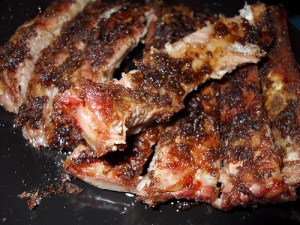
Everyone has their own way of making ribs, and some of them are pretty darn good. I enjoy my ribs tender, juicy and smoky with a hit of heat. At worst, ribs come off of the barbecue dried and stringy. When well done, however, they can be a thing of beauty.

In our house, we take our ribs very seriously. We begin the journey to perfect ribs the night before, and when rib day dawns, we plan to be home for at least five hours, carefully tending the ribs as they cook low and slow on a smoky gas grill.

If you’re in a hurry, don’t try this at home. If, however, you’re willing to wait for a good thing, then by all means give this rib grilling process a try. You’ll be very glad you did.

Step One: Choosing Your Ribs

You can use this process with either baby back or spare ribs. I prefer the baby back, which tend to be more flavorful and tender than the spare ribs. Find the meatiest racks you can – some meat cutters really skimp. Watch for bones showing through the meat. If you see them, you just may have skimpy ribs. The place with the meatiest baby backs I’ve come across? Costco. I plan for a half rack per female, a 1/4 rack per kid (except teens), and a full rack per teen or man. I usually have leftovers, but these ribs reheat well.

Step Two: Brining – The Night Before

Brining is the best thing to happen to grilled meat since the invention of barbecue sauce. It adds moisture and flavor into the meat, helping to prevent drying as you cook them. To make a brine, I add 1/2 cup of kosher salt (or 1/4 cup table salt) and 1/4 cup of Swerve sweetener per gallon of water. Find a large container or a cooler and fill with as much brine as you need to soak your ribs. Brine them for one hour the night before you plan to cook them.

Step Three: Rubbing – The Night Before

Remove ribs them from the brine, and dry them off. Then, use generous amounts of rub on both sides of the ribs. Wrap the ribs in plastic and refrigerate overnight.

Many commercial rib rubs exist. I don’t like them. They tend to be over-salty and not nearly as flavorful as a rub you make yourself. While my rib rub differs based on mood, I have a basic formula I follow using dried herbs and spices.

Two tablespoons each:

Cumin
Salt
Oregano
Chili powder
One tablespoon each:
Ground black pepper
Ground white pepper
Four tablespoons each:
Swerve sweetener
Sweet paprika
One teaspoon each:
Cayenne
You can adjust your proportions, double it, triple it – whatever you need to do. Plan on about 1/4 cup of rib rub for each rack.

Step Four: Smoke – The Night Before

If you use a regular grill, smoke preparation also begins the night before. Choose wood chips or chunks you like, and set them to soak overnight. I prefer chuks to chips for their ability to smoke longer, and applewood for its subtle flavors. You probably have a favorite. I don’t recommend hickory, which I believe is too aggressive at asserting its own flavor into the ribs.

We have a smoker, which we use to smoke our ribs. We keep it low and slow – about 275 for about four or five hours.

Step Five: Barbecue Prep – Rib Day

Congratulations! You’ve made it to rib day and you are mere hours away from the best ribs of your life. For a gas grill, set it on the lowest temperature possible, and close the lid. You want to heat it to a consistent temperature of about 275 degrees, where it should remain for most of the day. The key to ribs is low and slow. Once the grill reaches a temperature of 275 degrees, turn off one of the burners, leaving the other on low. This should allow you to keep the ribs at consistent temperature.
Make foil packets in which you place your wood chips. We like to set two or three foil packets around the grill for full saturation. Place slits in the top for the smoke to escape, and grant easy access so you can add more wood chips as needed. Place the packets underneath the grill plates and allow them to heat as you preheat your grill.

For a smoker: Turn it on to 275. Bam! You’re done.

Step Six: Cook the Ribs

If you own a smoker, this section is pretty short: smoke your ribs, low and slow, at about 250-275 until they fall off the bone (about 4-6 hours). If you own a grill, read on.

If you own rib racks, use them. This keeps the ribs from direct contact with the grill and facilitates the development of tender, fall-off-the-bone meat. You can find them at many kitchen speciality stores, and they are quite inexpensive. Otherwise, place ribs on the part of the grill where the burner has been turned off. You are going to use indirect heat to grill your ribs.

Close the lid and walk away. Every 30 minutes, check the temperature of the ribs to make sure they are still grilling low, and rotate the position of the ribs so they cook evenly. Check smoke packets to see if supplies need to be replenished, as well. Have a beer and wait.

At between 3-1/2 and 5 hours, the ribs should start to get really tender. Poke them with a fork, or give the end of a rack a small twist with tongs and see if it is falling off the bone. When it is, they’re done.
We usually stop here and eat our ribs; however, I know many people really, really, really like barbecue sauce or glaze. If you’ve carefully tended your smoke and barbecue temperature, however, these ribs will not need them. They should be smoky, sweet, and juicy.

Still, if you absolutely must, proceed to step seven.

Step Seven (Optional): Glaze the Ribs

I actually love my ribs with just the dry rub and no glaze. If you brine them and keep them on low and slow, they will be tender and moist.

If you like your ribs a little wetter, then glaze them. You could use commercial barbecue sauce, although what a waste of perfectly good ribs that would be. You could also make your own barbecue sauce, as I outlined here. However, I believe even a homemade tomato-based barbecue sauce will overwhelm the sweet smokiness of these  ribs. Therefore, if your ribs must be covered in something other than deliciousness, I recommend making a glaze.

How do you make a glaze? Add:

  • A base liquid (chicken stock, wine, beer, cola, or something)
  • Something sweet (stevia, Swerve sweetener, honey)
  • Acid (balsamic vinegar, red wine vinegar, lemon juice, etc.)
  • Salt
  • A dash of heat (cayenne, jalapenos, red pepper flakes, hot sauce)

Simmer it altogether on the stove until it becomes syrupy, tasting to adjust flavor. Brush the glaze on the ribs and stick them under the broiler for a few minutes to set the glaze.

Farm Fresh Eggs

eggsMy friend Kathrynn Saari is a genius at coaxing food from the earth. She’s always been a source of garden delights, but after a recent move to property large enough to raise chickens and keep bees, she’s become my regular supplier of farm fresh eggs. For just $3 per dozen, I get two cartons of eggs at the end of every week, and frankly, I can’t wait for the honey.

For those of you who have only ever tried supermarket eggs, I urge you to seek a source from the farm. Many people do not realize it, but eggs at the grocery store (even the organic ones) are several weeks old by the time they make it to your refrigerator. While this makes them ideal for hard boiling (older eggs peel much more cleanly than fresh eggs), there is a payoff in flavor and color.

The eggs I get from Kathrynn have been plucked from beneath the butts of chickens hours earlier. They arrive in a colorful array – white, brown, blue, and sage green. Just looking at them in a carton is a delight. When I crack one open, the yolk is a deep sunshine-colored orangey-yellow that is so much more intensely pigmented than a store-bought egg. They also typically have a higher yolk to white ratio, rendering anything you make from them silky and delicious.

Just last week, I baked a batch of chocolate chip cookies from these wonderful eggs. Jim assures me they are the best chocolate chip cookies he has ever had, and he’s not really a fan of that type of cookie. He’s more of an oatmeal raisin man. Still, the cookies were spectacular. Although the eggs are slightly smaller than a supermarket egg, I used the normal amount. The result was cookies that rose to a spectacular height. Yesterday, I made zucchini bread with them. I have never made a quick bread with such a perfect, moist crumb.

Baking aside, farm fresh eggs make homemade pastas tastier and more velvety, homemade mayonnaise richer, and taste delicious when you feature them in humble scrambled eggs. Since I’m currently working with beautiful vegetables straight from my CSA box, I also enjoy a really good frittata. With farm fresh eggs, they are even better than you could image.

Heirloom Tomato and Zucchini Fritatta

Ingredients

  • 6 eggs
  • 1/4 cup heavy cream
  • Fresh cracked black pepper to taste
  • 1 tsp. unsalted butter
  • 1/4 zucchini, sliced
  • 3-4 thick slices heirloom tomato
  • 3 Tbsp. (or more) of grated cheese. For this, I enjoy Asiago.
  • Drizzle of extra virgin olive oil
  • 3-4 leaves of fresh basil, torn into small pieces
  • Pinch of sea salt

Method:

  1. Set oven to broil.
  2. Whisk together eggs until well combined.
  3. Whisk in heavy cream, and black pepper to combine.
  4. Heat an oven-proof saute pan on the stove top over medium-high heat, melting the butter in it to prevent sticking. Use more butter if necessary.
  5. Pour egg mixture into pan. As the eggs begin to set up around the side, gently work them towards the center with a spatula and tilt pan to distribute unset eggs.
  6. When eggs have mostly set, remove from heat. Arrange zucchini and tomatoes on top. Sprinkle with grated cheese.
  7. Place in oven under broiler, watching carefully. Cook for just a few moments, until frittata puffs slightly and cheese melts and begins to brown.
  8. Remove from oven.
  9. Slice into wedges.
  10. Drizzle each slice with olive oil, and sprinkle with basil and a little sea salt. My son will also tell you that drizzling these with truffle oil in place of olive oil makes the frittata even better.
  11. Serve immediately.

The Tao of Tomatoes

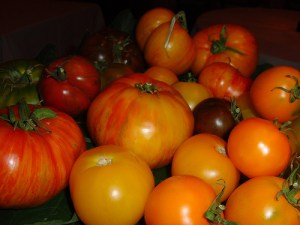
tomatoMy husband believes he does not like tomatoes. I disagree. What he doesn’t like are the mealy, flavorless red fruits I sometimes purchase at the grocery store that are not locally in season and have traveled hundreds of miles to get to my plate. If you want tomatoes in the off season and don’t have a hothouse, then such things are a necessary evil, but they fail to live up to the glory of a real, fresh, seasonal tomato.

Last night, my husband ate such a tomato. In a rather surprised voice, he told me it was good. He did not gag once while eating it.

There’s something very special (dare I say hedonistic?) about eating a sun-ripened, heirloom tomato that was just plucked from the vine hours ago at its peak of ripeness. Instead of the mushy, insipid tomato you buy at a grocery store, that heirloom tomato is firm, juicy, and sweet like a berry.

Heirloom Tomato Salad

Have some really fresh tomatoes just waiting to be plucked? Try this simple salad.

1. Create a vinaigrette by mixing one part vinegar (balsamic works well with tomatoes, though you may use any kind such as red wine or Champagne vinegar) with three parts olive oil. Add a squeeze of fresh lemon juice, about a half teaspoon of minced shallot, and sea salt and fresh cracked pepper to taste. Whisk to emulsify.

2. Thinly slice your heirloom tomatoes and arrange them on a platter.

3. Pour your vinaigrette over the tomatoes.

4. Sprinkle with small pieces of fresh basil.

5. Allow to sit at room temperature for about two hours to allow flavors to mingle.

Tomato Tips

If you have such an amazing, fresh tomato in your possession, consider the following tips in order to allow it to reveal itself to you in all its glory.

1. Never, ever, ever store a tomato in the refrigerator. It causes the tomato to lose sweetness and texture. Instead, store it stemside down in a cool, dry location at a consistent temperature, and eat it soon after picking.

2. Select tomatoes that have a deep orangey-red color, firm yet supple flesh, and a substantial heft for their size. Give the tomato a sniff on the blossom end, smelling for a rich tomato scent.

3. When cooking, many canned tomatoes work as well if not better than fresh. My favorite canned tomatoes are Muir Glen organic tomatoes, which have great flavor with no tinny notes.

4. A teeny bit of sea salt on freshly sliced tomato can bring out the flavors.

Pesto

pestoToday is CSA day. For those of you who don’t know, CSA stands for community supported agriculture. Many organic farms in local communities offer members the opportunity to purchase a share in the farm. This can run anywhere from about $400 for a season to $1,000. Then, once growing season starts, the farm supplies you with a box of freshly picked vegetables every week.

This is my first year trying community supported agriculture. I like the idea of keeping my money in my community and receiving fresh, organic vegetables that haven’t traveled hundreds of miles before they make it to my kitchen. Very few foods taste better than a fresh vegetable picked at its peak of ripeness.

Having a CSA delivery every week has changed the way I cook this summer. I used to plan my meals and then go to the store to get what I needed to cook them. Now, I wait for my CSA box and then plan my meals around what is in them. Since Tuesday is CSA delivery day, I will see what treasures arrive today and then create simple meals. Last night I used the last of my previous week’s CSA, making a seafood chowder with red potatoes, fresh carrots, and local seafood.

Scapes

My first CSA box contained scapes. While they look like octopus tentacles, scapes are actually the green tops of garlic bulbs that rise above the ground as the bulb develops. They have a subtle garlicky flavor and make a fantastic seasoning. You can chop them and use them to season foods such as oven-roasted potatoes, or you can create a terrific pesto.

Pesto

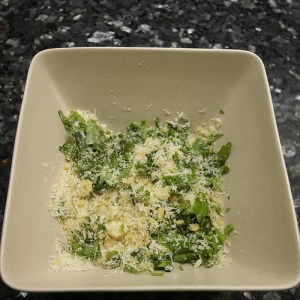
Pesto is a simple, fresh sauce that is easy to make. All it requires are herbs, virgin olive oil, nuts, hard cheese, and garlic. The traditional pesto contains basil, olive oil, pine nuts, parmesan cheese, and garlic. Pulse the ingredients in a food processor and voila, pesto. To make it, use two tablespoons of oil, 3/4 cup of grated cheese, 1/4 cup of pine nuts, three cloves of garlic and a small bunch of basil. You can also hand chop the ingredients and mix them together. If you do use the food processor, pulse it a few times to chop but not homogenize your ingredients.

That’s it. Use your basic pesto to top warm pasta, jazz up eggs, or as a sauce for grilled chicken or fish. Your only limit is your creativity. You can also replace any ingredient with something else. Consider this: arugula and walnuts in place of pine nuts and basil. It’s up to you, and it’s so easy to do.

Want to make scape pesto? Use scapes, parmesan, toasted slivered almonds, olive oil, and a touch of sea salt.

Pair pesto dishes with a nice unoaked white wine, such as a Sauvignon Blanc or a dry Riesling. Try the 2010 Airfield Yakima Valley Sauvignon Blanc for just $13 per bottle, or a Chateau Ste. Michelle Columbia Valley Riesling Cold Creek Vineyard for around $15.