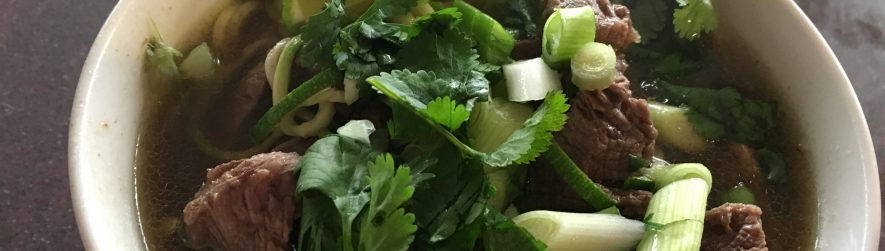
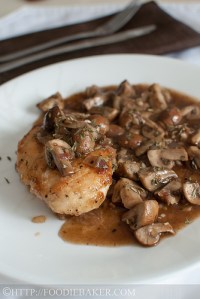
Coq au Vin

coqJim and I were working side-by-side in the kitchen last night. Actually, since I was in the midst of the world’s worst hot flash, he was cooking and I was instructing. Jim isn’t much of a cook – something he’ll freely admit. He can follow instructions pretty precisely and do okay. He’s awesome on the grill. He sometimes comes across something he decides is a “magic ingredient” and begins adding it to absolutely everything he cooks (such as the great Emeril Lagasse Kicked Up Gahlic Salad Dressing explosion of 2002 where he combined the salad dressing and green beans, wrapping it in a tortilla because, hey – it’s a burrito). But really what Jim does is heat stuff up so that it is warm enough to ward off bacteria and food-borne illness. This is how many people cook – with the goal of getting the food cooked, rather than making it flavorful.

On the other hand, building flavor is pretty easy if you know a few cooking techniques. If you can get food to the proper temperature in order to serve it, if you can combine ingredients in a recipe to make a dish, then you can begin to build flavors in your food. Best of all, it won’t take that much longer than just following the recipe ingredient by ingredient and your food will improve by leaps and bounds.

One of the best ways to build flavor is via the Maillard reaction. I know – it sounds all fancy, but it’s really pretty simple. When meat browns, it happens due to the Maillard reaction. When bread browns, same thing. Essentially, what you need to know about the Maillard reaction is this: it adds flavor to food. At its most basic, the Maillard reaction occurs when heat is added to foods containing amino acids and carbohydrates. In food terms, it adds tremendous savoriness meats and other foods.

For example, how do you like your steak? I am a medium rare gal, myself, but I know some people who like their steak super rare in the middle. Yet these same people wouldn’t consider eating a cut of meat that is entirely uncooked. When you are served a rare steak in a restaurant, it arrives crisp and brown on the outside, but when you cut into it, it is nearly raw. And most of the flavor on that steak comes from the brown part on the outside (as well as seasonings), which has browned due to the Maillard reaction.

To promote the Maillard reaction in your cooking:

  • Don’t crowd the pan. That inhibits the reaction and instead causes steaming. I work in batches.
  • Leave whatever you are cooking in contact with the heat without moving it for several minutes until it browns. Do this with vegetables, mushrooms, onions, meats. This allows for tremendous flavor development.
  • If you are thickening with flour, add it to the heated fat in the pan and then let it cook for a few minutes to develop flavor.
  • When you add liquids to a pain that you’ve browned meat and/or vegetables in to make a sauce, don’t waste the flavor that is stuck to the pan. Use the side of a wooden spoon to scrape the browned bits off the bottom of the pan.

Let’s look at the application of the Maillard Reaction in a recipe for coq au vin.

Coq au Vin

  • 6 thick slices bacon, chopped
  • One chicken, cut into pieces, skin left on
  • Salt and black pepper to taste
  • 1 lb button mushrooms, quartered
  • 1-1/2 cup pearl onions (fresh or frozen)
  • One onion, diced
  • One carrot, peeled and diced
  • One celery stalk, peeled and diced
  • 4 cloves garlic, sliced
  • 6 tbsp flour (or sweet rice flour for gluten-free)
  • Two cups dry red wine
  • Two cups gluten-free chicken stock
  • 2 Tbsp thyme
  1. Preheat oven to 350 degrees.
  2. In a large, oven proof pot such as a dutch oven, cook bacon over medium high heat until crisp. Remove bacon from fat with a slotted spoon and set aside.
  3. Season chicken pieces with salt and pepper. Working in batches, cook the chicken pieces in the bacon fat until skin is browned on both sides.
  4. Remove chicken from pan and set aside. Add the mushrooms to the oil in the pan. Allow them to stay in contact with the pan for about four minutes to brown before stirring them. Continue to stir and cook for a few more minutes. Remove from oil with a slotted spoon and set aside.
  5. Add pearl onions to the pan, allowing them to stay in contact with the pan and brown for a few minutes before stirring. Once cooked, remove them from the pan and set aside.
  6. Add mirepoix to pan (diced onions, carrots, celery). Cook in the oil without stirring until they are browned. Once browned, stir and cook until tender.
  7. Add garlic and continue to cook, stirring until garlic releases its scent – about 30 seconds.
  8. Sprinkle the flour over the vegetables and stir to cook flour about four minutes.
  9. Pour wine into pan, scraping the bottom of the pan and stirring as you do. Cook for a few minutes to remove alcohol flavors.
  10. Add chicken stock and thyme. Stir to combine.
  11. Return chicken, mushrooms, pearl onions, and bacon to the pan, making sure you add any juices that have accumulated, as well. Stir to combine and bring to a simmer.
  12. Cover pan and place in preheated oven. Cook 60 minutes, until chicken is tender. Serve with egg noodles or rice if you prefer gluten-free.

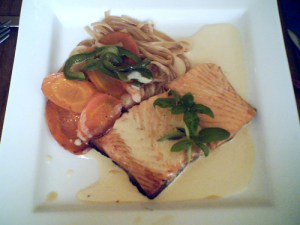
Steamer Clams

clamsEven though school has started, summer is not quite over. Here in the Pacific Northwest, late summer and early fall offer up gorgeous weather that entices you outdoors before the rainy season begins again.

One of my favorite seasonal dishes for this time of year is steamer clams. While many people head to the beach at low tide to dig for these local delicacies, I typically buy mine at the farmers’ market where someone has already done the majority of the work for me. You might also be able to find small manila clams at the grocery store in the seafood section.

You can purchase steamer clams several hours ahead of cooking and keep them refrigerated or on ice until you use them. Always use steamer clams the same day, and make sure your source is providing the freshest clams possible.

I live in a household that loves clams. Resultantly, I buy them in bulk when I plan to cook them for the main meal. Jim and Tanner by themselves can put down about five pounds of the bivalves and still look around for something else to eat. As an appetizer, however, you can cook fewer.

I prefer making the clams in a simple wine and butter broth redolent with herbs. It not only provides tremendous flavor to the clams, but it also serves as a delicious base for dipping crusty bread to supplement the meal. To round out our traditional late summer supper of clams and bread, I include sweet corn on the cob, a simple green salad with whatever seasonal veggies I have around and a crisp white wine or beer.

Cooking steamer clams isn’t so much a recipe as a series of steps I follow. I don’t really measure – I just toss in ingredients.

How to Cook Steamer Clams

Ingredients

  • Grass-fed butter
  • Chopped shallots or sweet onions
  • Chopped fennel bulb
  • Clams
  • Dry white wine
  • Fresh lemon juice and zest
  • Fresh cracked pepper
  • Salt to taste
  • Chopped fresh tarragon

Method

  1. On the stovetop, melt butter in a large pot.
  2. Saute shallots or onions and fennel in butter until soft.
  3. Add clams, white wine, juice of one lemon, zest from half the lemon, and pepper. Stir to combine.
  4. Cover the pot and allow to steam, stirring occasionally, until all of the clams have opened. Discard unopened clams.
  5. Taste for seasoning and stir in tarragon.

Variation
Replace fennel with chopped garlic and tarragon with chopped fresh basil. Stir in fresh chopped tomatoes with the basil.

Cooking Salmon

salmonI have a shameful secret. Although I live in the Pacific Northwest, I do not enjoy salmon. It’s nothing personal. It’s more that I just do not like any fish that tastes fishy. That pretty much precludes anything except for halibut, and sometimes even that is over the top as far as I am concerned.

On the other hand, I live in a household of fish lovers, and we frequently entertain other fish lovers. Therefore, in spite of my personal taste, I’ve had to learn to cook salmon. I have two recipes that glean particular praise and are relatively easy. Even I don’t mind eating salmon prepared this way. Love might be going a bit far because I simply do not like fish, but others do love these and I can eat them without gagging. Thanks to Cooks Illustrated, where I learned the perfect method for grilling salmon using a two-level heat system.

Some tips for selecting salmon.

  • Select the freshest fish you can get, and cook it within 24 hours. The flesh should be bright pink, and it should not smell “fishy,” but rather clean and slightly briny.
  • Rinse and dry the fish before you cook it.
  • For best flavor, choose wild caught Pacific salmon. If you’d like a real treat, use these recipes with Copper River salmon when it becomes available in the spring.
  • I prefer cooking filets to steaks. Use pliers to remove any small bones, and cut the salmon into individual-sized pieces to cook.
  • These are grilling recipes. You can alter them for sauteing on the stovetop, however. Heat your pan over medium high heat, add a little olive oil, and saute starting skin side down. It should take about 3 minutes per side. Glaze before flipping the salmon. You can also use an indoor grill like the Foreman grill. Glaze the salmon before placing on the grill. It will take about 2-4 minutes to cook the salmon through.
  • Other glazes that work well with salmon include honey and reduced balsamic vinegar with a little sugar added.

Salmon with Cherry Orange Glaze
Ingredients

  • Juice of one orange and 2 strips of orange zest about 1″ x 1/2″
  • Juice of one lemon
  • One cinnamon stick
  • 3-4 whole cloves
  • 1/2 cup cherry preserves
  • 1 cup chicken broth
  • 1/2 cup port
  • 1/4 cup marmalade
  • 2 teaspoons of cornstarch
  • 1 tablespoon water
  • 1/8 teaspoon of cayenne (or to taste)
  • Salmon filets, cut into individual sized pieces
  • Salt and fresh cracked pepper to taste

Method

  1. Over a high heat, bring orange juice and zest, lemon juice, cinnamon, cloves, cherry preserves, and chicken broth to a boil. Lower heat to medium and allow to simmer and reduce by about 1/4 – about 10 minutes.
  2. Remove cinnamon, cloves, and orange zest.
  3. Add port and marmalade and simmer about five minutes.
  4. Dissolve the cornstarch in water and whisk into glaze. Simmer to thicken, about 15 seconds.
  5. Add cayenne and taste for seasoning. Add salt and pepper as needed.
  6. Cool sauce.
  7. Season salmon fillets, and preheat your grill over high heat. Turn off one half of the grill and leave the other on high.
  8. Carefully clean the grill and oil it.
  9. Place salmon on grill over the hot side, flesh side down for one minute.
  10. Flip salmon to skin-side and glaze the top. Allow to cook for 3-4 minutes, until salmon is opaque about 1/2 to 3/4 through the fish. Glaze the salmon with sauce.
  11. Oil the side of the grill with the burners turned off. Flip the salmon flesh side down again onto the oiled part of the grill. Allow salmon to cook through and begin to caramelize, about two minutes. Serve immediately with glaze on the side.
  12. Reglaze the salmon, and serve.

Maple Glazed Salmon
Ingredients

  • 1/2 cup pure maple syrup
  • 1/4 cup soy sauce
  • Dash cayenne
  • Salmon filets cut into individual portions
  • Salt and pepper to taste

Method

  1. Preheat grill on high.
  2. Combine maple syrup and soy sauce in a shallow pan.
  3. Place salmon fillets, flesh-side down, in soy/maple mixture and allow to marinate at room temperature, about 15 minutes.
  4. Remove salmon from marinade and pour marinade into a pan. Bring marinade to a boil and simmer to reduce until thick and syrupy. Add cayenne.
  5. Season salmon with salt and pepper.
  6. Clean the grill and turn heat off on one side.
  7. Oil the grill on the hot side.
  8. Place salmon, flesh side down on hot oiled grill, about one minute.
  9. Flip the salmon to skin side down on the hot side and grill for about 3-4 minutes. Glaze salmon.
  10. Oil the cooler side of the grill. Flip the salmon onto the oiled grill, flesh side down, and allow to cook until glaze begins to caramelize, about two minutes.

A classic northwest pairing? Salmon and Pinot Noir. Try a powerful Oregon Pinot from Beaux Frerers.

Chicken Pot Pie

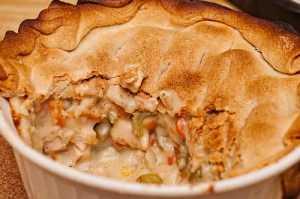
chickenpieWhen I was a kid, I HATED chicken pot pie. My mom would buy the Swanson’s premade chicken pies and bake them. The mushy vegetables and cubes of super soft chicken weren’t appetizing to me. Worse, they contained what I considered to be the most awful vegetable on the face of the earth. Peas.

I hated peas with a vengeance as a kid. For a while, I tried hiding them in my napkin or throwing them on the floor. Sadly for me, my mother was just a little cleverer than that I gave her credit for being, so those avenues of pea disposal were lost to me. I can recall a few dinners sitting long after everyone else was done eating, staring down the slimy green objects I found so disgusting. Then I hit on the perfect solution. If I swallowed them whole with my milk, I didn’t have to taste them at all. Chicken pie, however, made this exercise more of a challenge, and I dreaded seeing those Swanson’s boxes on the counter.

In high school, a close family friend was also my home economics teacher. Etta Kirk taught a class called Meal Management, and we made all sorts of really great foods like cream pies and cinnamon rolls. We also made chicken pie, a lesson I knew was coming and dreaded with the same intensity I used to fear seeing a bag of frozen peas in the freezer. Still, Etta encouraged us to try everything we’d cooked in the class. The chicken pie didn’t suck, but it still wasn’t my favorite. I avoided it for years.

It wasn’t until about five years ago that I had a revelation. I was a grown up, and I could put whatever vegetables I wanted into my chicken pie, and there didn’t have to be a single pea in it. I set out on a mission to create a chicken pie that I would love.

Here’s the good news. If you love peas, you can add them into this recipe. You can change up the herbs and vegetables, and make a chicken pie that suits your palate if you just use the really simple techniques I outline below. The result will be a rustic, delicious, comforting chicken pie that is sure to become a family favorite. The best part? You don’t even need to know how to make pie crust. I’ve hit on a simple solution that has earned rave reviews. Instead of making pie crust, I purchase pre-made puff pastry sheets in the grocer’s freezer section, and top my pie with that.

Deep Dish Chicken Pie

Ingredients

  • 1/4 pound raw pancetta, diced (you can find pancetta in the deli section of the grocery store. You can also use bacon, which will impart much smokier flavor. I prefer pancetta.)
  • 2 tablespoons olive oil or butter
  • 1 pound chicken thighs, boned and quartered
  • Kosher salt and fresh cracked black pepper
  • 1 sweet onion, diced
  • 2 carrots, peeled and diced
  • 2 stalks celery, diced
  • 1/4 cup flour
  • 1 cup dry white wine
  • 3 cups chicken stock
  • 1/2 bag frozen pearl onions
  • 1/2 pound crimini mushrooms, quartered (mushroom haters – these are optional)
  • One sheet frozen puff pastry, thawed on the counter for 30 minutes, plus flour for rolling
  • 1 egg, beaten slightly
  • 3 tablespoons fresh or 2 tablespoons dried tarragon

Method

  1. Preheat the oven to 400 degrees.
  2. In a large saute pan, heat oil on medium high and cook pancetta. Remove pancetta from oil with a slotted spoon and set aside in a deep pan such as a deep dish pie dish or a 9 x 9 deep dish square pan.
  3. Season chicken with salt and pepper and cook in oil from pancetta in batches, allowing it to caramelize before turning it over. Do this by leaving chicken in contact with the pan for 3-4 minutes before flipping it. You do not need to cook chicken all the way through – just allow it to develop flavor by browning it on both sides. Do not overcrowd the pan. I typically perform this step in 2-3 batches. Remove chicken from pan and set aside with pancetta.
  4. Using the same pan and oil, add diced onions, carrots, and celery (mirepoix). Leave the vegetables in contact with the pan to allow flavor to develop before stirring, about 3 to four minutes. Stir and allow vegetables to soften. Reduce heat to medium.
  5. Add flour to the vegetables and oil, stirring constantly for two minutes.
  6. Add wine to pan, stirring constantly and scraping any browned bits from cooking off the bottom of the pan.
  7. Add chicken stock and allow to come to a simmer and thicken slightly, stirring constantly.
  8. Pour the mixture over chicken and pancetta in deep dish pan. Add mushrooms,  pearl onions and tarragon. Stir to combine.
  9. On a floured surface, slightly roll out your sheet of puff pastry so it is large enough to overlap the edges of your pan. Place on top of the deep dish and crimp the edges by pinching them between your fingers.
  10. Brush beaten eggs along the top of the crust in a light wash.
  11. Bake for 40 minutes, until crust is golden brown. Serve immediately.

Serve this with a nice dry white like a Chardonnay.

Some tips:

  • Prepare all of your proteins and vegetables before you start cooking, so that everything is set out and ready to go when it is time to cook. This is referred to as “mise en place,” which means everything in place. This is the best way to cook anything – with all of your ingredients pre chopped, pre-measured, and ready to go before you cook.
  • Mirepoix is a standard combination of diced carrots, celery and onions. Try to cut all of your vegetables to roughly the same size so they cook evenly. The standard measurements for mirepoix are two parts onion to one part carrot and one part celery. It serves as a flavor base for many dishes.
  • Develop flavor by leaving chicken and vegetables in contact with the pan so it starts to caramelize. Don’t skimp on this step, because it makes a huge flavor difference, adding layers of complexity to your cooking.
  • Don’t shorten your cooking time with the flour. When you add flour to oil or melted fat (even if there are vegetables in the oil), you are making a roux. A roux is a standard way of thickening
  • When you add the wine to the pan, make sure you scrape all of the browned bits off the bottom  to incorporate the flavor into the broth.
  • If you wish to add other vegetables (like peas), use fresh rather than frozen, and add them just before you put the crust on top and put the pie in the oven.
  • You can trade tarragon for thyme, which is also really good in this recipe. If you add thyme, a little garlic would be nice, as well. Add it in the last few moments of sauteeing your vegetables, right before you add the flour. Garlic doesn’t need to cook long. As soon as you can smell it, it’s good enough. If you cook it too long, it grows bitter. If you are using tarragon, don’t add garlic – because the garlic will overwhelm the delicate character of the tarragon.

Lamb Recipes

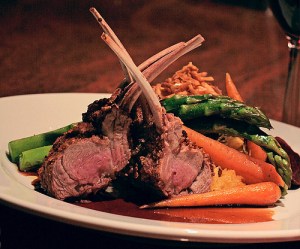
rackoflambMany people shy away from cooking lamb for an array of reasons. Some people don’t like it. Others think it is “fancy” food, and it’s true, certain cuts of lamb can be expensive. Some just may not have a clue how to cook it.

I am a big fan of lamb, especially of the pasture-raised, local, grass-fed variety. The meat is tender and flavorful, providing a nice break from routine. The good news is cooking lamb is no more difficult than preparing any other meat.

Some find lamb gamey in flavor. The best way to remedy this is to trim away the fat before you eat it (but not before you cook it – the fat is essential in cooking lamb), and to provide some vinegar, garlic, or herbs as a counterpoint to cut through the flavor. The gaminess also depends on the cut you choose. Lamb chops and leg of lamb tend to be a bit gamier, which is why so many people pair them with mint sauce. Rack of lamb or rib cuts, on the other hand, are tender and delicious without a hint of game.

Today, I will offer you two ways to prepare lamb. Both are simple and delicious. The “fancy” preparation I save for special occasions – though it is shockingly easy to prepare. The other I will often serve for regular meals.

Leg of Lamb with Roasted Garlic and Shallots

Ingredients

  • 1/2 cup red wine vinegar
  • 1/2 cup white wine vinegar
  • 2 tablespoons chopped fresh rosemary
  • 2 tablespoons dry oregano
  • 3 cloves garlic, pressed through a press
  • Three bulbs garlic (or more)
  • Six shallots (or more)
  • Drizzle olive oil
  • One leg of lamb, butterflied with bone removed
  • Kosher salt and fresh cracked pepper to taste
  • Chopped, fresh rosemary

Method

  1. Pour vinegar, olive oil, rosemary, and oregano into a bowl and whisk. Marinate lamb in this for 4-6 hours.
  2. Preheat the oven to 350 degrees.
  3. Slice the tops off of the heads of garlic and halve the shallots. Place them in a baking dish, cut side up and drizzle with olive oil.
  4. Cover with foil and roast for 90 minutes, until garlic and shallots are soft.
  5. Raise oven temperature to 500 degrees.
  6. Squeeze garlic and shallots out of the dried skins into a bowl and mash together.
  7. Lay lamb out on the counter and season with salt and fresh cracked pepper.
  8. Spread garlic and shallot mixture over surface of butterflied lamb.
  9. Sprinkle with chopped rosemary.
  10. Roll lamb into a roast and tie with butcher’s twine.
  11. Season outside of lamb with salt and pepper.
  12. Place in roasting pan and put in oven for 10 minutes to sear lamb.
  13. Reduce heat to 325 degrees and cook until lamb reaches an internal temperature of 130 degrees, about an hour (or longer for larger cuts. Check temperature regularly).
  14. Allow to rest 20 minutes before carving and serving.

Herb Crusted Rack of Lamb

Ingredients

  • One stick of grass-fed butter, softened
  • 6 cloves of garlic, minced
  • 1/2 cup almond meal
  • 1/4 cup chopped fresh parsley
  • 1/4 cup chopped fresh thyme
  • One rack of lamb, Frenched
  • Kosher salt and fresh cracked black pepper, to taste

Method

  1. Preheat your oven to 425 degrees.
  2. Combine butter, garlic, almond meal, parsley, and thyme to form a loose paste.
  3. Score the fat on the rack of lamb crosswise, avoiding cutting all the way through to the meat.
  4. Season rack of lamb with salt and pepper.
  5. Press bread crumb mixture onto fleshy side of the rack of lamb, covering the meat entirely but leaving bones exposed.
  6. Place in a roasting pain, crust side up.
  7. Roast for about 30 minutes, until a meat thermometer in the thickest part of the lamb reads 135 degrees.
  8. Allow to rest 20 minutes before cutting and serving.

Serve with an earthy Pinot Noir or French Burgundy (made from Pinot Noir), which is a classic food/wine pairing. Favorites include Martinelli Pinot Noir from California or a Domaine Serene Pinot Noir from Oregon.

Italian Burgers

burgerThe three day weekends that sandwich summer in the United States send Americans to the grill in large numbers. One of the most common foods for summer grilling is the humble hamburger. Basic burgers are pretty simple. Shape some ground beef into a patty, add a little seasoning, and grill away.

I enjoy a good, basic hamburger as much as the next guy, but sometimes I want something just a little different. Our local farmer’s market offers up grass fed beef hamburger with a little something extra. They grind beef and bacon into the same batch of meat, so you don’t have to grill the bacon and put it on top. It’s right in the burger! You can find this little bit of sheer genius at the farmer’s market in Olympia, Washington, or you can ask your butcher to give it a try. Ask them to grind sirloin and bacon at a ratio of 75%:25%. It’s pretty tasty stuff, and grills up juicy and delicious. If you happen to be in possession of your own meat grinder (don’t laugh. Kitchen Aids have meat grinding attachments), then you can even do it yourself.

My favorite burger, however, is a departure from the traditional burger. The Italian burger mixes sweet or hot Italian sausage (your choice depending on taste preference), hamburger, pesto mayonnaise, fresh mozzarella, and a rustic bun of some type. I like ciabatta for it, but mini baguettes work well, too.

Italian Burgers

Ingredients

  • 1 lb. each bulk Italian sausage (sweet or hot) and ground beef (20 percent fat keeps it from drying out)
  • 2 egg yolks, slightly beaten
  • 2 cloves of garlic, minced or put through a garlic press
  • 1 cup Italian bread crumbs (or gluten-free bread crumbs plus 1 tablespoon each garlic powder and Italian seasoning)
  • 2 Tbsp. dried oregano
  • Fresh mozzarella (you can find it in the deli section of most grocery stores – fresh mozzarella is packed in liquid), sliced (eliminate for gluten-free)
  • 6 rustic buns such as ciabatta or mini baguettes (or gluten-free buns)
  • 1/2 stick butter
  • 1 clove garlic, minced or pressed through a garlic press
  • 1 container pre-made pesto or homemade (recipe available here)
  • 1 cup mayonnaise (commercial or homemade)

Method

  1. Mix meat, egg yolks, 2 cloves garlic, bread crumbs, and oregano until well combined. I mix with very clean hands to make sure it is well integrated.
  2. Shape burgers to fit your buns and grill or saute until done. Do not overcook.
  3. In the last few minutes of cooking, top with mozzarella until it melts.
  4. While burgers cook, slice buns lengthwise and brush with melted butter containing one clove of minced garlic.
  5. Broil the buns for a few moments to brown (or toss them on the grill for a few moments, cut side down). Alternatively, you can grill your buns and then rub them with a lengthwise sliced clove of garlic to give them a light garlic flavor.
  6. Combine mayonnaise and pesto. Spread the mixture on your buns.
  7. Top with burgers.

These burgers go great with a spicy Zinfandel or Syrah, or you can choose a more traditional Italian wine such as Sangiovese (the grape found in Chianti).

Delicious Things to Do with Shrimp

shrimpShrimp is a great protein to work with. It’s naturally low in fat, easy to handle, and has a sweetness that even people who aren’t fish fanatics enjoy. While it can be a bit expensive, there are ways to allay the cost. For example, purchasing it unpeeled and peeling it yourself is cheaper than purchasing it peeled and deveined.

Most of the shrimp you find in the grocery store is pre-frozen. It holds up well to flash freezing, and I’ve found that often the difference between the bags in the freezer section and the shrimp at the fish counter is they’ve thawed it for you. Once thawed, you need to use it pretty quickly. That’s why I buy the bags and thaw them myself when I’m ready.

Preparing to cook shrimp is easy. Take the bag out of the freezer, leave it sealed, and place it in a sink of cold water. Change the water every 30 minutes until the shrimp is thawed. Next, pull the shrimp out of the bag and give it a quick rinse to remove any remaining ice crystals. Let it drain in a colander for a few minutes, and then peel and devein it. There is a small vein that runs along the back of each shrimp. Just slit the membrane above the vein with a sharp knife, pull it out, and rinse it away.

Shrimp has an affinity for garlic. The bite of the garlic blends beautifully with the sweet, salty flesh of the shrimp. For a quick meal, heat a little olive oil in a pan, toss in the shrimp for a few minutes until they pink, and then toss in garlic for about 30 seconds. Taste for seasoning, and add salt if necessary.

I have several favorite ways to prepare shrimp.

First, I really like grilling it on sugarcane skewers. You can purchase sugar cane swizzle sticks online at Melissa’s Produce and cut them into small skewers. Grilling the shrimp on the sugarcane enhances the sweetness, and only takes a few moments over a hot, oiled grill. As soon as the shrimp turns pink, I glaze them with a rum based glaze containing equal parts rum and sugar, a little dijon mustard, some cinnamon, a dash of vinegar, and turn or two of fresh cracked pepper. I simmer those ingredients together until syrupy and taste for seasoning. Once brushed on the shrimp, I allow it contact with the heat for just about a minute a side.

Baked scampi makes an amazing blend of flavors between shrimp, garlic, and citrus. I marinate my shrimp for a few minutes at room temperature in a mixture of white wine and olive oil at a 2:3 ratio with a little black pepper. While the shrimp marinates, I combine softened butter; bread crumbs (I prefer panko); minced garlic, shallot,  parsley and rosemary; lemon zest, and an egg yolk into a crumbly topping. I spread the topping on the shrimp in a baking dish and bake it at 425 degrees for about 10 minutes until the shrimp pinks. Then, I blast it under the broiler for a minute or two to make the topping crunchy. This is delicious served on angel hair pasta.

If you like Mexican flavors, I make shrimp mojo de ajo with mushrooms. To create the mojo de ajo, place a saucepan with 1 to 2 cups of extra virgin olive oil on the stove top on the lowest temperature you can get it. I actually make the heat even less direct by placing a ring of rolled foil between the bottom of the pan and the burner. Add several cloves of chopped garlic (about one head per cup of oil), and allow it to simmer (but never boil) on the stovetop for an hour or longer. This gently cooks the garlic, making it extremely sweet and flavors the oil. Add a pinch of chipotle for a hit of spice. Saute quartered button mushrooms on the stovetop until they begin to brown and then add the shrimp. Once shrimp begins to pink, add the garlic and olive oil mix to finish cooking. Add a squeeze of lime juice. I serve this with tortillas, rice, pico de gallo, guacamole, and sour cream so people can build their own burritos.  Making homemade guacamole is easy. Chop two soft avocados and add one minced jalapeno (no seeds), 1/2 minced red onion, a few tablespoons of chopped cilantro, a squeeze of lime juice, a pinch of salt, and a minced clove of garlic (or put through the garlic press). Stir, keeping some avocado chunks in the mix, and taste for seasoning.

Wines for shrimp: Shrimp has an affinity for crisp, mineral whites. I really like a good German Riesling with all of these recipes, because the acidity holds up well to the spices and sweetness of the shrimp. Try a Kabinett Riesling, or for something a little sweeter, try a Spatlese.

Seared Scallops with Mushroom Risotto

risottoI may have mentioned before that I have a habit of reverse engineering meals I enjoy in restaurants so I can make them at home. After my reconnaissance missions to wonderful eateries around the area, I head into the kitchen where I play with ingredients until I achieve reasonable facsimile. No restaurant is immune. I’m just as likely to attempt to reverse engineer an Applebee’s quesadilla burger (Tanner’s favorite, and I just made it the other night!) as a fancy schmancy meal from Snidely McSnooty’s.

One of my favorite restaurant meals comes from the Lobster Shop in Tacoma. Our whole family enjoys visiting the restaurant along the water on Ruston Way. When they have it, we almost always select the center cut king crab legs (thank you Sig Hansen!), but when those are not on the menu, I’m all over their weathervane scallops with mushroom risotto. The risotto is creamy and earthy while the perfectly seared scallops are sweet and tender. I’ve made the dish several times at home, adapting it as I go along. While it’s never quite the same twice, I can give you a basic recipe. Try it at home. You’ll be glad you did!

Seared Scallops with Mushroom Risotto

Ingredients

  • 2 packages of dried porcini mushrooms (you can find them in the produce aisle at the grocery, usually right by the regular mushrooms)
  • 7 cups of chicken stock
  • 1/2 stick unsalted butter (or 4T duck fat for dairy-free)
  • 1/4 lb pancetta, chopped
  • One onion, minced
  • 1-1/2 cup Aborio rice
  • 1/2 cup dry white wine
  • 2 to 3 cups assorted fresh mushrooms, sliced ( I like crimini and chanterelles)
  • 3 to 4 Tbsp. dried or chopped fresh thyme
  • Fresh cracked black pepper to taste
  • 1 cup hard Italian cheese (I like parmigiano reggiano or asiago – or omit for dairy-free)
  • 3 Tbsp. heavy cream (omit for dairy-free)
  • Salt to taste
  • One pound of large sea scallops
  • Salt and fresh cracked pepper to taste
  • 2 Tbsp. clarified unsalted butter
  • 1/2 scallop, minced
  • Dash of white wine
  • 1 cube unsalted butter, cut into 1/2″ pieces and chilled.
  • Dash heavy cream

Method:

  1. Heat chicken stock to boiling. Add dried mushrooms and set aside to soak for about two hours.
  2. Remove mushrooms from the stock and chop. Set aside. Strain dregs out of stock and reheat the stock on stovetop to simmering.
  3. Heat a large, heavy pot over medium heat. Melt butter (or duck fat) in pot until it begins to bubble.
  4. Add pancetta and cook until crisp, stirring occasionally.
  5. Add the onion, and saute until it softens, about two to three minutes.
  6. Add rice and saute, stirring constantly to toast rice and coat it with oil, about two minutes.
  7. Add wine, stirring constantly.
  8. Add mushrooms and thyme after the rice absorbs the liquid from the wine, and immediately begin adding stock.
  9. Add stock about one ladleful at a time, stirring constantly. Constant stirring will help develop a creamy texture, which is especially important if you are omitting cheese and butter. As the rice absorbs the liquid, add another ladleful. After about 15 to 20 minutes, the rice should be el dente. You should have about one cup of stock left.
  10. Stir in cheese until melted, and then add 3 Tbsp. heavy cream (omit this step for dairy free). Stir to combine. Taste for seasoning, and add salt and pepper as needed.
  11. Set scallops to drain in a colander.
  12. Heat a 12″ saute pan over medium-high heat on the stovetop. Add cold clarified butter or duck fat to the hot pan, and allow it to heat to bubbling.
  13. Meanwhile, pat scallops m completely dry with a paper towel and season lightly with salt and pepper.
  14. Place scallops in the pan and do not move or touch them. Do not overcrowd the pan, or scallops will not sear. If you must, cook them in two batches.
  15. After scallops have been in contact with the pan without moving for about two minutes, use tongs to peek at the bottom side of one. If it is browned and caramelized, then flip the scallops. Sear the other side.
  16. Remove scallops from the pan and place them on a plate, tented with foil.
  17. Return the pan to medium heat and pour the remaining stock into the pan, carefully scraping the browned bits off of the bottom of the pan with a wooden spoon. Add a dash of white wine.
  18. Add shallots, and allow to simmer until liquid reduces by about half or a little more.
  19. Whisk in one of the 1/2 inch pieces of butter. When it is fully incorporated, whisk in a few more. Continue to whisk butter in a few pieces at a time until it is all added (omit this step for dairy-free and instead reduce stock further until desired thickness).
  20. Whisk in a dash of heavy cream (omit this step for dairy free).
  21. Spoon risotto onto the plate. Top with sea scallops, and spoon the pan sauce over the top. Serve immediately.

This is good garnished with steamed asparagus, or serve it with a simply dressed salad of mache or spring greens. For a wine, have an earthy Pinot Noir, which pairs perfectly with the mushrooms and sets off the sweetness of the scallops nicely. I enjoy Oregon Pinot Noirs. Try one of Argyle Winery’s Spirit House Pinot Noir or their very affordable Willamette Valley Pinot Noir.

Perfect Steakhouse Steak

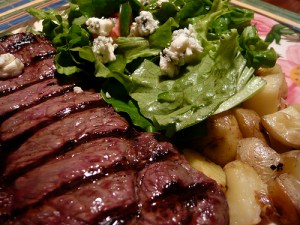
Steak dinnerHere’s the thing about cooking steak. Sure, it tastes pretty good most of the time no matter what you do to it, but there are methods you can use that render it otherworldly. It’s the reason steakhouses are so popular. They have equipment that allows them to cook the steak to the perfect level of doneness, with a caramelized brown crust on the outside and the perfect juicy, pink interior.

Many people find these results difficult to achieve at home. I started experimenting with a method Cook’s Illustrated recommended for cooking filet mignon and found it transfers well to all steaks, especially thick ones.

I am a huge fan of Cook’s Illustrated. Even if you never cook one of their recipes, reading their magazine and cookbooks from cover to cover will provide you with an amazing cooking education.

What Cook’s Illustrated recommends to make perfect filet mignon is to par-cook it at a low temperature oven and finish it with a sear on a very hot stovetop. For a 1 to 1-1/2 ” thick filet mignon, 20 minutes at about 275° F does the trick. For other cuts like thick cut rib-eyes or porterhouses, you will need between 30 and 45 minutes depending on the size and thickness of the steak. When you remove them from the oven, they should be slightly browned on the outside but still have a distinctly pinkish cast. A quick touch to the steak should be quite soft and yielding, but not squishy.

I like filet mignon for its tenderness, but I am not a huge fan of its flavor. Because of this, I feel it is a steak ripe for a good pan sauce. I like to make mine with a tawny Port-tarragon sauce.

Filet Mignon with Port-Tarragon Sauce

Ingredients

  • 2 to 4 1-1/2″ to 2″ thick filet mignon steaks
  • Salt and fresh cracked black pepper to taste
  • 3 Tbsp. clarified butter
  • 1/2 to 1 shallot, finely minced
  • 1/4 to  1/2 cup tawny Port
  • 1 stick of unsalted butter, cut into 1″ pieces and chilled so it is very cold
  • 2 to 4 Tbsp. chopped fresh tarragon

Method

  1. Preheat oven to 275° F.
  2. Place steaks on a rack placed over a baking sheet and season with salt and fresh cracked black pepper.
  3. Cook steaks for 20 – 25 minutes.
  4. Heat butter in a saute pan over high heat. If you like, you can also use grapeseed oil. Though it lacks the flavor of butter, it has a high smoke point.
  5. Saute steaks for two minutes on each side without moving them until it is time to flip them.
  6. Remove steaks from pan and set aside, tented with foil.
  7. Reduce heat to medium and deglaze the pan with Tawny port, taking care to scrape all of the browned bits off the bottom with a wooden spoon.
  8. Add shallot and allow to simmer until liquid is reduced and syrupy. It should coat the back of a spoon.
  9. Whisk in butter, staring with one piece and allowing it to fully incorporate before adding a second. Add 3-4 pieces of butter separately, and then add a few at a time, whisking continuously, until butter is incorporated and sauce is thick and creamy.
  10. Remove from heat and stir in the tarragon.
  11. Spoon over steaks, and serve immediately.

Serve with a nicely aged Cabernet Sauvignon or Bordeaux blend wine. A young Cab may be a bit too heavy for the delicate sauce. A personal favorite is Spring Valley Uriah, a Washington State wine that incorporates a variety of Bordeaux varietals in a Merlot base. Januik Winery, another Washington State winery, also makes consistently good Cabernet Sauvignon wines.

Smoked Baby Back Ribs

ribsby Karen Frazier

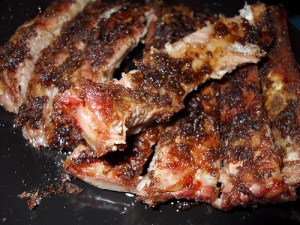
Everyone has their own way of making ribs, and some of them are pretty darn good. I enjoy my ribs tender, juicy and smoky with a hit of heat. At worst, ribs come off of the barbecue dried and stringy. When well done, however, they can be a thing of beauty.

In our house, we take our ribs very seriously. We begin the journey to perfect ribs the night before, and when rib day dawns, we plan to be home for at least five hours, carefully tending the ribs as they cook low and slow on a smoky gas grill.

If you’re in a hurry, don’t try this at home. If, however, you’re willing to wait for a good thing, then by all means give this rib grilling process a try. You’ll be very glad you did.

Step One: Choosing Your Ribs

You can use this process with either baby back or spare ribs. I prefer the baby back, which tend to be more flavorful and tender than the spare ribs. Find the meatiest racks you can – some meat cutters really skimp. Watch for bones showing through the meat. If you see them, you just may have skimpy ribs. The place with the meatiest baby backs I’ve come across? Costco. I plan for a half rack per female, a 1/4 rack per kid (except teens), and a full rack per teen or man. I usually have leftovers, but these ribs reheat well.

Step Two: Brining – The Night Before

Brining is the best thing to happen to grilled meat since the invention of barbecue sauce. It adds moisture and flavor into the meat, helping to prevent drying as you cook them. To make a brine, I add 1/2 cup of kosher salt (or 1/4 cup table salt) and 1/4 cup of Swerve sweetener per gallon of water. Find a large container or a cooler and fill with as much brine as you need to soak your ribs. Brine them for one hour the night before you plan to cook them.

Step Three: Rubbing – The Night Before

Remove ribs them from the brine, and dry them off. Then, use generous amounts of rub on both sides of the ribs. Wrap the ribs in plastic and refrigerate overnight.

Many commercial rib rubs exist. I don’t like them. They tend to be over-salty and not nearly as flavorful as a rub you make yourself. While my rib rub differs based on mood, I have a basic formula I follow using dried herbs and spices.

Two tablespoons each:

Cumin
Salt
Oregano
Chili powder
One tablespoon each:
Ground black pepper
Ground white pepper
Four tablespoons each:
Swerve sweetener
Sweet paprika
One teaspoon each:
Cayenne
You can adjust your proportions, double it, triple it – whatever you need to do. Plan on about 1/4 cup of rib rub for each rack.

Step Four: Smoke – The Night Before

If you use a regular grill, smoke preparation also begins the night before. Choose wood chips or chunks you like, and set them to soak overnight. I prefer chuks to chips for their ability to smoke longer, and applewood for its subtle flavors. You probably have a favorite. I don’t recommend hickory, which I believe is too aggressive at asserting its own flavor into the ribs.

We have a smoker, which we use to smoke our ribs. We keep it low and slow – about 275 for about four or five hours.

Step Five: Barbecue Prep – Rib Day

Congratulations! You’ve made it to rib day and you are mere hours away from the best ribs of your life. For a gas grill, set it on the lowest temperature possible, and close the lid. You want to heat it to a consistent temperature of about 275 degrees, where it should remain for most of the day. The key to ribs is low and slow. Once the grill reaches a temperature of 275 degrees, turn off one of the burners, leaving the other on low. This should allow you to keep the ribs at consistent temperature.
Make foil packets in which you place your wood chips. We like to set two or three foil packets around the grill for full saturation. Place slits in the top for the smoke to escape, and grant easy access so you can add more wood chips as needed. Place the packets underneath the grill plates and allow them to heat as you preheat your grill.

For a smoker: Turn it on to 275. Bam! You’re done.

Step Six: Cook the Ribs

If you own a smoker, this section is pretty short: smoke your ribs, low and slow, at about 250-275 until they fall off the bone (about 4-6 hours). If you own a grill, read on.

If you own rib racks, use them. This keeps the ribs from direct contact with the grill and facilitates the development of tender, fall-off-the-bone meat. You can find them at many kitchen speciality stores, and they are quite inexpensive. Otherwise, place ribs on the part of the grill where the burner has been turned off. You are going to use indirect heat to grill your ribs.

Close the lid and walk away. Every 30 minutes, check the temperature of the ribs to make sure they are still grilling low, and rotate the position of the ribs so they cook evenly. Check smoke packets to see if supplies need to be replenished, as well. Have a beer and wait.

At between 3-1/2 and 5 hours, the ribs should start to get really tender. Poke them with a fork, or give the end of a rack a small twist with tongs and see if it is falling off the bone. When it is, they’re done.
We usually stop here and eat our ribs; however, I know many people really, really, really like barbecue sauce or glaze. If you’ve carefully tended your smoke and barbecue temperature, however, these ribs will not need them. They should be smoky, sweet, and juicy.

Still, if you absolutely must, proceed to step seven.

Step Seven (Optional): Glaze the Ribs

I actually love my ribs with just the dry rub and no glaze. If you brine them and keep them on low and slow, they will be tender and moist.

If you like your ribs a little wetter, then glaze them. You could use commercial barbecue sauce, although what a waste of perfectly good ribs that would be. You could also make your own barbecue sauce, as I outlined here. However, I believe even a homemade tomato-based barbecue sauce will overwhelm the sweet smokiness of these  ribs. Therefore, if your ribs must be covered in something other than deliciousness, I recommend making a glaze.

How do you make a glaze? Add:

  • A base liquid (chicken stock, wine, beer, cola, or something)
  • Something sweet (stevia, Swerve sweetener, honey)
  • Acid (balsamic vinegar, red wine vinegar, lemon juice, etc.)
  • Salt
  • A dash of heat (cayenne, jalapenos, red pepper flakes, hot sauce)

Simmer it altogether on the stove until it becomes syrupy, tasting to adjust flavor. Brush the glaze on the ribs and stick them under the broiler for a few minutes to set the glaze.