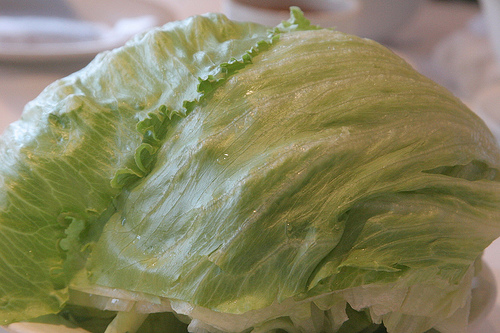
Lettuce Wraps

lettuce wrap

The other day at the grocery store, I came across chicken thighs for $1.29 per pound. The catch was that you had to purchase a huge tray of them – more than enough to feed my family twice over. Still, it made sense to buy them since a smaller tray not on special cost exactly the same as the large tray.

Today, Jim smoked the thighs on the smoker for two hours at 275 degrees. In the last 30 minutes, he glazed them with a reduction of a cup of pure maple syrup, the zest and juice of an orange, a couple of tablespoons of gluten-free soy sauce, and a teaspoon of sriracha. As I knew it would, we had about half of the thighs left when we were done with dinner.

No worries – I have a plan. Tomorrow I will shred the thighs, toss them in the remaining sauce, and make lettuce wraps. Here’s my recipe.

Lettuce Wraps

  • Large leaves from one head of lettuce
  • 1 tablespoon oil
  • 1 cup mushrooms, chopped chopped
  • 1/2 onion, minced
  • 1 clove garlic, minced
  • Meat and skin from six smoked chicken thighs, cut into chunks.
  • Sauce made from a reduction of 1 cup of maple syrup, zest and juice of one orange, 2 T gluten-free soy sauce (or coconut amines), and 1/2 to 1 teaspoon of sriracha (or red pepper flakes) (simmer until syrupy)
  • Shirataki angel hair noodles, rinsed and warmed in hot water, then drained (or some other gluten free noodle) (optional)
  • 2 scallions, julienned
  • 2 carrots, julienned
  • 1 cup bean sprouts
  • Peanut sauce (recipe follows)
  1. Heat oil in a large sauté pan until shimmering.
  2. Add mushrooms and cook to brown, about six minutes.
  3. Add onions and continue to cook until transparent.
  4. Add garlic and cook until it releases its scent, about 30 seconds.
  5. Add chicken and half of the maple syrup sauce and simmer until chicken is heated through.
  6. Remove from heat and set aside.
  7. Rinse shirataki noodles (or cook some other gluten free noodle) under water in a wire colander.
  8. Place colander with noodles in a bowl of hot water and let sit to warm noodles until you are ready to serve. Drain well before serving.
  9. To serve, put chicken and mushrooms on a plate, along with portions of noodles, scallions, carrots, and bean sprouts. Put 2-3 lettuce leaves on each plate. Serve remaining maple syrup reduction and peanut sauce on the side.
  10. To assemble, put portions of chicken, noodles, vegetables, and sauce in the center of lettuce leaves and roll to eat.

Quick Peanut Sauce

In a blender or food processor mix until well combined:

  • 1-1/2 cups of peanut butter (or almond butter for paleo)
  • 3 tablespoons gluten-free soy sauce (or coconut amines for paleo)
  • Juice from one lime
  • 1 tsp to 1 tablespoon sriracha (to taste or omit all together)
  • 1 tablespoon grated gingerroot
  • 1 tablespoon sesame oil
  • 2 teaspoons honey

Scotch Eggs

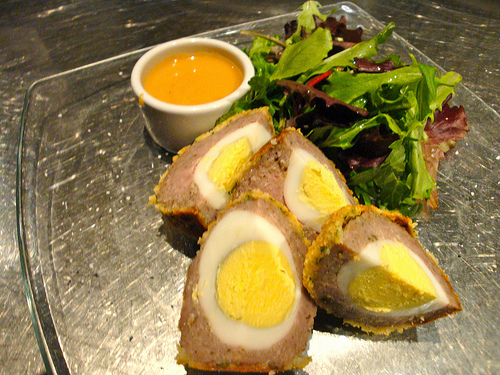
Scotch EggsLove breakfast foods but get tired of making the same scrambled eggs and sausages? Try a Scotch egg. They’re easy to make and can be served with fruit or oven potatoes for a filling and simple meal.

Never had a Scotch egg? Essentially, it’s a boiled egg wrapped in breakfast sausage and then breaded and deep fried. It’s easy to make gluten-free, and many people enjoy the eggs with mustard.

Scotch Eggs

  • 6 organic, very fresh eggs
  • 1 pound organic bulk gluten-free breakfast sausage
  • 1 cup almond meal
  • 1 teaspoon dried thyme
  • 1/2 teaspoon black pepper
  • 1 tablespoon sea salt
  • 1 teaspoon mustard powder
  • 1/4 cup duck fat or another paleo-friendly fat
  1. Preheat your oven to 350 degrees. Line a baking sheet with parchment.
  2. Place four eggs in a saucepan and cover them with cold water. Place the pan on the stove and bring to a boil.
  3. As soon as the water boils, remove from heat and cover. Allow to sit off the heat for four minutes.
  4. Plunge eggs in a bowl of ice water. Refrigerate and allow to cool completely.
  5. Carefully peel eggs.
  6. Pat sausage into four thin patties.
  7. Place an egg in the center of each patty, and wrap patty around the egg, sealing carefully.
  8. In a small bowl, combine almond meal, thyme, pepper, salt, and mustard powder.
  9. Whisk two remaining eggs in a small bowl.
  10. Dip each sausage/egg ball into egg wash and then into the almond meal mixture.
  11. In a large pot, heat the duck fat over medium-high until it shimmers.
  12. Add the eggs and cook until browned on all sides, about four minutes per side.
  13. Put the eggs on the prepared baking sheet and transfer them to the preheated oven. Cook until sausage is cooked through, ten to 15 minutes more.

Maple-Orange Glazed Pork Shoulder Roast

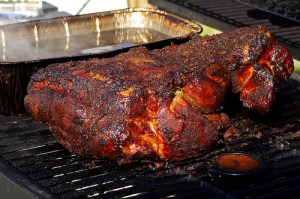
porkshoulderJim got a smoker for Christmas, so right now he’s totally into smoked meat. I, on the other hand, am getting tired of it. Still, we’re having a New Year’s Eve dinner gathering of friends, so we decided to break out the smoker. I’m adapting a recipe I enjoy making either in the oven or on the grill to the smoker – Jim will smoke it low and slow for several hours. If you’d like to cook it in the oven, then I recommend roasting at 325 for about an hour per pound. For the brine:

  • 8 quarts of cold water
  • 1 cup sea salt

For the roast:

  • 5-6 pound pork shoulder roast
  • Salt and fresh cracked black pepper to taste

For the glaze

  • 1 cup maple syrup
  • 3 tablespoons coconut aminos
  • 3 tablespoons whiskey
  • Zest of one orange
  • Juice from two oranges
  • 1-2 tablespoons sriracha or to taste (red pepper flakes for paleo)
  1. Combine water, brown sugar, and salt in a cooler, mixing well.
  2. Add pork shoulder and allow roast to brine for about 5-6 hours.
  3. Remove roast from brine and rinse. Pat dry with paper towels.
  4. Season pork with salt and pepper. Smoke at about 225 degrees, one hour per pound.
  5. While roast smokes, combine syrup, soy sauce, whiskey, orange zest, orange juice, and sriracha in a small saucepan.
  6. Simmer the glaze until syrupy.
  7. Begin brushing glaze onto meat in about hour #3 of cooking, and brush glaze every 15 minutes.
  8. Cook meat to an internal temperature of 190 degrees.
  9. Remove from oven and allow to sit, tented with foil, for 30 minutes, before slicing.

Warm Spinach Salad

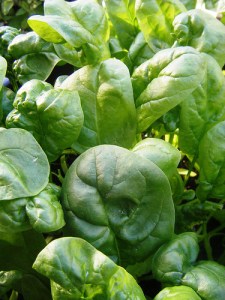
baby spinachI have a certain person in my family who despises green food, and it’s not me or one of the kids. Still, I can get him to eat his spinach when I make this warm spinach salad. You can vary it in a number of ways, which I’ll include after the recipe. For the salad, I prefer baby spinach, which is more tender and flavorful; however, you can use other types of spinach, as well. The recipe below serves four.

  • 8 ounces of baby spinach
  • 2 Tablespoons duck fat
  • 5 slices thick cut bacon, chopped
  • 2 shallots, sliced thinly
  • 1/4 cup red wine vinegar (or raw apple cider vinegar)
  • Fresh cracked black pepper, to taste
  1. Wash and drain baby spinach. Place dry spinach in a large, heatproof bowl.
  2. Heat olive oil in pan and cook chopped bacon until crispy.
  3. Remove bacon from fat with a slotted spoon and put in bowl with spinach.
  4. Add shallots and cook until soft.
  5. Add red wine vinegar, scraping browned bits off bottom of pan.
  6. Pour dressing from pan over the top of spinach and bacon and toss. The bacon will wilt slightly.
  7. Top with fresh pepper and serve immediately.

Variations:

  • Change vinegar to sherry vinegar or balsamic
  • Add pine nuts
  • Add zest from one orange to dressing when you add sugar

Shrimp Tequila Chowder

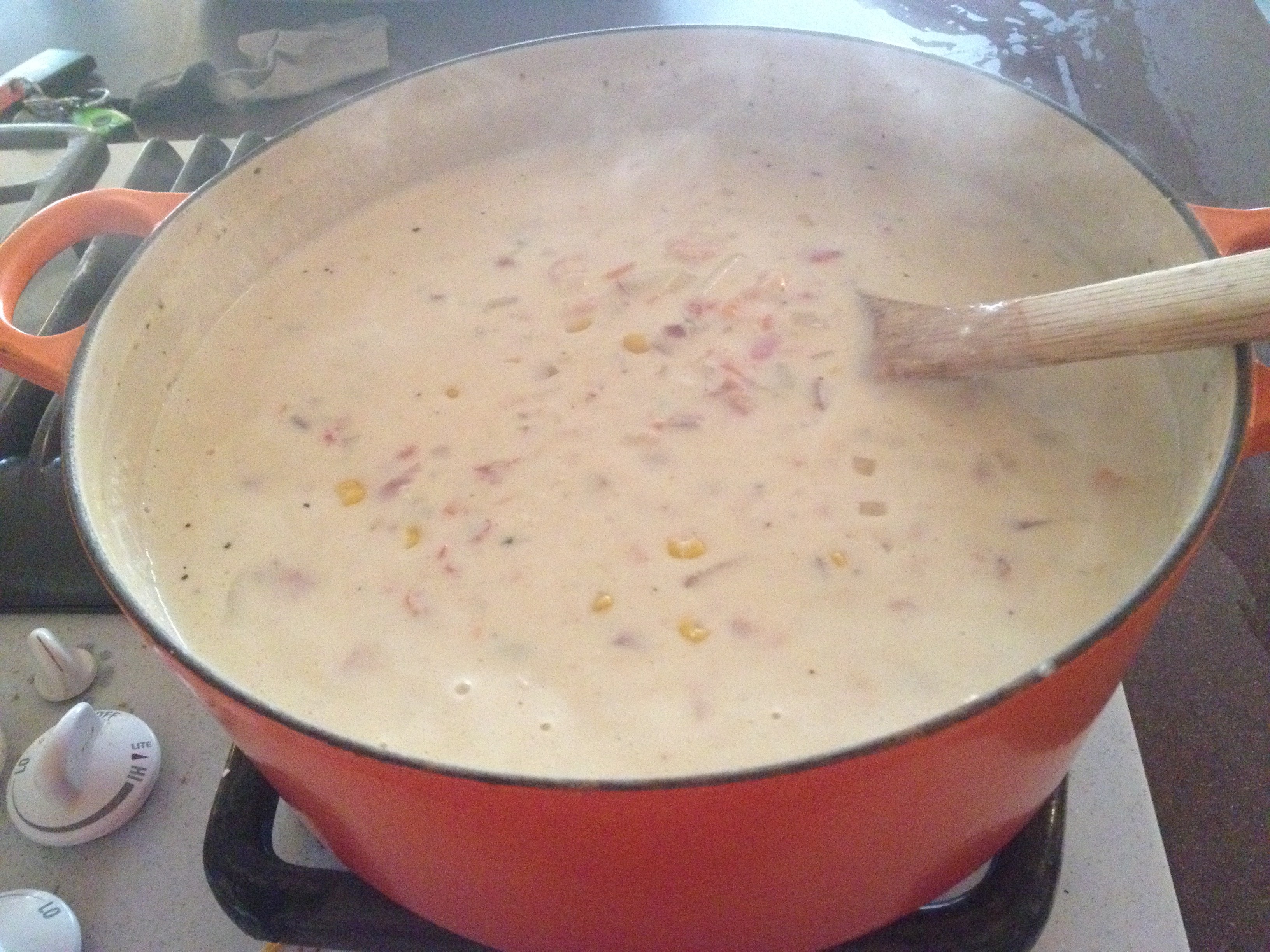
shrimp tequila chowderI reverse engineered this from Azteca Restaurants Shrimp Diablo Chowder. I think it’s pretty close, and very delicious!

Shrimp Tequila Chowder

  • 1 lb shrimp, peeled, deveined, tails removed, and cut into fourths
  • 1/2 cup tequila, divided
  • Juice of 2 limes
  • 3 cloves garlic, put through a garlic press
  • 3 tablespoons oil or butter
  • One onion, diced
  • 1 jalapeno, seeded and minced
  • 1 carrot, peeled and diced
  • 3 tablespoons flour (use sweet rice flour for gluten-free)
  • 4 cups gluten-free chicken stock
  • 1 can Rotelle (tomatoes and peppers)
  • 1 can crisp summer corn, drained
  • 1 lb red potatoes, cubed
  • 2 cups heavy cream
  • 1/4 teaspoon chipoltle
  • 1/2 teaspoon dried cumin
  • 3 tablespoons corn starch, dissolved into 3 tablespoons chicken stock
  • Salt and fresh cracked pepper to taste
  1. Combine 1/4 cup tequila, lime juice, and garlic in a small bowl. Toss with shrimp and set aside.
  2. Heat oil or butter in a soup pot.
  3. Add onions, jalapeno, and carrots. Saute until carrots are soft, about 5 minutes.
  4. Add flour and stir until raw flour flavor is gone – about four minutes.
  5. Stir in remaining 1/4 cup tequila, scraping up any bits on bottom of pan.
  6. Add chicken stock, Rotelle, corn, potatoes, cream, cumin, and chipoltle.
  7. Bring to a simmer and cook until potatoes are tender.
  8. Stir in corn starch slurry.
  9. Remove shrimp from marinade and stir into soup.
  10. Taste for seasoning and add salt, pepper, and additional chipoltle to taste.

Here’s the chowder with a paleo makeover (although tequila is not technically paleo). If you’re watching carbs, this version has about 12 grams of carbs per serving (it serves 8). Leave out the celeriac and it has about 10 grams of carbs per serving.

  • 1 lb shrimp, peeled, deveined, tails removed, and cut into fourths
  • 1/2 cup tequila, divided
  • Juice of 2 limes
  • 3 cloves garlic, put through a garlic press
  • 3 tablespoons fat (I use duck fat)
  • 1 pound grass fed chorizo (I use bison chorizo from US Wellness Meats)
  • One onion, diced
  • 1 jalapeno, seeded and minced
  • 1 carrot, peeled and diced
  • 4 cups homemade chicken bone broth
  • 1 can organic, sugar-free tomatoes and peppers (or organic canned crushed tomatoes plus 1 small can organic diced jalapeños)
  • 1 lb celeriac, peeled and cubed
  • 1/4 teaspoon chipoltle
  • 1/2 teaspoon dried cumin
  • 1/4 cup arrowroot powder, dissolved into 1/4 cup water
  • Salt and fresh cracked pepper to taste
  1. Combine 1/4 cup tequila, lime juice, and garlic in a small bowl. Toss with shrimp and set aside.
  2. Heat fat in a soup pot.
  3. Add chorizo and cook until it is browned. Remove it from the fat with a slotted spoon and set it aside on a platter.
  4. Cook the onions, jalapeno, and carrots in the fat that remains in the pan. Saute until carrots are soft, about 5 minutes.
  5. Stir in the remaining 1/4 cup tequila, scraping up any bits on bottom of pan.
  6. Add chicken broth, tomatoes and peppers, celeriac, cumin, and chipoltle.
  7. Bring to a simmer and cook until celeriac is tender.
  8. Stir in the arrowroot slurry.
  9. Remove shrimp from marinade and stir into soup. Return the chorizo to the pot.
  10. Taste for seasoning and add salt, pepper, and additional chipoltle to taste.

Guacamole

guacEver since I was a kid, I have loved avocados. My favorite way to eat them is naked in all their glory, sliced. They are creamy, sweet, and a little grassy with a soft, smooth texture. This past weekend, I mixed up a batch of my second favorite way to eat avocados for a Super Bowl party.

Learning to make great guacamole is not difficult. Many people have turned to premade seasoning packets, but to quote my son, “Those are no good.”

While it seems like opening a spice packet and mixing it in to a bunch of smooshed avocados is, indeed, easier than making it homemade, it really isn’t so much less time consuming that it makes up for the vast difference in flavor between what Tanner calls, “the homemade stuff and the fake stuff.”

Before I give you my guacamole recipe, here are some tips:

  • Hass avocados make the best guacamole. Those are the ones with the dark green, pebbly skin.
  • Avocados should be heavy, but when you place a gentle pressure with the thumb, the flesh underneath should yield but not sink.
  • The skin should be dark green – almost black, but not wrinkled or shrunken. This chart shows you the differences between unripe, perfect, and overripe.
  • I include jalapenos or Anaheim peppers in my guacamole. Anaheim are slightly milder than jalapeno, and both can be made milder by carefully removing the inner ribs and seeds.
  • I like to roast my peppers before putting them in the guacamole, which makes them milder and adds complexity. Roasting is easy. Brush the outside of the peppers with a little olive oil and place under a broiler. As skin browns, turn the peppers a quarter turn and then another and another until the entire pepper is browned. Cool, and then peel the skin and remove seeds and ribs.
  • For a smokier guacamole, replace your peppers with minced chipotle chile.
  • Carefully clean and dry the cilantro. Wet cilantro can make your finished product watery. Remove as many of the stems as possible before chopping.
  • Mix up the guacamole a few hours ahead and let rest in the refrigerator to allow flavors to blend. To keep the guacamole bright green, place plastic wrap directly on its surface, and then cover the entire bowl with plastic.
  • I like to leave my guacamole a little chunky. It makes it far more interesting with chunks of veggies and avocado. I semi-mash about half to 3/4 of the avocados, leaving a few lumps, and then I cube the rest and toss them in at the end.
  • Many people like tomatoes in their guacamole. I don’t add them. I think it makes the guacamole too watery, and I only like tomatoes when they are in season. If you want to add them, go for it, but remove the inner juice and seeds before adding to avoid watering down your finished product.

Here’s the recipe.

Guacamole

  • 2 Hass avocados, peeled and pitted
  • 1/4 of a red onion, finely minced
  • 1/2 of a bunch of cilantro, washed with stems removed, and finely chopped
  • 1-2 peppers (jalapeno or Anaheim), seeds removed and finely minced
  • 1 clove garlic, pressed through a garlic press
  • Juice of 1 lime
  • Sea salt to taste
  1. Place avocados, onion, cilantro, peppers and garlic in a bowl and mix to combine, lightly mashing with a fork to the desired consistency.
  2. Squeeze lime juice over the top and mix in thoroughly.
  3. Add a little salt and taste for seasoning. Continue to add salt a little at a time, tasting after each addition until you reach the desired level.

Roasted Poultry Stock

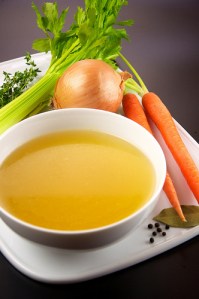
stockHow to Make Roasted Poultry Stock

  1. Preheat your oven to 450.
  2. Arrange about four pounds of turkey and chicken wings in a roasting pan in a single layer, and roast for one hour.
  3. Remove the poultry from the pan and add one cup of water to the pan, scraping to remove all of the flavorful browned bits from the bottom.
  4. In a large stockpot, saute two ribs of celery, two carrots, and two onions roughly chopped in a few tablespoons of oil until tender. Add poultry, water from roasting pan, and about one gallon of water to the pot and bring to a simmer.
  5. Meanwhile, wrap 1/2 teaspoon of peppercorns, several sprigs of parsley, several sage leaves, two bay leaves, and several sprigs of fresh thyme in cheesecloth and tie with kitchen twine. Drop it in the simmering water.
  6. Simmer, uncovered, for three hours. Allow to cool and strain out solids. Store in the refrigerator in a tightly sealed container.

You can use homemade stock in gravy, soups, sauces, and stews. It has much better flavor than canned broths.

Ginger Maple Applesauce

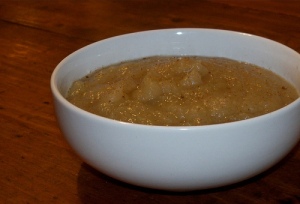
Homemade ApplesauceYesterday was the perfect fall morning at the Olympia farmers’ market. There was a crisp chill in the air, which significantly reduced crowd size. Still, given the offerings available this time of year at the market, the chill was worth it. Along with a dizzying array of organic apples from Washington’s bumper apple crops, there were large ears of corn, juicy plums, chanterelles, squash, pole beans, red and white raspberries, concord grapes, and many others. One of my favorite types of produce from fall in Washington State is pluots. A cross between a plum and an apricot, the pluot is like a juicy, sweet plum. If you come across these tasty stone fruit, give them a try. I think you’ll love them.

As far as I am concerned, however, the star of the show for fall is apples. I love apple season with a passion approaching my love for writing. In fact, as soon as the days grow shorter and the leaves start to change color, I begin cooking with apples. The dogs love it. They gather at my feet as I peel and chop, accepting tiny slices of apple they chew with great gusto. (Tip – never give your pets apple seeds, which contain traces of cyanide.) At the market yesterday, the variety was amazing. Braeburn, Fuji, Jazz, Lady Alice, Gravenstein, Pink Lady, Rose, Honeycrisp…it’s an apple lovers paradise.

I enjoy baking apple pies, crisps, cakes, and turnovers. I also like making a simple applesauce, which I will be making today from the organic Honeycrisp, Pink Lady, and Jazz apples I bought yesterday.

When cooking with apples, I take a minimalist approach. I like to let the flavors of the fruit shine through. This doesn’t mean lots of sugar or heavy spices. Instead I use just enough to enhance the natural flavors of the apples instead of overpowering them.  Some of my favorite spices to use include fresh grated nutmeg, cinnamon, allspice, cloves, and fresh grated ginger. I also usually use just a touch of lemon zest and lemon juice to prevent the apples from turning brown and bring out the tart notes.

Another trick for baking with apples is using a few different varieties in one dish. For instance, in my pies I often mix Granny Smith and Pink Lady apples. In fact, Pink Lady apples are my favorite eating and baking apples, followed closely by Honeycrisp.

Today, I will be making a simple applesauce. Recipe below.

Ginger Maple Applesauce

  • 4 Pink Lady apples – Peeled, cored, and chopped
  • 4 Honeycrisp apples,  peeled, cored, and chopped
  • 4 Jazz apples, peeled, cored, and chopped
  • 1 cup water
  • 1/2 cup pure maple syrup
  • 2 T. fresh ginger root, grated
  1. Place apples and water in a large pot and simmer on the stove top, covered until apples begin to break down, about 15 to 20 minutes.
  2. Remove from heat and stir, mashing apples together.
  3. Stir in ginger root and maple syrup.
  4. If you prefer a smooth applesauce instead of a rustic one, cool and process in a food processor or food mill.

Steamer Clams

clamsEven though school has started, summer is not quite over. Here in the Pacific Northwest, late summer and early fall offer up gorgeous weather that entices you outdoors before the rainy season begins again.

One of my favorite seasonal dishes for this time of year is steamer clams. While many people head to the beach at low tide to dig for these local delicacies, I typically buy mine at the farmers’ market where someone has already done the majority of the work for me. You might also be able to find small manila clams at the grocery store in the seafood section.

You can purchase steamer clams several hours ahead of cooking and keep them refrigerated or on ice until you use them. Always use steamer clams the same day, and make sure your source is providing the freshest clams possible.

I live in a household that loves clams. Resultantly, I buy them in bulk when I plan to cook them for the main meal. Jim and Tanner by themselves can put down about five pounds of the bivalves and still look around for something else to eat. As an appetizer, however, you can cook fewer.

I prefer making the clams in a simple wine and butter broth redolent with herbs. It not only provides tremendous flavor to the clams, but it also serves as a delicious base for dipping crusty bread to supplement the meal. To round out our traditional late summer supper of clams and bread, I include sweet corn on the cob, a simple green salad with whatever seasonal veggies I have around and a crisp white wine or beer.

Cooking steamer clams isn’t so much a recipe as a series of steps I follow. I don’t really measure – I just toss in ingredients.

How to Cook Steamer Clams

Ingredients

  • Grass-fed butter
  • Chopped shallots or sweet onions
  • Chopped fennel bulb
  • Clams
  • Dry white wine
  • Fresh lemon juice and zest
  • Fresh cracked pepper
  • Salt to taste
  • Chopped fresh tarragon

Method

  1. On the stovetop, melt butter in a large pot.
  2. Saute shallots or onions and fennel in butter until soft.
  3. Add clams, white wine, juice of one lemon, zest from half the lemon, and pepper. Stir to combine.
  4. Cover the pot and allow to steam, stirring occasionally, until all of the clams have opened. Discard unopened clams.
  5. Taste for seasoning and stir in tarragon.

Variation
Replace fennel with chopped garlic and tarragon with chopped fresh basil. Stir in fresh chopped tomatoes with the basil.

Lamb Recipes

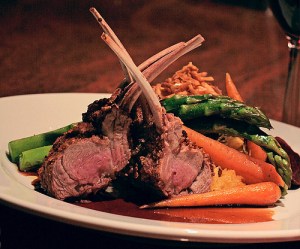
rackoflambMany people shy away from cooking lamb for an array of reasons. Some people don’t like it. Others think it is “fancy” food, and it’s true, certain cuts of lamb can be expensive. Some just may not have a clue how to cook it.

I am a big fan of lamb, especially of the pasture-raised, local, grass-fed variety. The meat is tender and flavorful, providing a nice break from routine. The good news is cooking lamb is no more difficult than preparing any other meat.

Some find lamb gamey in flavor. The best way to remedy this is to trim away the fat before you eat it (but not before you cook it – the fat is essential in cooking lamb), and to provide some vinegar, garlic, or herbs as a counterpoint to cut through the flavor. The gaminess also depends on the cut you choose. Lamb chops and leg of lamb tend to be a bit gamier, which is why so many people pair them with mint sauce. Rack of lamb or rib cuts, on the other hand, are tender and delicious without a hint of game.

Today, I will offer you two ways to prepare lamb. Both are simple and delicious. The “fancy” preparation I save for special occasions – though it is shockingly easy to prepare. The other I will often serve for regular meals.

Leg of Lamb with Roasted Garlic and Shallots

Ingredients

  • 1/2 cup red wine vinegar
  • 1/2 cup white wine vinegar
  • 2 tablespoons chopped fresh rosemary
  • 2 tablespoons dry oregano
  • 3 cloves garlic, pressed through a press
  • Three bulbs garlic (or more)
  • Six shallots (or more)
  • Drizzle olive oil
  • One leg of lamb, butterflied with bone removed
  • Kosher salt and fresh cracked pepper to taste
  • Chopped, fresh rosemary

Method

  1. Pour vinegar, olive oil, rosemary, and oregano into a bowl and whisk. Marinate lamb in this for 4-6 hours.
  2. Preheat the oven to 350 degrees.
  3. Slice the tops off of the heads of garlic and halve the shallots. Place them in a baking dish, cut side up and drizzle with olive oil.
  4. Cover with foil and roast for 90 minutes, until garlic and shallots are soft.
  5. Raise oven temperature to 500 degrees.
  6. Squeeze garlic and shallots out of the dried skins into a bowl and mash together.
  7. Lay lamb out on the counter and season with salt and fresh cracked pepper.
  8. Spread garlic and shallot mixture over surface of butterflied lamb.
  9. Sprinkle with chopped rosemary.
  10. Roll lamb into a roast and tie with butcher’s twine.
  11. Season outside of lamb with salt and pepper.
  12. Place in roasting pan and put in oven for 10 minutes to sear lamb.
  13. Reduce heat to 325 degrees and cook until lamb reaches an internal temperature of 130 degrees, about an hour (or longer for larger cuts. Check temperature regularly).
  14. Allow to rest 20 minutes before carving and serving.

Herb Crusted Rack of Lamb

Ingredients

  • One stick of grass-fed butter, softened
  • 6 cloves of garlic, minced
  • 1/2 cup almond meal
  • 1/4 cup chopped fresh parsley
  • 1/4 cup chopped fresh thyme
  • One rack of lamb, Frenched
  • Kosher salt and fresh cracked black pepper, to taste

Method

  1. Preheat your oven to 425 degrees.
  2. Combine butter, garlic, almond meal, parsley, and thyme to form a loose paste.
  3. Score the fat on the rack of lamb crosswise, avoiding cutting all the way through to the meat.
  4. Season rack of lamb with salt and pepper.
  5. Press bread crumb mixture onto fleshy side of the rack of lamb, covering the meat entirely but leaving bones exposed.
  6. Place in a roasting pain, crust side up.
  7. Roast for about 30 minutes, until a meat thermometer in the thickest part of the lamb reads 135 degrees.
  8. Allow to rest 20 minutes before cutting and serving.

Serve with an earthy Pinot Noir or French Burgundy (made from Pinot Noir), which is a classic food/wine pairing. Favorites include Martinelli Pinot Noir from California or a Domaine Serene Pinot Noir from Oregon.