Paleo Smoked Rib Eyes with Sweet and Sour Bacon Jam

Ribeyesby Karen Frazier

Jim is a meat lover. Man does that guy love his meat. If you put meat on top of meat, well he loves that even more. It’s why after his heart attack, I realized that the Paleo diet was the only way to go that would make him happy. I just couldn’t see him subsisting on a nearly vegetarian diet with a tiny amount of meat.

Fortunately, the research on the Paleo diet for people heart disease is very promising. After researching it extensively and talking to his cardiologist, this is where we settled. So far so good. He’s lost 30 pounds and his blood lipids are improving. His BP is low, and he is healthier than he has been in years.

It’s been great for me, too. I have Hashimoto’s thyroiditis and celiac disease. Both are autoimmune conditions, and research is showing that Paleo diets work well for those. Since October 1, I have lost 55 pounds (and still going). I have more energy than I’ve had in years. My celiac disease is under control, and I just feel so much better in general. For us, it has vastly improved our health.

Anyway – meat on meat. I got a little sidetracked there with the whole health thing. And while health is super important, if you’re eating tasteless, unsatisfying food, any diet can be difficult to stick to. Since I am so invested in Jim’s good health–I want him around for years to come–I tailor the foods I make to his tastes. I want to make him do a happy dance at how delicious the foods I provide are. That means that sometimes, I put meat on meat. Which is where I came up with the idea for smoked rib eyes with bacon jam. Because seriously – yum.

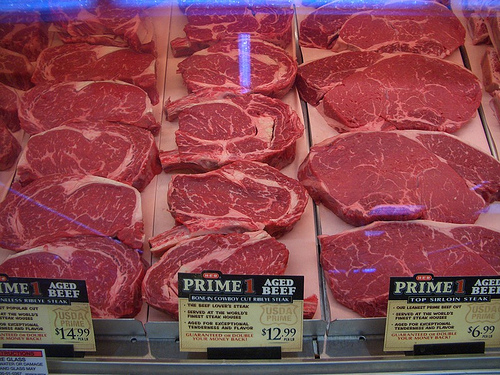
The bacon jam is the perfect combination of sweet and sour with just a little bit of spice, while the smoky ribeye is the perfect canvas for it. Jim got a smoker a few years ago for Christmas and it is his pride and joy. If it came down to his smoker or me, I think he might choose the smoker. Fortunately, I’m happy that he spends time outside adding a little smokiness to meat, because it really brings the flavor to dishes like this. If you don’t have a smoker, no worries. Just cook the ribeye (or your favorite cut of beef) on the grill, or however you enjoy cooking it. My instructions below are for the smoker.

I served this dish with a sweet potato that I’d spiralized into pommes frites style shoestrings, fried in lard, and sprinkled with a bit of Himalayan pink salt. If that sounds like a super carby choice, it is not as bad as you would think. One five-inch sweet potato (peeled) in a spiralizer makes a huge batch of pommes frites, and it only has 26 grams of carbs. Between two people, it’s 13 grams of carbs each, minus about 3 grams of fiber for a net carb count of 10 grams. If you do fry up some sweet potato pommes frites, make sure your oil is 375 degrees Fahrenheit before you start to cook the potatoes, and work in batches.

I also added a side of sautéed citrus spinach. I’ll put the recipe below. I can’t actually eat a whole ribeye, or even half one, but it gives me a few meals. As for the leftover bacon jam, roll it in your omelet tomorrow morning or warm it up and put it over a fried egg.

Smoked Rib Eyes with Sweet and Sour Bacon Jam

  • 2 12-ounce grass fed rib eye steaks
  • Sea salt and fresh cracked black pepper
  • 6 slices bacon, cut into small dice
  • 1 large yellow onion, cut into small dice
  • 5 garlic cloves, minced
  • 1/2 cup raw organic apple cider vinegar
  • Zest and juice from 1/2 orange
  • 1/2 teaspoon dried thyme
  • 1/2 teaspoon sea salt
  • 1 teaspoon sriracha or 1/4 teaspoon red pepper flakes
  • 2 tablespoons Swerve sweetener or 1 packet stevia
  1. Preheat your smoker to 325 degrees Fahrenheit.
  2. Season the steaks generously with sea salt and fresh cracked black pepper.
  3. Smoke the steaks for 50 minutes.
  4. While the steaks smoke, in a large sauté pan, brown the bacon over medium-high heat until the fat is rendered and the bacon is crisp. Remove all but one tablespoon of the bacon fat from the pan and set the bacon fat aside.
  5. Add the onion to the remaining fat and the bacon and cook it, stirring occasionally, until the onion is soft, about five minutes.
  6. Add the garlic to the pan and cook, stirring constantly, until the garlic is fragrant, about 30 seconds.
  7. Add the vinegar, thyme, sea salt, orange zest and orange juice, sriracha or red pepper flakes, and stevia or Swerve. Bring to a simmer and reduce the heat to medium. Cook over medium heat, stirring occasionally, until the liquid reduces and the flavors blend, about 20 minutes.
  8. Heat two tablespoons of the reserved bacon fat in a large sauté pan over medium-high heat. Add the smoked rib eyes and cook until well browned, two minutes per side.
  9. Serve the bacon jam spooned over the top of the steak.

Sauteed Citrus Spinach

  • 2 tablespoons coconut oil, duck fat, lard, or bacon grease
  • 2 tablespoons minced shallot
  • 2 garlic cloves, minced
  • 4 cups organic fresh baby spinach
  • Juice and zest of half an orange
  • Pinch red pepper flakes
  • Sea salt and fresh cracked black pepper to taste
  1. In a large saute pan, heat the oil over medium-high heat until it shimmers.
  2. Add the shallot and cook, stirring frequently, until shallot is soft, about four minutes.
  3. Add the garlic and cook, stirring constantly, until the garlic is fragrant, about 30 seconds.
  4. Add the spinach, orange juice, orange zest, red pepper flakes, salt, and pepper. Cook, stirring constantly, until the spinach wilts. Serve immediately.

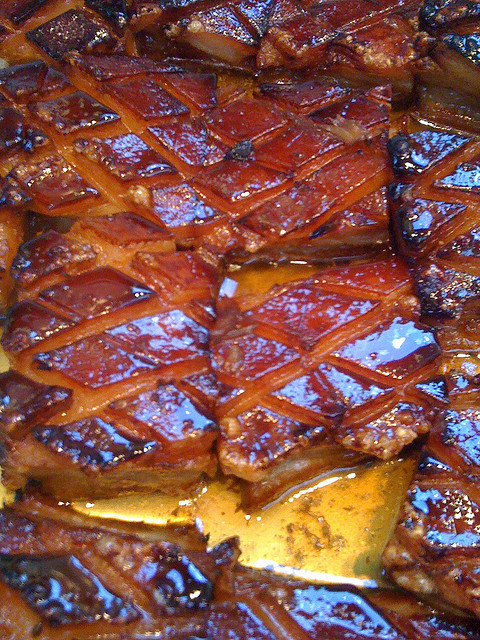
photo credit: junehug via photopin cc

Slow Cooker Paleo Jambalaya

Jambalayaby Karen Frazier

I love spicy food. Jim is a little more reticent. He will eat it, but he prefers it not be too hot. Most jambalaya recipes have a lot of heat in them, making them spicier than Jim’s palate prefers. So I set out to make jambalaya (without rice for obvious reasons) that would fit Jim’s heat preferences.

This recipe turned out perfectly. It had a little heat from the andouille without setting fire to our mouths. If you like it spicier, add more cayenne.

Slow Cooker Paleo Jambalaya

  • 1 onion, peeled and chopped
  • 1 organic red pepper, seeded and chopped
  • 1 organic yellow pepper, seeded and chopped
  • 1 organic green pepper, peeled and chopped
  • 1 organic jalapeño, seeded and minced
  • 6 garlic cloves, minced
  • 1 pound andouille sausage, cut into one inch pieces
  • 1 pound boneless skinless chicken thighs, cut into one inch pieces
  • 1 (15 ounce) can crushed tomatoes, undrained
  • 1 cup homemade beef bone broth
  • 1 teaspoon chopped fresh organic thyme
  • 1 teaspoon chopped fresh organic oregano
  • 1 teaspoon chopped fresh organic basil
  • 1 teaspoon sea salt
  • 1/2 teaspoon fresh cracked black pepper
  • 1/4 teaspoon cayenne
  • 1 pound wild caught shrimp, tails removed, peeled, and deveined
  • Juice of 1/2 lemon
  • 1/4 cup chopped fresh parsley
  • 4 scallions, thinly sliced
  1. In a large slow cooker, combine the onion, peppers, jalapeño, garlic, andouille, chicken, tomatoes, broth, thyme, oregano, basil, salt, pepper, and cayenne. Cook, covered, in a slow cooker on low for seven hours.
  2. Stir in the shrimp and lemon juice. Cover and continue cooking, turning the slow cooker up to high, until shrimp is pink, about one hour.
  3. Stir in the parsley.
  4. Serve garnished with the scallions.

Crispy Skinned Pork Belly with Orange-Jicama Slaw

pork bellyby Karen Frazier

Pork belly is often difficult to come by, but if you can find it, snap it up. For those who don’t know, it’s essentially uncured slab bacon that comes with the skin on the top. With the unctuous fattiness of the meat and the crispy skin on top, it makes a delicious main course. Check with local ranchers to find pork belly, or dig around on the Internet and you’ll be able to find some to order.

In this recipe, the spices in the rub and the acidity of the orange, as well as the crunch of the slaw all serve as a delicious counterpoint to the sweet fattiness of the pork. When I made this, it was the first time I cooked pork belly, so I borrowed the crispy skin cooking method from The Clothes Make the Girl blog. Then, I added my own flavors and spices. Trust me, it’s really delicious and rich!

For the pork belly:

  • 2-pound pork belly
  • 1 tablespoon paprika
  • 1 teaspoon smoked paprika
  • 1 teaspoon onion powder
  • 1/2 teaspoon garlic powder
  • 1/2 teaspoon fresh cracked black pepper
  • 1/2 teaspoon cumin
  • 1/2 teaspoon coriander
  • 1 teaspoon sea salt
  • 2 tablespoons Swerve sweetener (or 1 packet stevia) (optional – omit for Whole30)
  • Juice from half an orange

For the slaw:

  • 1 jicama, julienned
  • 1 cup julienned cabbage
  • 3 green onions, very thinly sliced
  • 2 carrots, peeled and grated
  • 1 avocado, peeled and pitted
  • 2 garlic cloves, finely minced
  • 1/8 teaspoon red pepper flakes (or sriracha to taste)
  • Juice from half an orange
  • Zest from half an orange
  • 2 tablespoons apple cider vinegar
  • 2 tablespoons cilantro, finely chopped
  • 1/4 teaspoon fresh cracked black pepper
  • 1 teaspoon sea salt (or to taste)

For the pork belly:

  1. Pat the pork belly dry with paper towels. Score the pork skin in a cross-hatch pattern, cutting down to the meat but not through the meat.
  2. In a small bowl, mix the paprika, smoked paprika, onion powder, garlic powder, black pepper, coriander, cumin, sea salt, and sweetener.
  3. Rub the spice mixture on both sides of the pork. Wrap the pork in plastic and refrigerate for about two hours.
  4. Thirty minutes before cooking, put the unwrapped pork belly on a foil-lined baking sheet with the skin-side facing up. Allow it to come to room temperature.
  5. Preheat the oven to 450 degrees Fahrenheit.
  6. Just before putting the pork belly in the oven, rub the skin with the orange juice.
  7. Bake the pork belly at 450 for 30 minutes. Reduce the heat to 350 degrees Fahrenheit, and bake for another hour, until the skin has browned and crisped.
  8. Rest the pork, tented with foil, for 20 minutes before serving. While the pork rests, prepare the slaw.

For the slaw:

  1. In a large bowl, combine the jicama, cabbage, onions, and carrots.
  2. In a blender, add the avocado, garlic, red pepper flakes, orange juice and zest, apple cider vinegar, cilantro, and pepper. Blend until smooth. Taste and season with salt, starting with about 1/2 teaspoon of salt and continuing to add it until it is properly seasoned.
  3. Pour the avocado mixture over the vegetables and toss to coat.
  4. Serve the slaw alongside the pork.

photo credit: linecook via photopin cc

Asian Pork Meatball Lettuce Wraps with Spicy Dipping Sauce

pork meatballsby Karen Frazier

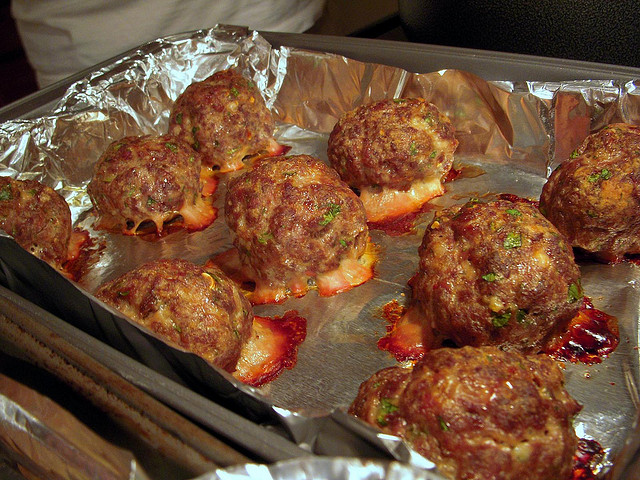
This recipe is not strictly paleo because I use a few non-paleo ingredients. But it’s still low-carb and pretty darn delicious. While I avoid non-paleo ingredients 80 to 90 percent of the time, I occasionally do use them. I like to serve the meatballs with leaves of tender butter lettuce. Wrap the meatball in the lettuce and dip it in the tasty sauce.

Asian Pork Meatball Lettuce Wraps with Spicy Dipping Sauce

For the meatballs:

  • 2 pounds ground pastured pork
  • 3/4 cup almond flour
  • 2 bunches scallions, thinly sliced
  • 8 ounces shiitake mushrooms, finely chopped
  • 1 1/2 cups finely chopped green cabbage
  • 4 garlic cloves, finely minced
  • 1 tablespoon grated fresh ginger
  • 1/4 cup cilantro, finely chopped
  • 2 tablespoons gluten-free soy sauce (or coconut aminos for paleo)
  • 1 teaspoon sesame oil (omit for paleo or find cold pressed)
  • 1/2 teaspoon chili oil (or 1/2 teaspoon red pepper flakes for paleo)
  • 2 eggs, beaten
  • 1 teaspoon salt
  • 1/2 teaspoon fresh cracked black pepper
  • Butter lettuce leaves

For the dipping sauce:

  • 1/4 cup gluten-free soy sauce (or coconut aminos for paleo)
  • 1/4 cup rice vinegar
  • 1 teaspoon garlic chili sauce (or to taste) or 1/2 teaspoon chili oil (or to taste) (for paleo, try red pepper flakes)
  • 1 tablespoon Swerve sweetener, 1 packet of stevia, or 1 tablespoon honey (optional – omit if using coconut aminos)

To make the meatballs:

  1. Preheat the oven to 400 degrees Fahrenheit. Line a baking sheet with foil.
  2. In a large bowl, mix all of the meatball ingredients together (except for lettuce leaves). Use your hands to mix well.
  3. Roll into medium-sized meatballs and bake for 30 minutes.
  4. Serve wrapped in lettuce leaves dipped in the sauce.

To make the dipping sauce:

Whisk all ingredients together in a small bowl. Start by adding a little of the garlic chili sauce or chili oil, and then adding more to achieve the desired level of heat.

photo credit: matthewf01 via photopin cc

Bacon-Wrapped Beef Tenderloin with Duxelle, Red Wine Sauce & Crispy Shoestring Sweet Potatoes

tenderloinby Karen Frazier

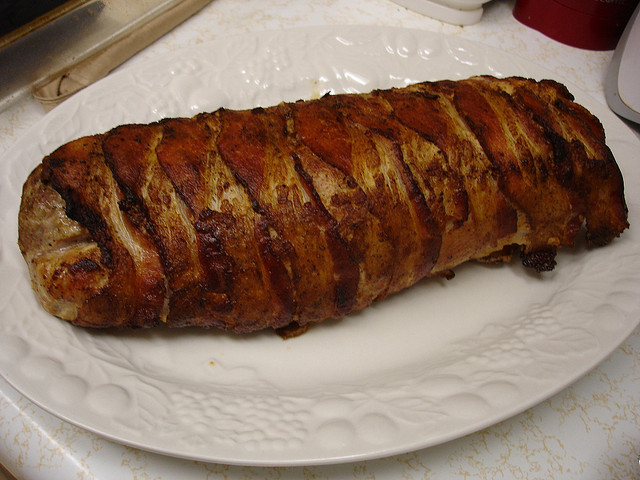
I’m excited to share this one with you. It makes a great special occasion meal. We had it for New Year’s Eve, but you can make it any time. I wanted to wait to post the recipe until I’d fully developed it – wouldn’t want to steer you wrong, but with this combination of flavors it was pretty hard to go wrong.

This recipe is gluten-free, dairy-free, low-carb, and paleo.

Tips:

  • I made the duxelle a day ahead of time and refrigerated it so it was completely cool before I put it in the beef tenderloin.
  • Marinate the tenderloin overnight.
  • Put the tenderloin on on the counter for an hour before cooking it to bring it to room temperature.
  • Save the marinade to combine with a few extra ingredients to make the sauce. Boil the marinade for five minutes to  cook out any bacteria.
  • To butterfly the tenderloin, slice it lengthwise about halfway through the meat, and then slice horizontally into each side of the cut. Fold the meat outward to make a flat fillet.
  • I use a spiralizer for the shoestring potatoes. However, you can also use a mandolin on the thinnest setting, or even grate the sweet potatoes.
  • For super low-carb, eliminate the sweet potatoes.
  • If you’re not comfortable cooking with wine for paleo meals, then eliminate the sauce, skip the marinade, and replace the wine in the duxelle with homemade beef broth.
  • While you can roast the beef in the oven, if you’ve got a smoker, I highly recommend using it.

For the duxelle:

  • 2 tablespoons duck fat (or some other paleo-friendly fat)
  • 1 pound crimini mushrooms, finely chopped
  • 1/4 cup finely chopped shallots
  • 1/2 teaspoon sea salt
  • 1/4 teaspoon freshly cracked black pepper
  • 3 cloves garlic, finely minced
  • 1/2 cup red wine

For the marinade:

  • 1 cup red wine
  • 1 cup olive oil
  • 1 tablespoon Dijon mustard
  • 1 teaspoon fresh chopped rosemary
  • 1 teaspoon dried thyme
  • 4 cloves garlic, finely minced
  • 1/2 teaspoon fresh cracked black pepper
  • 1/2 teaspoon sea salt

For the tenderloin:

  • 1 5-pound beef tenderloin, butterflied
  • 1 pound thick-sliced pepper bacon

For the sauce:

  • Leftover marinade
  • 1 cup homemade beef broth
  • 1 cup red wine
  • 1 tablespoon Dijon mustard
  • 2 tablespoons finely chopped shallot
  • Sea salt and fresh cracked black pepper to taste

For the sweet potato strips:

  • 1 sweet potato, peeled, sliced, and cut into very thin shoestrings
  • 2 tablespoons duck fat (or other paleo-friendly fat)
  • Sea salt

For the duxelle:

  1. In a large saute pan, heat the duck fat until it melts and shimmers.
  2. Add the mushrooms and cook, stirring occasionally, until the juice from the mushrooms has evaporated, five to seven minutes.
  3. Add the shallots, salt, and pepper and cook, stirring occasionally, for another five minutes, until shallots are soft and mixture is dry.
  4. Add the garlic and cook, stirring constantly, for 30 seconds.
  5. Add the wine and cook, stirring frequently, until the liquid evaporates.
  6. Refrigerate the duxelle and allow it to completely cool before using in the roast.

For the marinade and roast:

  1. In a small bowl, whisk together all ingredients until well combined.
  2. Place the butterflied roast in a flat dish and pour the marinade over the top, covering the beef.
  3. Cover with plastic wrap and refrigerate overnight, or up to 24 hours.
  4. Heat the oven to 375 (or, we used a smoker – heat that to 375).
  5. Remove the roast from the marinade and pat it dry. Reserve the marinade for the sauce.
  6. Lay out a large piece of plastic wrap, and lay the strips of bacon in it in a row, slightly overlapping.
  7. Place the roast on top of the bacon strips. Spread the roast with the chilled duxelle. Use the plastic wrap to roll the bacon completely around the roast. Tie the roast with butcher’s twine to keep the bacon in place.
  8. Heat a large ovenproof sauté pan over medium-high heat. Add the roast and cook, searing the bacon on each side until it begins to brown, three to five minutes per side.
  9. Move the sauté pan to the preheated oven and cook until a thermometer reads 130 to 135 degrees Fahrenheit, about 30 minutes.
  10. Remove the roast from the oven and allow it to rest for 20 minutes before carving.

For the sauce:

  1. In a large saucepan, heat the reserved marinade over medium-high heat until it boils. Boil, stirring occasionally, for five minutes.
  2. Reduce the heat to medium and whisk in the remaining ingredients (except salt and pepper). Simmer until the liquid thickens and reduces, about 20 minutes.
  3. Season to taste with salt and pepper.

For the sweet potatoes:

  1. Preheat the oven to 400 degrees Fahrenheit. Line a baking sheet with parchment.
  2. In a small bowl, toss together the sweet potato strips, melted duck fat, and sea salt.
  3. Pour the potatoes onto the parchment-lined pan in a single layer.
  4. Bake until the potatoes are crispy, 20 to 25 minutes.

To serve: After resting the roast for 20 minutes, slice it and carefully remove the twine. Spoon the sauce over each piece of beef and top with the crispy sweet potatoes. For sides, we served garlic sautéed green beans and a green salad.

photo credit: CraftyGoat via photopin cc

Paleo Spicy Shrimp Chowder with Coconut and Sweet Potatoes

shrimp chowderby Karen Frazier

I’ve probably mentioned this in my blog about a zillion times now, but I’m super allergic to dairy products. In fact, I re-discovered just how allergic I am on Christmas Eve when I dipped a piece of lobster in a tiny bit of butter. I’ve been paying for it for the past two days.

Still, I love chowder. I love its rich creaminess paired with seafood. I love it so much, I almost feel like I’d be willing to suffer the wrath of dairy for it. However, after Christmas Eve, I am reminded that really, no bite of food is worth all of that. And so, I had to come up with a way to make a delicious creamy seafood chowder without dairy and without a grain-based roux to thicken it.

I just made this chowder, and it’s pretty darn tasty if I do say so myself. Yesterday I prepared some homemade chicken broth, which I made from chicken feet (creepy looking!), chicken necks, onion trimmings, rosemary, and a few other ingredients. I refrigerated it overnight, and then skimmed the fat from its surface this morning. I used the defatted stock to make this delicious shrimp chowder. The recipe yields about six to eight servings, depending on how much you eat. For me, it makes eight servings. For Jim, it’s six or fewer. Anyway – based on eight servings it has around 230 calories, 8 grams of fat, 9 net grams of carbs (unless you leave out the sweet potatoes or pick around them like I do), and 28 grams of protein. To make it lower in carbs, leave out the sweet potato.

Spicy Shrimp Chowder with Coconut and Sweet Potatoes

  • 2 tablespoons coconut oil
  • 1 onion, chopped
  • 1 jalapeño, seeded and chopped
  • 1 Anaheim pepper, seeded and chopped
  • 1 piquillo pepper, seeded and chopped
  • 1 red bell pepper, seeded and chopped
  • 6 cloves of garlic, chopped
  • Juice of one lime
  • 6 cups chicken stock
  • 1 tablespoon paleo fish sauce (I use Red Boat)
  • 1white sweet potato, cubed
  • 2 large carrots, peeled and chopped
  • 2 pounds shrimp, peeled, deveined, and tails removed
  • 1/2 cup arrowroot powder
  • 1/2 cup water
  • 1 (14 ounce) can full-fat coconut milk
  • Sriracha or red pepper flakes to taste (optional)
  • Sea salt and fresh cracked black pepper to taste
  1. In a large soup pot, melt the coconut oil over medium-high heat until it shimmers. Add the onions and all of the peppers. Cook, stirring occasionally, until the vegetables are soft and beginning to brown, seven to ten minutes.
  2. Add the garlic and cook, stirring constantly, until it is fragrant, about 30 seconds.
  3. Add the lime juice, chicken stock, and fish sauce, stirring to scrape any browned bits off the bottom of the pot.
  4. Add the sweet potatoes and carrots and bring the soup to a boil. Reduce the heat to medium and simmer until the potatoes and carrots are tender, about 20 minutes.
  5. Add the shrimp and cook, stirring occasionally, until it is pink, 5 to 10 minutes more (five if it’s thawed, about ten if it’s frozen).
  6. In a small bowl, combine the arrowroot powder with the water and whisk to make a slurry. Pour the slurry into the soup, stirring constantly. Simmer until the soup thickens.
  7. Stir in the coconut milk, sriracha or red pepper flakes, salt, and pepper. Taste and adjust seasonings as desired.

Photo used under flickr creative commons license. Some rights reserved by InSinU8.

Spicy Slow Cooker Pot Roast

PotRoastby Karen Frazier

I tend to cook fairly seasonally. In the spring, summer, and early fall, I go to the local farmers market to pick out beautiful locally grown fruits, vegetables, and herbs and then plan my meals based on whatever I bring home. In the late fall, winter, and early spring our local farmers market closes, and I am left with what I can find in grocery store’s organic section or, occasionally, what I can pick up at the year-round farmers market in Olympia.

Cooking in this way also follows my natural appetites. In the summer, my meals are lighter with fresher flavors and lots of greens. As summer fades, however, I tend to cook heartier foods with more warming, deeper flavors. I also cook lots of root vegetables, because that’s what is available.

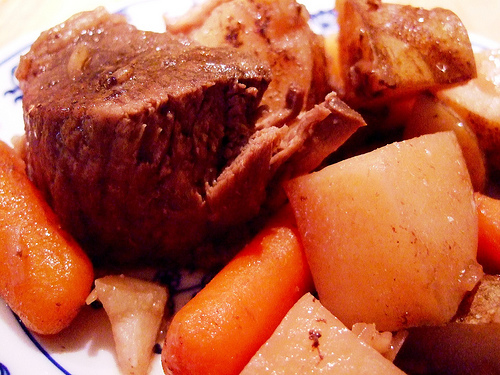
Pot roast is the quintessential fall/winter meal. It features an affordable and fatty cut of meat and flavorful root vegetables. Because the fatty cuts you use for pot roast perform best under low, slow, and moist cooking conditions, the slow cooker is the ideal vehicle for a tasty pot roast.

I’m a big fan of browning meat and vegetables before putting them in the slow cooker. This just adds an extra depth of flavor. However, if you don’t feel like doing any browning, then just toss everything in the slow cooker raw. It will still be pretty darn tasty.

Spicy Slow Cooker Pot Roast

  • 4 tablespoons fat, divided (I used rendered bacon grease for this one for a little bit of additional smoky flavor)
  • 1 organic onion, sliced
  • 4 organic garlic cloves, roughly chopped
  • 1 three to four pound grass fed chuck roast
  • Sea salt
  • Fresh cracked black pepper
  • 1/2 cup red wine (or beef stock)
  • 1/2 cup homemade beef bone broth
  • 1 teaspoon organic garlic powder
  • 1 teaspoon organic onion powder
  • 1 teaspoon organic ground mustard seed
  • 2 tablespoons freshly grated organic horseradish root (or more to taste), divided
  • 2 cups organic whole baby carrots
  • 2 bulbs organic celeriac, peeled and cut into cubes
  1. In a large saute pan, heat two tablespoons of the fat over medium-high heat. Add the onions and cook, stirring occasionally, until they begin to brown, seven to eight minutes.
  2. Add the garlic and cook, stirring constantly, until it is fragrant, about 30 seconds more.
  3. Put the onions and garlic in the slow cooker and return the sauté pan to the heat. Add the remaining two tablespoons of fat.
  4. Season the chuck roast liberally with salt and pepper. Put it in the hot fat and cook it, searing it on all sides, four to five minutes per side. Put the chuck roast in the slow cooker with the onions.
  5. Return the sauté pan to the heat. Add the wine and stir, scraping any browned bits off the bottom of the pan with the side of a spoon. Add the beef stock and whisk in the garlic powder, onion powder, ground mustard seed, and freshly grated horseradish. Simmer for about three minutes to allow the flavors to blend.
  6. Put the baby carrots and celeriac in the slow cooker with the roast and onions. Pour the wine mixture over the top.
  7. Cover the slow cooker and cook on low until the meat is tender, eight to ten hours on low or four to five hours on high.
  8. Grate in the remaining one tablespoon of horseradish root just before serving.
  9. Optional: If you wish to turn the sauce into gravy, then ladle out the liquid from the slow cooker. Put it in a saucepan and whisk in 1/4 cup of arrowroot powder mixed with 1/4 beef stock. This will add about 28 grams of carbs to the entire recipe, so if you are eating low-carb paleo, you may wish to skip this step. For low-carb paleo, simmer the liquid in a saucepan over medium-low heat until it reduces and thickens, about ten minutes.

photo credit: jypsygen via photopin cc

Shrimp and Mushrooms with Garlic Mojo

shrimpby Karen Frazier

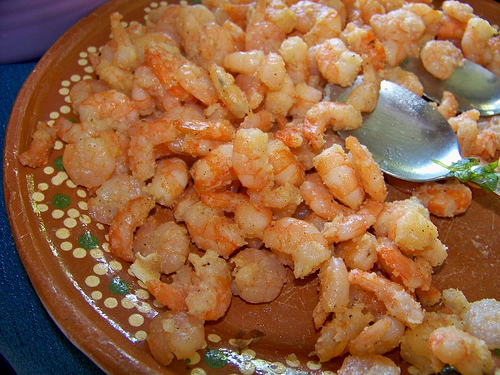
I know – more mushrooms. Like I said in an earlier post, fall is the perfect time to find delicious seasonal mushrooms, so I take advantage of the bounty. Plus, I love mushrooms. If you don’t care for them, go ahead and leave them out of this delicious paleo recipe.

I use a modified version of Rick Bayless’s garlic mojo. Make the mojo ahead of time, and keep it tightly sealed in the refrigerator for several weeks. Then, use the garlic mojo in the recipe.

Garlic Mojo

  • 1 1/2 cups peeled garlic cloves, crushed
  • 2 cups extra virgin olive oil (or some type of melted animal fat, if you prefer)
  • 1/2 teaspoon sea salt
  • Juice of three limes
  • 1/4 teaspoon chipotle chili powder
  1. Preheat your oven to 325 degrees Fahrenheit.
  2. In a square glass pan (8×8″), spread the garlic along the bottom of the pan. Pour the olive oil or fat over the top. Add the salt and stir to combine, making sure all of the cloves are completely covered with oil. If they aren’t, add a little more oil or remove a few garlic cloves.
  3. Bake in the preheated oven until the garlic begins to turn golden, 45 to 50 minutes.
  4. Remove the garlic from the oven and stir in the lime juice and chipotle.
  5. Return the pan to the oven and continue baking for an additional 20 minutes.
  6. Remove the garlic mojo from the oven and mash the garlic cloves with a potato masher or a fork.
  7. Allow the garlic mojo to cool completely and then put it in a container that seals tightly. Refrigerate for up to 90 days. Be sure the garlic remains submerged in oil when you store it.

Shrimp and Mushrooms with Garlic Mojo

  • 1/4 cup garlic mojo, divided
  • 1 pound of shrimp, peeled and deveined with tails removed
  • 1 onion, chopped
  • 8 ounces button mushrooms, sliced (use any kind you wish)
  • 2 cloves garlic, minced
  • Juice of one lime
  • 1/8 teaspoon chipotle chili powder
  • 1/4 teaspoon sea salt
  • 1 recipe guacamole
  • 1 recipe pico di gallo (recipe follows)
  • Several large lettuce leaves
  1. Stir the garlic mojo before measuring it.
  2. In a large saute pan, heat two tablespoons of the garlic mojo over medium-high heat. Add the shrimp and cook until it turns pink, about six minutes.
  3. Remove the shrimp with a slotted spoon and set it aside on a platter.
  4. Add the remaining two tablespoons of garlic mojo to the sauté pan. Add the onion and mushrooms and cook, stirring occasionally, until they are soft and begin to brown, six to eight minutes.
  5. Return the shrimp and any juices that have collected on the platter to the sauté pan.
  6. Add the lime juice, chipotle chili and sea salt. Cook, stirring constantly, until the shrimp heats through, about four minutes.
  7. Serve the garlic mojo using the lettuce leaves as tortillas. Top with guacamole and pico de gallo.

Pico de Gallo

  • 1 large tomato, chopped
  • 2 tablespoons chopped cilantro
  • 1/2 red onion, chopped
  • 1 small jalapeño, seeded and chopped
  • 1 garlic clove, minced
  • Juice of one lime
  • 1/4 teaspoon sea salt

Mix all the ingredients together in a small bowl.

photo credit: Rene Venturoso via photopin cc

Mushroom Soup with Italian Sausage and Fennel

mushroom soupby Karen Frazier

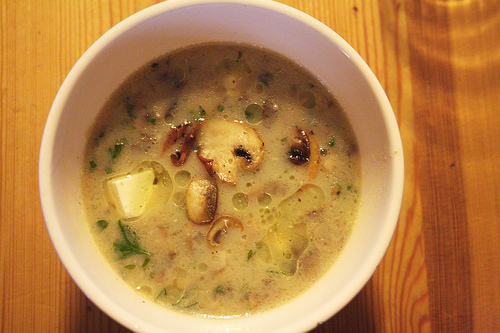
Tendergrass farms makes a tasty grass-fed, sugar-free Italian sausage. I really like it, and so I enjoy using it in soups, spaghetti sauce (with zucchini spaghetti of course), and other recipes. In the fall when delicious mushrooms are so abundant, I especially enjoy mushroom dishes, which is why you’re seeing so many of them in my recipe feed lately.

This soup is delicious and hearty. It really hits the spot on a cold fall evening. I use my typical thickening method…pureeing the vegetables and adding them back into the broth, because it works so well.

Mushroom Soup with Italian Sausage and Fennel

  • 1 bulb organic garlic, the top sliced off
  • 2 tablespoons melted fat (lard, duck fat, etc.)
  • Sprinkling of sea salt
  • Sprinkling of organic chopped fresh rosemary
  • 1 package organic dried porcini mushrooms
  • 6 cups homemade beef or chicken bone broth
  • 3 tablespoons melted fat (I use duck fat)
  • 1 pound sugar-free, organic pastured pork Italian sausage, casings removed
  • 1 onion, sliced
  • 1 pound seasonal organic mushrooms (can be any variety), sliced
  • 1 bulb organic fennel, chopped
  • 1/4 cup dry sherry (or more broth)
  • 1 teaspoon organic dried thyme
  • 1/4 teaspoon red pepper flakes
  • 1 teaspoon sea salt (or to taste)
  • 1/2 teaspoon fresh cracked black pepper.
  • Two tablespoons chopped organic fennel fronds
  1. Preheat your oven to 350 degrees Fahrenheit. Place the cut garlic heads on a large piece of foil. Drizzle them with two tablespoons of the melted fat and sprinkle them with salt and rosemary. Wrap them in the foil. Roast the garlic in the preheated oven for about 90 minutes, until soft. Allow it to cool slightly, and then squeeze the cloves out of the papery skin and into a bowl. Set aside.
  2. In a large saucepan, heat the bone broth until it simmers. Remove the broth from the heat and add the dried porcini mushrooms. Cover and allow the mushrooms to soak until they are soft, about two hours.
  3. In a large dutch oven, heat three tablespoons of fat over medium-high heat until it shimmers. Add the Italian sausage and cook, breaking the sausage apart with a spoon, until it is browned, five to seven minutes. Remove the sausage from the fat with a slotted spoon and set aside on a platter.
  4. Add the onion to the fat in the pan and cook over medium heat, stirring occasionally, until it softens and begins to brown, five to seven minutes. Remove the onions from the fat with a slotted spoon and set it aside in the bowl of a food processor fitted with a metal chopping blade.
  5. If needed, add a little more fat to the pan. Over medium-high heat, cook the mushrooms in the fat, stirring occasionally, until they soften, seven to ten minutes. Remove the mushrooms from the fat with a slotted spoon. Put half of the mushrooms into the food processor with the onions and put the remaining half on the platter with the Italian sausage.
  6. Add the fennel to the remaining fat in the pan (or add a bit more if necessary). Cook over medium-high heat, stirring occasionally, until the fennel is soft, five to seven minutes.
  7. Add the red wine to the pot. Using the side of your spoon, scrape any browned bits from the bottom of the pan.
  8. Use a slotted spoon to remove the reconstituted porcini mushrooms from the stock and put them in the food processor with the other vegetables. Pour the stock into the cooking pot.
  9. Add the cooked sausage and mushrooms from the platter, thyme, red pepper flakes, salt, and pepper to the pot. Reduce the heat to medium-low and allow it to simmer.
  10. Meanwhile, add the roasted garlic to the food processor with the mushrooms and onions. Process until the vegetables form a smooth paste, 30 seconds to one minute.
  11. Stir the vegetables back into the pot of soup to thicken it.
  12. Cook, stirring occasionally, until the soup warms through, about five more minutes. Adjust seasoning as necessary.
  13. Serve garnished with fennel fronds.

For an easier to make but still paleo version, but with a slightly higher carb count (about 12 g per serving versus about 7 g per serving):

  • 1 package organic dried porcini mushrooms
  • 6 cups homemade beef or chicken bone broth
  • 3 tablespoons melted fat (I use duck fat)
  • 1 pound sugar-free, organic pastured pork Italian sausage, casings removed
  • 1 onion, sliced
  • 1 pound seasonal organic mushrooms (can be any variety), sliced
  • 1 bulb organic fennel, chopped
  • 4 cloves garlic, minced
  • 1/4 cup dry sherry (or more broth)
  • 1 teaspoon organic dried thyme
  • 1/4 teaspoon red pepper flakes
  • 1 teaspoon sea salt (or to taste)
  • 1/2 teaspoon fresh cracked black pepper.
  • 1/4 cup arrowroot powder
  • 1/4 cup water
  • Two tablespoons chopped organic fennel fronds
  1. Preheat your oven to 350 degrees Fahrenheit. Place the cut garlic heads on a large piece of foil. Drizzle them with two tablespoons of the melted fat and sprinkle them with salt and rosemary. Wrap them in the foil. Roast the garlic in the preheated oven for about 90 minutes, until soft. Allow it to cool slightly, and then squeeze the cloves out of the papery skin and into a bowl. Set aside.
  2. In a large saucepan, heat the bone broth until it simmers. Remove the broth from the heat and add the dried porcini mushrooms. Cover and allow the mushrooms to soak until they are soft, about two hours. Remove the mushrooms from the broth and chop them roughly. Return them to the broth.
  3. In a large dutch oven, heat three tablespoons of fat over medium-high heat until it shimmers. Add the Italian sausage and cook, breaking the sausage apart with a spoon, until it is browned, five to seven minutes. Remove the sausage from the fat with a slotted spoon and set aside on a platter.
  4. Add the onion to the fat in the pan and cook over medium heat, stirring occasionally, until it softens and begins to brown, five to seven minutes. Remove the onions from the fat with a slotted spoon and set it aside with the sausage.
  5. If needed, add a little more fat to the pan. Over medium-high heat, cook the mushrooms in the fat, stirring occasionally, until they soften and brown, seven to ten minutes. Remove the mushrooms from the fat with a slotted spoon. Set them aside with the sausage.
  6. Add the fennel to the remaining fat in the pan (or add a bit more if necessary). Cook over medium-high heat, stirring occasionally, until the fennel is soft, five to seven minutes. Add the garlic and cook, stirring constantly, until it is fragrant, about 30 seconds.
  7. Add the sherry to the pot. Using the side of your spoon, scrape any browned bits from the bottom of the pan.
  8. Pour the stock into the cooking pot. Add the cooked sausage, mushrooms, and onions back to the pot along with the thyme, red pepper flakes, salt, and pepper.
  9. Reduce the heat to medium-low and allow it to simmer.
  10. In a small bowl, whisk together the arrowroot powder and water. Pour them into the simmering pot, stirring constantly, until the soup thickens slightly.
  11. Adjust seasoning as necessary.
  12. Serve garnished with fennel fronds.

photo credit: RonjaNilsson via photopin cc

Pork and Spinach Meatballs with Mushroom and Caramelized Onion Gravy

meatballsby Karen Frazier

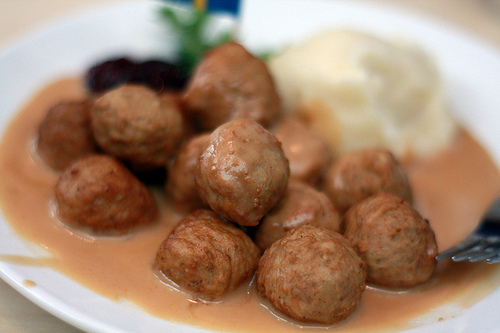
Recently, I bought some lovely ground pastured pork from a local farmer and knew I wanted to make something tasty with it. Okay – true – I always want to make something tasty. As always, I turned to my slow cooker.

You may notice I’ve been posting a lot of slow cooker recipes lately. Here’s why. When you cook real food – that is, food that doesn’t come in packages, jars, and cans – it can be pretty time and labor intensive. Of course, the results are totally worth it, and I love to cook. But I’m cooking three real food meals every day – and I get tired of cleaning up the kitchen. Not the cooking – just the cleaning. Plus, Jim and I are often on different schedules, so we need to eat at different times.

The slow cooker takes care of both of these problems. First, my slow cooker is 7 quarts, so I can make a lot of food in it. Therefore, I typically double any recipe I post here. It simmers all day long, and I’ve got meals for two nights, plus leftovers for the freezer. (Bonus: The house smells great!) My freezer is packed with yummy slow cooker food that I can take out and heat up for any meal. That means that I not only get two dinners out of one day of cooking, but I also have additional breakfasts and lunches on demand. It gives Jim the opportunity to grab a healthy meal for lunches at work, too, instead of having to turn to something like a fast food meal.

The other reason I’ve been using the slow cooker so much is scheduling. When Jim and I are on our wildly divergent schedules, we can each eat a hot meals straight from the slow cooker when time permits. Slow cookers make it easy for busy families to grab a quick meal when they have the time.

So, that’s why I love my slow cooker and use it so much. Oh – and one other reason, as well. The slow cooker is a closed system that cooks on low heat all day. This tenderizes meats and allows flavors to meld beautifully, so the meals are hearty and delicious. What could be better?

For the caramelized onions in this recipe, I make a huge batch in the slow cooker. You can also make a batch by cooking thinly sliced onions on the stovetop on low heat in a sauté pan with a few tablespoons of fat and a pinch of salt for about 45 minutes, stirring occasionally.

Pork and Spinach Meatballs with Mushroom and Caramelized Onion Gravy

  • 2 tablespoons duck fat (or your fat of choice)
  • 2 onions, finely chopped, divided
  • 6 garlic cloves, minced, divided
  • 1 pound pastured ground pork
  • 1 teaspoon mustard powder, divided
  • 3 cups organic spinach, finely chopped
  • 1 pound organic mushrooms, divided
  • 1 organic carrot, grated
  • 1/2 teaspoon dried thyme
  • 1 teaspoon sea salt
  • 1/2 teaspoon fresh cracked black pepper
  • Pinch red pepper flakes
  • 3 carrots, peeled and chopped
  • 1 cup homemade beef or chicken stock
  • 1 sprig of fresh rosemary
  • 1/2 cup caramelized onions (about one onion)
  1. In a large saute pan, heat the duck fat over medium-high heat until it shimmers. Add one of the onions and cook, stirring occasionally, until they are soft, about five minutes.
  2. Add the two cloves of the garlic and cook, stirring constantly, until it is fragrant, about 30 seconds more. Remove the onions from the heat and allow to cool completely.
  3. In a large bowl, combine the cooked onions and garlic, pork, 1/2 teaspoon of the mustard powder, spinach, 8 ounces of the mushrooms (finely chopped), the grated carrot, the dried thyme, the sea salt, the pepper, and the red pepper flakes. Using your hands, mix well to combine.
  4. Roll the mixture into meatballs that are slightly smaller than a golf ball. Put the meatballs in the bottom of the slow cooker.
  5. Add the remaining onion (chopped), the remaining garlic (minced), the chopped carrots, the remaining 8 ounces of mushrooms (sliced), the stock, the rosemary sprig, and some salt and pepper to taste.
  6. Cover and cook on low for six hours.
  7. Before serving, remove the lid of the slow cooker and allow it to simmer for about 30 minutes uncovered. Using a slotted spoon, remove the meatballs from the slow cooker and set them aside on a platter, tented with foil. Remove the rosemary sprig and discard it. Using the same spoon, remove the solids (the carrots, mushrooms, and onions) from the broth in the slow cooker. Put them in a food processor or blender with the caramelized onions and the remaining half teaspoon of dried mustard and process until they form a smooth puree. (Remember to protect your hand with a folded towel and to allow steam to escape through the open top chute of the processor).
  8. Pour the mixture from the food processor back into the slow cooker, using a rubber scraper to make sure you get it all. Whisk the mixture to combine the broth in the slow cooker with the pureed vegetables.
  9. Return the meatballs to the slow cooker and stir to mix them with the gravy.
  10. Serve on pureed celeriac or cauliflower.

photo credit: gavinr via photopin cc