Chocolate Coconut Smoothie

Hashimoto's Cookbook, Rockridge Pressby Karen Frazier

Sometimes you just need chocolate. Know what I mean? Yeah. So. I often enjoy my chocolate in the form of a smoothie, because smoothies are like milkshakes, and for one as deadly allergic to milk as me, a milkshake sounds grand!

Because I’m trying to lose weight (85 pounds to day, lots more to go), I eat a ketogenic paleo diet. That means low-carb. This smoothie is low-carb, high in fat (also good for ketogenic), and contains all paleo-friendly ingredients. It’s also super filling. I just had about a third of the recipe this morning, and I think my stomach may explode. Yesterday I had the first half of the recipe at about 10 AM and had no desire for food until about 5 PM.

Here’s a secret. You can use water to adjust the thickness of the smoothie, so you can actually make it like pudding, too, if you prefer to eat your chocolate with a spoon.

Chocolate Coconut Smoothie

  • 1 (14 ounce) can coconut milk (full-fat, not light)
  • 1 avocado, peel and pit removed
  • 1/4 cup mixed berries, frozen
  • 1/4 cup unsweetened organic cocoa powder
  • 2-3 droppersful of vanilla flavored liquid stevia (adjust according to your desire for sweetness)

Stick it all in a blender and blend until smooth. Add water to adjust the consistency to your desired thickness. Yields 2-3 smoothies, and it will refrigerate well for a day or two. Just add a bit more water and re-blend when you’re ready to have it the second day.

So before I go, I have one more announcement. Rockridge Press has published the cookbook I wrote: The Hashimoto’s Cookbook and Action Plan: 31 Days to Eliminate Toxins and Restore Thyroid Health Through Diet. It’s a modified Autoimmune Protocol (Paleo AIP) with special consideration given to foods that may affect the thyroid.

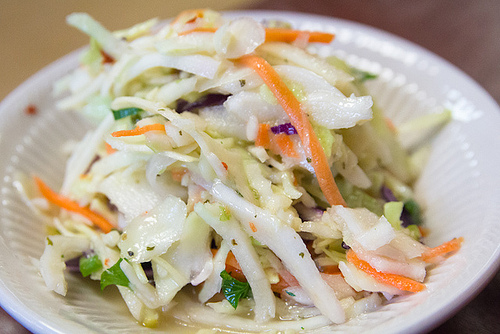
Orange Avocado Coleslaw

slawby Karen Frazier

I always thought I hated coleslaw with a passion. I was only ever really exposed to it at potlucks and picnics, but one taste told me it wasn’t for me. I first got an inkling that I might enjoy coleslaw when I accidentally ate some on a weekend away at Cave B in the Columbia Gorge. I was eating lunch in the restaurant there, Tendrils, and I took a tentative bite of the slaw. It was delicious. As the chef wandered by, I asked him what was in it, and he admitted it had apples and ginger.

That’s when I started trying to make a better coleslaw – because I knew it existed. I tried it with apples and ginger. Pretty good. I tried it with jicama. Not bad. I keep tinkering with my recipe trying to give it more punch. For the most part, I’ve been a little underwhelmed. Until tonight.

Tonight I made pork belly with coleslaw, and it was delicious. In fact, I might go as far as to say the coleslaw actually stole the show for me…which is really saying something given how much I love pork belly. When I was done eating, I wasn’t hungry anymore. But if I’d wanted another bite of food, it would have been the coleslaw I nibbled.

I started with a simple organic coleslaw mix from Whole Foods, an orange, and an avocado. I like making my coleslaw dressing avocado-based instead of mayo-based because I like the vitamins, fat, fiber, and flavor I get from the avocado. It worked out swimmingly. Sadly, I didn’t measure. But I am going to try and estimate for you exactly what I did, because seriously folks. Yum!

Orange Avocado Coleslaw

  • 3 or 4 garlic cloves (I dumped a bunch in and chopped them and then realized oh God! Raw garlic! So I scooped a bunch back out)
  • 1 avocado, peeled and pitted
  • Juice of one orange
  • Zest of half an orange
  • 1 teaspoon sriracha (I like the recipe from NomNom Paleo) – or 1/4 teaspoon red pepper flakes for Whole30
  • 2 tablespoons apple cider vinegar
  • 1 tablespoon chopped fresh cilantro
  • 1/2 teaspoon Himalayan pink salt
  • 1 package organic coleslaw mix
  1. In the bowl of a food processor, chop the garlic cloves, 10 one-second pulses. Scrape the cloves from the sides of the food processor back into the bowl.
  2. Add the avocado, orange juice, orange zest, sriracha, apple cider vinegar, cilantro, and salt. Process until smooth, about 30 seconds.
  3. In a large bowl, toss the coleslaw mix with the dressing.

That’s it. Simple. Basic. I’ve been making it harder than it had to be.
photo credit: Chez Olga Haitian Restaurant Eastown Lourdie Lunch January 20, 2012 7 via photopin (license)

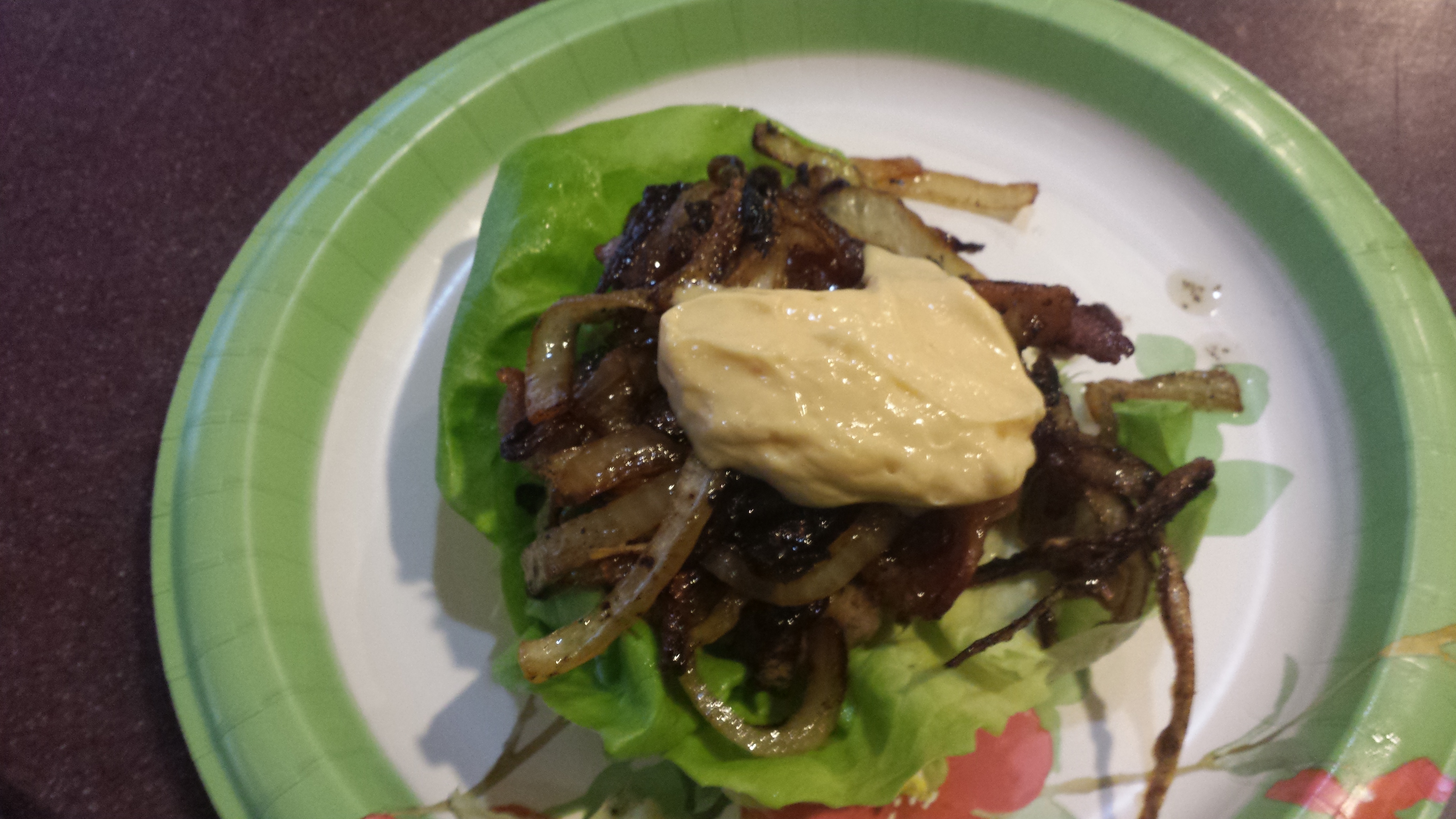
Protein Style Duck Burgers with Caramelized Onion and Orange Sriracha Mayonnaise

20150204_162322by Karen Frazier

I love foods that have a lot of flavor. Jim loves burgers. Therefore, I spend an inordinate amount of time trying to marry the two concepts – burgers with tons of flavor.

Since we went paleo, we no longer have buns of any kind on our hamburgers. Fortunately, we’ve discovered that butter lettuce makes a wonderful wrap for a burger – as long as you have enough layers of it. So that’s what these protein style burgers are – bunless but wrapped in tender and tasty butter lettuce.

They are also super flavorful, because as I’ve discovered, caramelized onions and sriracha can make almost anything better. And if those two ingredients don’t, then bacon will. Sriracha isn’t a strictly paleo ingredient, but Nom Nom Paleo has a great recipe for homemade paleo sriracha. It does the trick.

If you are unable to find ground duck locally, there are lots of places to order it online. It’s totally worth the effort.

Paleo Duck Burgers with Caramelized Onions and Orange Sriracha Mayonnaise

  • 4 slices bacon
  • 1 onion, sliced
  • 1/2 teaspoon sea salt
  • 1 pound ground duck
  • 2 egg yolks
  • 1 tablespoon sriracha
  • Juice of 1/2 orange
  • Zest of one orange
  • 1 tablespoon red wine vinegar
  • 1/2 teaspoon sea salt
  • 1 cup extra virgin olive oil
  • 8 large leaves of butter lettuce
  1. Preheat your oven to 400 degrees Fahrenheit. Put a baking rack over a baking sheet.
  2. In a large saute pan, cook the four slices of bacon over medium-high heat until they are crisp. Blot the bacon on a paper towel and set aside.
  3. Leave the bacon fat in the pan and reduce the heat to medium-low.
  4. Add the onions to the bacon grease along with 1/2 teaspoon of sea salt. Cook, stirring occasionally, until the onions are caramelized, about 30 minutes.
  5. While the onions cook, pat the ground duck into four patties. Put them on the prepared baking sheet. Bake in the preheated oven for 20 minutes.
  6. While the burgers and onions cook, put the egg yolks, orange zest, orange juice, red wine vinegar, sriracha, and 1/2 teaspoon of sea salt in the bowl of a food processor. Turn on the food processor and let it run.
  7. Through the chute of the food processor, add the oil a drop at a time for about 20 drops. Then, add the oil in a thin stream until the mayonnaise emulsifies.
  8. To assemble the burgers, put the duck patties on the butter lettuce. Top them with bacon, onions, and the mayonnaise.

Mustard and Herb Leg of Lamb

20150201_144406by Karen Frazier

What I really want is Super Bowl food, but it’s not going to happen. I love stuff like nachos and chicken wings, but they just don’t like me. Too much stuff I’m allergic to. So instead, I’m making a lovely roast that should be ready at halftime. While the roast sits for the last 20 minutes, I’ll roast some carrots on high heat and toss them with a bit of balsamic and mustard. It will be tasty and super easy.

Mustard and Herb Leg of Lamb

  • 1 5-pound leg of lamb, bone in
  • Sea salt and fresh cracked black pepper
  • 5 sprigs rosemary, stems removed and discarded
  • 1 small bunch chives
  • 2 bunches fresh basil, leaves only
  • 1 teaspoon sea salt
  • 1/4 teaspoon pepper
  • 8 garlic cloves
  • 1 tablespoon Dijon mustard
  • 2 tablespoons olive oil
  1. Preheat the oven to 400 degrees Fahrenheit.
  2. Season the leg of lamb with salt and pepper.
  3. In a food processor, combine the rosemary, chives, basil, salt, pepper, garlic, mustard, and olive oil. Blend until a paste forms.
  4. Rub the paste all over the outside of the lamb.
  5. Roast in a roasting pan in the pre-heated oven for 20 minutes. Reduce the heat to 300 degrees and continue roasting, 10 to 12 minutes per pound until the roast reaches 145 degrees.
  6. Remove the lamb from the oven and tent it with foil. Allow the lamb to rest for 20 to 30 minutes.

Balsamic and Mustard Roasted Baby Carrots

  • 2 tablespoons olive oil
  • 1 tablespoon chopped fresh rosemary
  • 1 tablespoon Dijon mustard
  • 1 tablespoon balsamic vinegar
  • 1/4 teaspoon sea salt
  • 1/4 teaspoon fresh cracked black pepper
  • 1 pound baby carrots
  1. Preheat oven to 400 degrees Fahrenheit. Line a baking sheet with parchment.
  2. In a large bowl, whisk together the oil, rosemary, mustard, vinegar, salt, and pepper.
  3. Toss the carrots with the mixture and put in a single layer on the prepared baking sheet.
  4. Roast for 30 minutes, until the carrots are cooked.

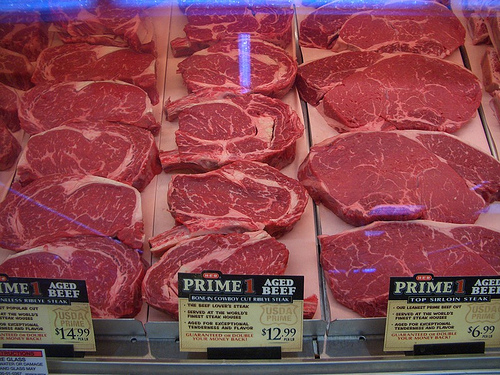
Paleo Smoked Rib Eyes with Sweet and Sour Bacon Jam

Ribeyesby Karen Frazier

Jim is a meat lover. Man does that guy love his meat. If you put meat on top of meat, well he loves that even more. It’s why after his heart attack, I realized that the Paleo diet was the only way to go that would make him happy. I just couldn’t see him subsisting on a nearly vegetarian diet with a tiny amount of meat.

Fortunately, the research on the Paleo diet for people heart disease is very promising. After researching it extensively and talking to his cardiologist, this is where we settled. So far so good. He’s lost 30 pounds and his blood lipids are improving. His BP is low, and he is healthier than he has been in years.

It’s been great for me, too. I have Hashimoto’s thyroiditis and celiac disease. Both are autoimmune conditions, and research is showing that Paleo diets work well for those. Since October 1, I have lost 55 pounds (and still going). I have more energy than I’ve had in years. My celiac disease is under control, and I just feel so much better in general. For us, it has vastly improved our health.

Anyway – meat on meat. I got a little sidetracked there with the whole health thing. And while health is super important, if you’re eating tasteless, unsatisfying food, any diet can be difficult to stick to. Since I am so invested in Jim’s good health–I want him around for years to come–I tailor the foods I make to his tastes. I want to make him do a happy dance at how delicious the foods I provide are. That means that sometimes, I put meat on meat. Which is where I came up with the idea for smoked rib eyes with bacon jam. Because seriously – yum.

The bacon jam is the perfect combination of sweet and sour with just a little bit of spice, while the smoky ribeye is the perfect canvas for it. Jim got a smoker a few years ago for Christmas and it is his pride and joy. If it came down to his smoker or me, I think he might choose the smoker. Fortunately, I’m happy that he spends time outside adding a little smokiness to meat, because it really brings the flavor to dishes like this. If you don’t have a smoker, no worries. Just cook the ribeye (or your favorite cut of beef) on the grill, or however you enjoy cooking it. My instructions below are for the smoker.

I served this dish with a sweet potato that I’d spiralized into pommes frites style shoestrings, fried in lard, and sprinkled with a bit of Himalayan pink salt. If that sounds like a super carby choice, it is not as bad as you would think. One five-inch sweet potato (peeled) in a spiralizer makes a huge batch of pommes frites, and it only has 26 grams of carbs. Between two people, it’s 13 grams of carbs each, minus about 3 grams of fiber for a net carb count of 10 grams. If you do fry up some sweet potato pommes frites, make sure your oil is 375 degrees Fahrenheit before you start to cook the potatoes, and work in batches.

I also added a side of sautéed citrus spinach. I’ll put the recipe below. I can’t actually eat a whole ribeye, or even half one, but it gives me a few meals. As for the leftover bacon jam, roll it in your omelet tomorrow morning or warm it up and put it over a fried egg.

Smoked Rib Eyes with Sweet and Sour Bacon Jam

  • 2 12-ounce grass fed rib eye steaks
  • Sea salt and fresh cracked black pepper
  • 6 slices bacon, cut into small dice
  • 1 large yellow onion, cut into small dice
  • 5 garlic cloves, minced
  • 1/2 cup raw organic apple cider vinegar
  • Zest and juice from 1/2 orange
  • 1/2 teaspoon dried thyme
  • 1/2 teaspoon sea salt
  • 1 teaspoon sriracha or 1/4 teaspoon red pepper flakes
  • 2 tablespoons Swerve sweetener or 1 packet stevia
  1. Preheat your smoker to 325 degrees Fahrenheit.
  2. Season the steaks generously with sea salt and fresh cracked black pepper.
  3. Smoke the steaks for 50 minutes.
  4. While the steaks smoke, in a large sauté pan, brown the bacon over medium-high heat until the fat is rendered and the bacon is crisp. Remove all but one tablespoon of the bacon fat from the pan and set the bacon fat aside.
  5. Add the onion to the remaining fat and the bacon and cook it, stirring occasionally, until the onion is soft, about five minutes.
  6. Add the garlic to the pan and cook, stirring constantly, until the garlic is fragrant, about 30 seconds.
  7. Add the vinegar, thyme, sea salt, orange zest and orange juice, sriracha or red pepper flakes, and stevia or Swerve. Bring to a simmer and reduce the heat to medium. Cook over medium heat, stirring occasionally, until the liquid reduces and the flavors blend, about 20 minutes.
  8. Heat two tablespoons of the reserved bacon fat in a large sauté pan over medium-high heat. Add the smoked rib eyes and cook until well browned, two minutes per side.
  9. Serve the bacon jam spooned over the top of the steak.

Sauteed Citrus Spinach

  • 2 tablespoons coconut oil, duck fat, lard, or bacon grease
  • 2 tablespoons minced shallot
  • 2 garlic cloves, minced
  • 4 cups organic fresh baby spinach
  • Juice and zest of half an orange
  • Pinch red pepper flakes
  • Sea salt and fresh cracked black pepper to taste
  1. In a large saute pan, heat the oil over medium-high heat until it shimmers.
  2. Add the shallot and cook, stirring frequently, until shallot is soft, about four minutes.
  3. Add the garlic and cook, stirring constantly, until the garlic is fragrant, about 30 seconds.
  4. Add the spinach, orange juice, orange zest, red pepper flakes, salt, and pepper. Cook, stirring constantly, until the spinach wilts. Serve immediately.

photo credit: junehug via photopin cc
Slow Cooker Paleo Jambalaya

Jambalayaby Karen Frazier

I love spicy food. Jim is a little more reticent. He will eat it, but he prefers it not be too hot. Most jambalaya recipes have a lot of heat in them, making them spicier than Jim’s palate prefers. So I set out to make jambalaya (without rice for obvious reasons) that would fit Jim’s heat preferences.

This recipe turned out perfectly. It had a little heat from the andouille without setting fire to our mouths. If you like it spicier, add more cayenne.

Slow Cooker Paleo Jambalaya

  • 1 onion, peeled and chopped
  • 1 organic red pepper, seeded and chopped
  • 1 organic yellow pepper, seeded and chopped
  • 1 organic green pepper, peeled and chopped
  • 1 organic jalapeño, seeded and minced
  • 6 garlic cloves, minced
  • 1 pound andouille sausage, cut into one inch pieces
  • 1 pound boneless skinless chicken thighs, cut into one inch pieces
  • 1 (15 ounce) can crushed tomatoes, undrained
  • 1 cup homemade beef bone broth
  • 1 teaspoon chopped fresh organic thyme
  • 1 teaspoon chopped fresh organic oregano
  • 1 teaspoon chopped fresh organic basil
  • 1 teaspoon sea salt
  • 1/2 teaspoon fresh cracked black pepper
  • 1/4 teaspoon cayenne
  • 1 pound wild caught shrimp, tails removed, peeled, and deveined
  • Juice of 1/2 lemon
  • 1/4 cup chopped fresh parsley
  • 4 scallions, thinly sliced
  1. In a large slow cooker, combine the onion, peppers, jalapeño, garlic, andouille, chicken, tomatoes, broth, thyme, oregano, basil, salt, pepper, and cayenne. Cook, covered, in a slow cooker on low for seven hours.
  2. Stir in the shrimp and lemon juice. Cover and continue cooking, turning the slow cooker up to high, until shrimp is pink, about one hour.
  3. Stir in the parsley.
  4. Serve garnished with the scallions.

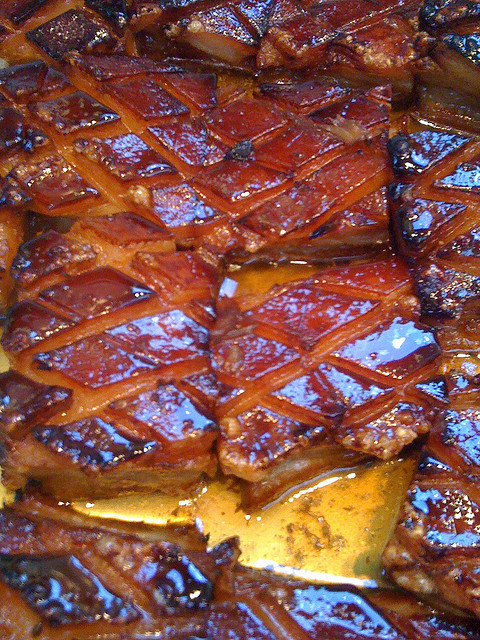
Crispy Skinned Pork Belly with Orange-Jicama Slaw

pork bellyby Karen Frazier

Pork belly is often difficult to come by, but if you can find it, snap it up. For those who don’t know, it’s essentially uncured slab bacon that comes with the skin on the top. With the unctuous fattiness of the meat and the crispy skin on top, it makes a delicious main course. Check with local ranchers to find pork belly, or dig around on the Internet and you’ll be able to find some to order.

In this recipe, the spices in the rub and the acidity of the orange, as well as the crunch of the slaw all serve as a delicious counterpoint to the sweet fattiness of the pork. When I made this, it was the first time I cooked pork belly, so I borrowed the crispy skin cooking method from The Clothes Make the Girl blog. Then, I added my own flavors and spices. Trust me, it’s really delicious and rich!

For the pork belly:

  • 2-pound pork belly
  • 1 tablespoon paprika
  • 1 teaspoon smoked paprika
  • 1 teaspoon onion powder
  • 1/2 teaspoon garlic powder
  • 1/2 teaspoon fresh cracked black pepper
  • 1/2 teaspoon cumin
  • 1/2 teaspoon coriander
  • 1 teaspoon sea salt
  • 2 tablespoons Swerve sweetener (or 1 packet stevia) (optional – omit for Whole30)
  • Juice from half an orange

For the slaw:

  • 1 jicama, julienned
  • 1 cup julienned cabbage
  • 3 green onions, very thinly sliced
  • 2 carrots, peeled and grated
  • 1 avocado, peeled and pitted
  • 2 garlic cloves, finely minced
  • 1/8 teaspoon red pepper flakes (or sriracha to taste)
  • Juice from half an orange
  • Zest from half an orange
  • 2 tablespoons apple cider vinegar
  • 2 tablespoons cilantro, finely chopped
  • 1/4 teaspoon fresh cracked black pepper
  • 1 teaspoon sea salt (or to taste)

For the pork belly:

  1. Pat the pork belly dry with paper towels. Score the pork skin in a cross-hatch pattern, cutting down to the meat but not through the meat.
  2. In a small bowl, mix the paprika, smoked paprika, onion powder, garlic powder, black pepper, coriander, cumin, sea salt, and sweetener.
  3. Rub the spice mixture on both sides of the pork. Wrap the pork in plastic and refrigerate for about two hours.
  4. Thirty minutes before cooking, put the unwrapped pork belly on a foil-lined baking sheet with the skin-side facing up. Allow it to come to room temperature.
  5. Preheat the oven to 450 degrees Fahrenheit.
  6. Just before putting the pork belly in the oven, rub the skin with the orange juice.
  7. Bake the pork belly at 450 for 30 minutes. Reduce the heat to 350 degrees Fahrenheit, and bake for another hour, until the skin has browned and crisped.
  8. Rest the pork, tented with foil, for 20 minutes before serving. While the pork rests, prepare the slaw.

For the slaw:

  1. In a large bowl, combine the jicama, cabbage, onions, and carrots.
  2. In a blender, add the avocado, garlic, red pepper flakes, orange juice and zest, apple cider vinegar, cilantro, and pepper. Blend until smooth. Taste and season with salt, starting with about 1/2 teaspoon of salt and continuing to add it until it is properly seasoned.
  3. Pour the avocado mixture over the vegetables and toss to coat.
  4. Serve the slaw alongside the pork.

photo credit: linecook via photopin cc

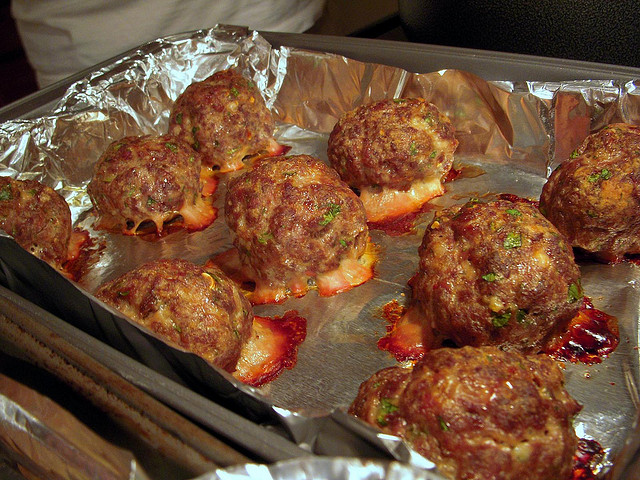
Asian Pork Meatball Lettuce Wraps with Spicy Dipping Sauce

pork meatballsby Karen Frazier

This recipe is not strictly paleo because I use a few non-paleo ingredients. But it’s still low-carb and pretty darn delicious. While I avoid non-paleo ingredients 80 to 90 percent of the time, I occasionally do use them. I like to serve the meatballs with leaves of tender butter lettuce. Wrap the meatball in the lettuce and dip it in the tasty sauce.

Asian Pork Meatball Lettuce Wraps with Spicy Dipping Sauce

For the meatballs:

  • 2 pounds ground pastured pork
  • 3/4 cup almond flour
  • 2 bunches scallions, thinly sliced
  • 8 ounces shiitake mushrooms, finely chopped
  • 1 1/2 cups finely chopped green cabbage
  • 4 garlic cloves, finely minced
  • 1 tablespoon grated fresh ginger
  • 1/4 cup cilantro, finely chopped
  • 2 tablespoons gluten-free soy sauce (or coconut aminos for paleo)
  • 1 teaspoon sesame oil (omit for paleo or find cold pressed)
  • 1/2 teaspoon chili oil (or 1/2 teaspoon red pepper flakes for paleo)
  • 2 eggs, beaten
  • 1 teaspoon salt
  • 1/2 teaspoon fresh cracked black pepper
  • Butter lettuce leaves

For the dipping sauce:

  • 1/4 cup gluten-free soy sauce (or coconut aminos for paleo)
  • 1/4 cup rice vinegar
  • 1 teaspoon garlic chili sauce (or to taste) or 1/2 teaspoon chili oil (or to taste) (for paleo, try red pepper flakes)
  • 1 tablespoon Swerve sweetener, 1 packet of stevia, or 1 tablespoon honey (optional – omit if using coconut aminos)

To make the meatballs:

  1. Preheat the oven to 400 degrees Fahrenheit. Line a baking sheet with foil.
  2. In a large bowl, mix all of the meatball ingredients together (except for lettuce leaves). Use your hands to mix well.
  3. Roll into medium-sized meatballs and bake for 30 minutes.
  4. Serve wrapped in lettuce leaves dipped in the sauce.

To make the dipping sauce:

Whisk all ingredients together in a small bowl. Start by adding a little of the garlic chili sauce or chili oil, and then adding more to achieve the desired level of heat.

photo credit: matthewf01 via photopin cc

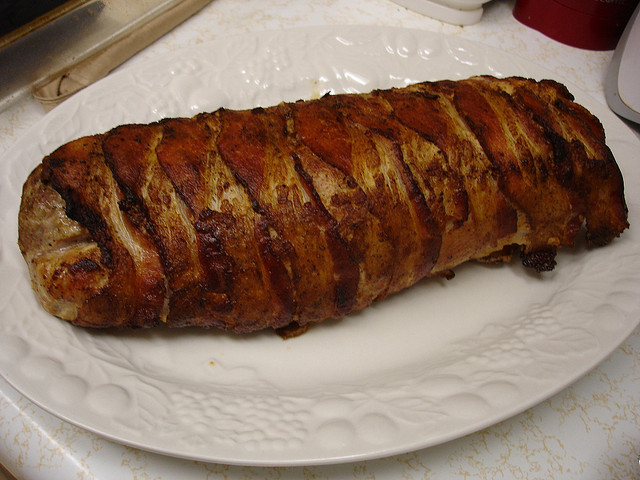
Bacon-Wrapped Beef Tenderloin with Duxelle, Red Wine Sauce & Crispy Shoestring Sweet Potatoes

tenderloinby Karen Frazier

I’m excited to share this one with you. It makes a great special occasion meal. We had it for New Year’s Eve, but you can make it any time. I wanted to wait to post the recipe until I’d fully developed it – wouldn’t want to steer you wrong, but with this combination of flavors it was pretty hard to go wrong.

This recipe is gluten-free, dairy-free, low-carb, and paleo.

Tips:

  • I made the duxelle a day ahead of time and refrigerated it so it was completely cool before I put it in the beef tenderloin.
  • Marinate the tenderloin overnight.
  • Put the tenderloin on on the counter for an hour before cooking it to bring it to room temperature.
  • Save the marinade to combine with a few extra ingredients to make the sauce. Boil the marinade for five minutes to  cook out any bacteria.
  • To butterfly the tenderloin, slice it lengthwise about halfway through the meat, and then slice horizontally into each side of the cut. Fold the meat outward to make a flat fillet.
  • I use a spiralizer for the shoestring potatoes. However, you can also use a mandolin on the thinnest setting, or even grate the sweet potatoes.
  • For super low-carb, eliminate the sweet potatoes.
  • If you’re not comfortable cooking with wine for paleo meals, then eliminate the sauce, skip the marinade, and replace the wine in the duxelle with homemade beef broth.
  • While you can roast the beef in the oven, if you’ve got a smoker, I highly recommend using it.

For the duxelle:

  • 2 tablespoons duck fat (or some other paleo-friendly fat)
  • 1 pound crimini mushrooms, finely chopped
  • 1/4 cup finely chopped shallots
  • 1/2 teaspoon sea salt
  • 1/4 teaspoon freshly cracked black pepper
  • 3 cloves garlic, finely minced
  • 1/2 cup red wine

For the marinade:

  • 1 cup red wine
  • 1 cup olive oil
  • 1 tablespoon Dijon mustard
  • 1 teaspoon fresh chopped rosemary
  • 1 teaspoon dried thyme
  • 4 cloves garlic, finely minced
  • 1/2 teaspoon fresh cracked black pepper
  • 1/2 teaspoon sea salt

For the tenderloin:

  • 1 5-pound beef tenderloin, butterflied
  • 1 pound thick-sliced pepper bacon

For the sauce:

  • Leftover marinade
  • 1 cup homemade beef broth
  • 1 cup red wine
  • 1 tablespoon Dijon mustard
  • 2 tablespoons finely chopped shallot
  • Sea salt and fresh cracked black pepper to taste

For the sweet potato strips:

  • 1 sweet potato, peeled, sliced, and cut into very thin shoestrings
  • 2 tablespoons duck fat (or other paleo-friendly fat)
  • Sea salt

For the duxelle:

  1. In a large saute pan, heat the duck fat until it melts and shimmers.
  2. Add the mushrooms and cook, stirring occasionally, until the juice from the mushrooms has evaporated, five to seven minutes.
  3. Add the shallots, salt, and pepper and cook, stirring occasionally, for another five minutes, until shallots are soft and mixture is dry.
  4. Add the garlic and cook, stirring constantly, for 30 seconds.
  5. Add the wine and cook, stirring frequently, until the liquid evaporates.
  6. Refrigerate the duxelle and allow it to completely cool before using in the roast.

For the marinade and roast:

  1. In a small bowl, whisk together all ingredients until well combined.
  2. Place the butterflied roast in a flat dish and pour the marinade over the top, covering the beef.
  3. Cover with plastic wrap and refrigerate overnight, or up to 24 hours.
  4. Heat the oven to 375 (or, we used a smoker – heat that to 375).
  5. Remove the roast from the marinade and pat it dry. Reserve the marinade for the sauce.
  6. Lay out a large piece of plastic wrap, and lay the strips of bacon in it in a row, slightly overlapping.
  7. Place the roast on top of the bacon strips. Spread the roast with the chilled duxelle. Use the plastic wrap to roll the bacon completely around the roast. Tie the roast with butcher’s twine to keep the bacon in place.
  8. Heat a large ovenproof sauté pan over medium-high heat. Add the roast and cook, searing the bacon on each side until it begins to brown, three to five minutes per side.
  9. Move the sauté pan to the preheated oven and cook until a thermometer reads 130 to 135 degrees Fahrenheit, about 30 minutes.
  10. Remove the roast from the oven and allow it to rest for 20 minutes before carving.

For the sauce:

  1. In a large saucepan, heat the reserved marinade over medium-high heat until it boils. Boil, stirring occasionally, for five minutes.
  2. Reduce the heat to medium and whisk in the remaining ingredients (except salt and pepper). Simmer until the liquid thickens and reduces, about 20 minutes.
  3. Season to taste with salt and pepper.

For the sweet potatoes:

  1. Preheat the oven to 400 degrees Fahrenheit. Line a baking sheet with parchment.
  2. In a small bowl, toss together the sweet potato strips, melted duck fat, and sea salt.
  3. Pour the potatoes onto the parchment-lined pan in a single layer.
  4. Bake until the potatoes are crispy, 20 to 25 minutes.

To serve: After resting the roast for 20 minutes, slice it and carefully remove the twine. Spoon the sauce over each piece of beef and top with the crispy sweet potatoes. For sides, we served garlic sautéed green beans and a green salad.

photo credit: CraftyGoat via photopin cc

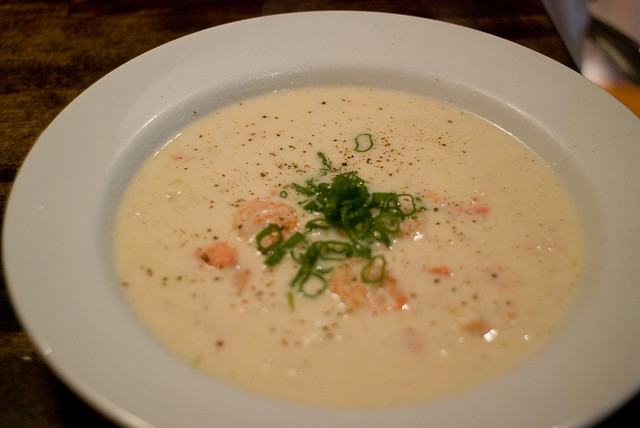
Paleo Spicy Shrimp Chowder with Coconut and Sweet Potatoes

shrimp chowderby Karen Frazier

I’ve probably mentioned this in my blog about a zillion times now, but I’m super allergic to dairy products. In fact, I re-discovered just how allergic I am on Christmas Eve when I dipped a piece of lobster in a tiny bit of butter. I’ve been paying for it for the past two days.

Still, I love chowder. I love its rich creaminess paired with seafood. I love it so much, I almost feel like I’d be willing to suffer the wrath of dairy for it. However, after Christmas Eve, I am reminded that really, no bite of food is worth all of that. And so, I had to come up with a way to make a delicious creamy seafood chowder without dairy and without a grain-based roux to thicken it.

I just made this chowder, and it’s pretty darn tasty if I do say so myself. Yesterday I prepared some homemade chicken broth, which I made from chicken feet (creepy looking!), chicken necks, onion trimmings, rosemary, and a few other ingredients. I refrigerated it overnight, and then skimmed the fat from its surface this morning. I used the defatted stock to make this delicious shrimp chowder. The recipe yields about six to eight servings, depending on how much you eat. For me, it makes eight servings. For Jim, it’s six or fewer. Anyway – based on eight servings it has around 230 calories, 8 grams of fat, 9 net grams of carbs (unless you leave out the sweet potatoes or pick around them like I do), and 28 grams of protein. To make it lower in carbs, leave out the sweet potato.

Spicy Shrimp Chowder with Coconut and Sweet Potatoes

  • 2 tablespoons coconut oil
  • 1 onion, chopped
  • 1 jalapeño, seeded and chopped
  • 1 Anaheim pepper, seeded and chopped
  • 1 piquillo pepper, seeded and chopped
  • 1 red bell pepper, seeded and chopped
  • 6 cloves of garlic, chopped
  • Juice of one lime
  • 6 cups chicken stock
  • 1 tablespoon paleo fish sauce (I use Red Boat)
  • 1white sweet potato, cubed
  • 2 large carrots, peeled and chopped
  • 2 pounds shrimp, peeled, deveined, and tails removed
  • 1/2 cup arrowroot powder
  • 1/2 cup water
  • 1 (14 ounce) can full-fat coconut milk
  • Sriracha or red pepper flakes to taste (optional)
  • Sea salt and fresh cracked black pepper to taste
  1. In a large soup pot, melt the coconut oil over medium-high heat until it shimmers. Add the onions and all of the peppers. Cook, stirring occasionally, until the vegetables are soft and beginning to brown, seven to ten minutes.
  2. Add the garlic and cook, stirring constantly, until it is fragrant, about 30 seconds.
  3. Add the lime juice, chicken stock, and fish sauce, stirring to scrape any browned bits off the bottom of the pot.
  4. Add the sweet potatoes and carrots and bring the soup to a boil. Reduce the heat to medium and simmer until the potatoes and carrots are tender, about 20 minutes.
  5. Add the shrimp and cook, stirring occasionally, until it is pink, 5 to 10 minutes more (five if it’s thawed, about ten if it’s frozen).
  6. In a small bowl, combine the arrowroot powder with the water and whisk to make a slurry. Pour the slurry into the soup, stirring constantly. Simmer until the soup thickens.
  7. Stir in the coconut milk, sriracha or red pepper flakes, salt, and pepper. Taste and adjust seasonings as desired.

Photo used under flickr creative commons license. Some rights reserved by InSinU8.