Slow Cooker Lamb Osso Buco

osso bucoby Karen Frazier

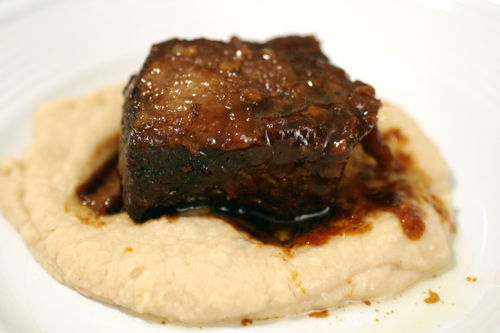
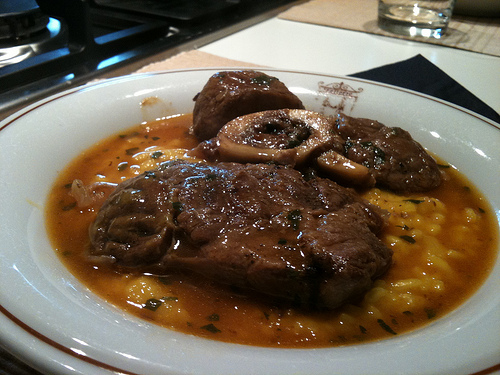
Several years ago, I came into possession of some cross-cut veal shanks, so I made Jim osso buco. He was immediately enamored, and it is one of his top requested meals. Of course, veal isn’t necessarily so easy to get where I live, but lamb is. Recently I picked up some pastured cross-cut lamb shanks, and I decided to adapt my osso buco recipe for the slow cooker, and for lamb. With an orange gremolata stirred in at the end, it’s really delicious.

Lamb Osso Buco

  • 4 pastured (grass fed) cross-cut lamb shanks
  • 1 onion, sliced
  • 2 large organic carrots, peeled and sliced
  • 4 cloves of garlic, sliced
  • 1 stalk of organic celery, sliced
  • 1 can (14 ounces) organic diced tomatoes, drained
  • Juice of 1/2 an orange
  • 3 sprigs of thyme
  • Sea salt and fresh cracked black pepper to taste
  • 1 bunch Italian parsley, washed, dried, and finely chopped
  • 3 cloves of garlic, finely chopped
  • Zest of one orange, finely grated
  1. In the crock of a slow cooker, combine lamb, onion, carrots, garlic, celery, tomatoes, orange juice, thyme, salt, and pepper. Cover and cook on low for 8 to 10 hours, or on high for 4 to 5 hours.
  2. After the osso buco is cooked, remove the lid and turn the slow cooker up to high. Allow to simmer, uncovered, for an additional 30 to 60 minutes to thicken the sauce.
  3. Meanwhile, combine the parsley, cloves, and orange zest with a pinch of sea salt. Stir into the osso buck just before serving.

photo credit: Micaiena via photopin cc

Slow Cooker Bone Broth

by Karen Frazierbroth

Anemia has been a big problem for me in the last five years or so. Not the mild anemia that makes me a little tired, but severe, often debilitating anemia that makes me exhausted to walk down the hall from my bedroom to my living room. In the past several weeks, however, I’ve added mineral rich, nourishing bone broth as a food I eat daily. It seems to be helping.

I have my bone broth in the morning just like someone else would have a cup of coffee. It’s rich in minerals and gelatin. It’s also really helped with how I feel. My energy is up. My digestion is working better. And my hair and nails from the gelatin – wow are they in good shape.

Many people are intimidated to make their own broth, but with a slow cooker, it’s really easy. I let mine simmer on the counter for 12 to 24 hours, extracting all of the good, rich mineral content from the bones. I use bones from organic, pastured animals, and I split them with a cleaver before sticking them in my slow cooker in order to make the mineral rich marrow more readily available to absorb into the broth as it simmers. I also add iron-rich parsley to bring even more iron to my healing brew.

My homemade broth serves as the base for or an ingredient in many of the foods I make. I use it to moisten stews, make gravies, create sauces, and make soup. Homemade broth adds delicious savoriness to your meals that is free of chemicals and artificial ingredients.

All About Bone Broth

So what goes into bone broth?

The bones: I use bones from pastured animals of all stripes. The bones can come from cooked foods (like a roasted  chicken carcass) or they can be raw. Sometimes I use chicken wings. I have beef marrow bones. I have beef knuckle bones. I save bones from whatever we eat. I have a baggie in the freezer full of bones. Whenever we have something with bones in it, I save the bones. I have a few ducks necks. I have some chicken feet, which add a wonderful gelatin to the broth. I have oxtails. While I get my pastured meat from local farmers and stores, I also order some of it from US Wellness Meats, which has high quality bones ready for your bone broth.

You can make your broth from a single source – like all beef or all chicken – or you can mix up bones from a variety of different animals. Just make sure you get some good cartilage bones in there like chicken feet, wings, or backs in order to up the gelatin content. Some people like to roast their bones ahead of time for additional flavor. This is especially true of beef bones, which get a delicious umami flavor when roasted.  Be sure to add some bones with some meat on them for even more flavor. When I use poultry wings, backs, or necks, I just toss them in meat and all. If you want to use the meat for something, rescue it from the bones after four or five hours of cooking and set it aside for use. Then, put the bones back in the stock to keep simmering.

The veggies: I’m a traditionalist in my veggie selections. I toss in an onion (usually cut into quarters or eights – you don’t have to peel it, and you can throw in the root ends), carrots, leeks if I’ve got them, and some celery. Occasionally I’ll throw in a few mushrooms, as well. If I’m feeling super fancy, I’ll add some organic dried shiitake mushrooms. I use all organic veggies, and I wash them thoroughly before putting them in the pot. You don’t need to cut them into tiny pieces. I just do a very rough chop (cutting carrots into three or four pieces each, same with celery). I always toss in a few celery leaves, as well.

One of the tricks I have for adding veggies to bone broth is this: I save my veggie trimmings from other cooking and freeze them in a large zipper bag. So I save onion peels, onion root ends, carrot root ends, celery tops, mushroom stems, etc. Then, I just dump them in my bone broth when I’m ready to make it.

The herbs and spices: You can use any herbs and spices you like in your broth. I prefer fresh herbs like rosemary, thyme, or sage. I just toss a few branches in there – I don’t bother to chop because they’ll be strained out later. I also add whole peppercorns, and a little bit of sea salt to the mix. I also add parsley for additional iron content. I usually add an entire bunch of organic parsley.

The liquid: I add just enough filtered water to cover the veggies/bones. I also add about a tablespoon of raw apple cider vinegar. This helps pull the minerals out of the bones. I actually let the water and vinegar soak with the bones for about an hour before I turn the slow cooker onto low.

Basic Bone Broth

  • Pastured organic bones and joints, a few containing meat
  • One or two organic onions, roughly chopped
  • Two organic carrots, roughly chopped
  • One organic celery rib, roughly chopped, with leaves
  • 1 sprig organic thyme
  • 1 sprig organic rosemary
  • 10 peppercorns
  • 1 bunch organic parsley
  • 1 to two tablespoons raw apple cider vinegar
  • Enough filtered water to cover the bones and vegetables
  1. Use a cleaver to split the bones open.
  2. Place all ingredients in the slow cooker. Add water just to cover the bones and vegetables.
  3. Cover the slow cooker and allow the stock to soak off heat for one hour.
  4. Turn on the slow cooker to low.
  5. Simmer on low for 12 to 24 hours. Poultry bones do better closer to 12 hours, beef bones 24.
  6. Strain the broth into a container, discarding any solids. Save the bones – you can reuse them until they go soft. Just freeze them in a zipper bag and pull them out the next time you make a broth.
  7. Chill the container, and then scrape any fat off the top before using the bone broth. The broth will turn to gelatin when chilled, which gives it wonderful body when you use it for soups and sauces.

This broth also is excellent in soups and stews – way better than anything commercially prepared. I always have a bunch frozen in individual containers in my freezer.
photo credit: paloetic via photopin cc
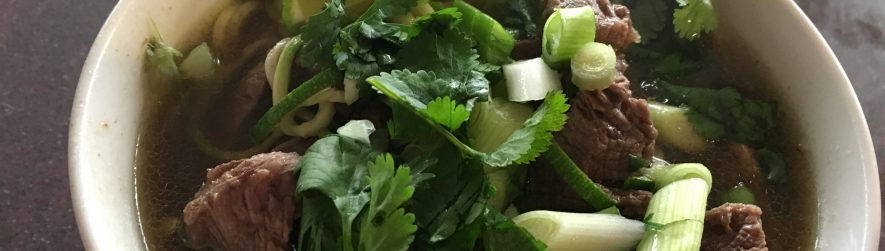
Wine and Horseradish Braised Short Ribs with Caramelized Onion Cauliflower Mash

short ribby Karen Frazier

Jim went to his cardiologist yesterday and got the go ahead for his primal diet. I was thrilled, because some doctors don’t like it that much. I’m glad to know my instincts were decent in this case. So tonight, I’m making use of my slow cooker and some grass fed, organic primal cut short ribs we picked up. I’m braising them in red wine and horseradish sauce, and turning the braising liquid into a gravy with which to top the cauliflower. I’m trying to give Jim non-primal flavors with a good health payoff.

There’s some controversy in the paleo world about red wine. Some people have it. Some don’t. If you know Jim and me, then you know we are wine enthusiasts. So I’m cooking with it tonight. It’s a sometimes thing instead of an every night indulgence now.

Jim has been so careful about following his diet that I wanted to make him something delicious, and I think this qualifies. Plus, I wanted to experiment with paleo gravy techniques.

Slow Cooker Wine and Horseradish Braised Short Ribs with Caramelized Onion Cauliflower Mash

For the short ribs:

  • 3 slices pastured sugar-free bacon (we get ours at US Wellness Meats), cut into pieces
  • 2 three-rib slabs of grass fed organic beef short ribs, cut into individual ribs
  • Sea salt and fresh cracked black pepper, to taste
  • 2 onions, sliced
  • 1 pound organic cremini mushrooms
  • 1 pound organic baby carrots or 4 large carrots, peeled and sliced
  • 2 sprigs organic fresh thyme
  • 2 sprigs organic fresh rosemary
  • 2 tablespoons organic prepared horseradish (or more to taste)
  • 2 cups dry red wine
  • 5 cloves garlic, finely minced or through a garlic press
  1. Season the ribs with sea salt and fresh cracked black pepper and place in the bottom of a slow cooker.
  2. Brown the bacon in a skillet over medium-high heat until the fat is rendered. Using a slotted spoon, put the bacon in the slow cooker. Set aside the bacon fat for the caramelized onions and cauliflower you’ll make later.
  3. Add the remaining ingredients to the slow cooker and stir. Cook, covered, on low for 8 to 10 hours or high for five hours.
  4. When the meat has cooked, remove it from the cooking liquid with tongs and set aside on a platter.
  5. Using a slotted spoon or skimmer, remove all of the vegetables from the cooking liquid and place them in a food processor. Remove the thyme and rosemary branches and throw them away.
  6. Leaving the top slot of the food processor open so steam can escape, puree the vegetables until smooth. Stir them back into the cooking liquid in the slow cooker until the liquid thickens.
  7. Return the meat to the cooking liquid and reduce heat to keep warm while you prepare the cauliflower.

For the cauliflower:

  • 2 tablespoons pastured bacon fat
  • 1 large onion, thinly sliced
  • 2 heads organic cauliflower, broken into small florets
  • 2 tablespoons of reserved bacon fat (or, if you’re not allergic to dairy like me, substitute pastured butter or another animal fat such as lard or duck fat)
  • Sea salt and fresh cracked black pepper, to taste
  1. In a large saute pan, heat the bacon fat over medium heat until it melts.
  2. Add the onions in a single layer in the pan. Reduce the heat to medium-low.
  3. Cook, stirring occasionally, until the onions are reduced and caramelized, about 45 minutes.
  4. In a large pot, cover the cauliflower with water. Cover the pot and set it on the stove to boil on high heat until the cauliflower is soft, 15 to 20 minutes.
  5. Drain the cauliflower well and allow it to sit in the colander for a few minutes to remove as much liquid as possible.
  6. Transfer the cauliflower and caramelized onions to the food processor. Add one to two tablespoons of butter, bacon fat, or some other fat. Process until smooth. Be sure to leave the top slot of the food processor open so the steam can escape.
  7. Season to taste with salt and pepper.

Now, serve the meat and gravy over the mashed cauliflower. Delicious, I promise!

A bit about my food processor warning. When I was a little kid, my mom was pureeing hot lentil soup in the food processor. It went boom and wound up all over the kitchen ceiling. My mom was lucky she didn’t get burned by the scalding hot soup.

When blending hot foods in a blender or food processor, steam build up can cause hot liquid and food to force its way out of the top of the processor. It can blow the lid clean off a blender. The best way to protect yourself is to open the chute at the top of the blender or food processor as you blend. Then, fold a towel several times and place it on top of the blender or processor. Place your hand on top of the towel to hold the lid in place. The towel will protect your hand. Finally, don’t stick your face right over the top of the open chute, just in case. Open the lid cautiously after blending hot  foods.

So – when I mentioned I was making mashed cauliflower on Facebook, I got some negative feedback about it. Apparently it’s a love it or hate it kind of food. I like it. With this, the caramelized onions really do mellow the flavor, and the bacon fat (if you use it) adds a lovely smokiness. Still – if you just can’t see yourself eating mashed cauliflower, consider another mashed paleo-friendly food such as celeriac or sweet potatoes.

photo credit: thebittenword.com via photopin cc

Lamb Gyros

gyro

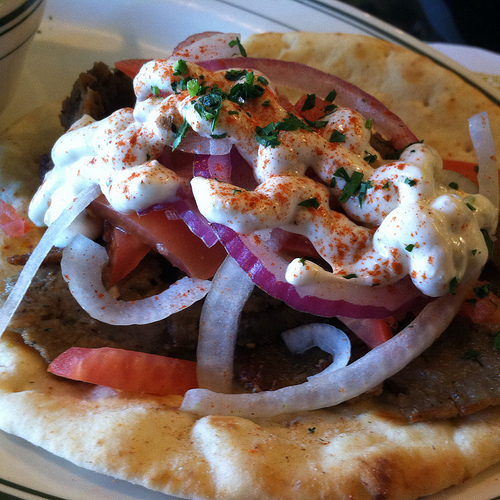
My entire family loves gyros. Made with a spiced lamb, gyros are warm and delicious food.

I’ve been making my own gyros for years. While they are traditionally served on pita with tzatziki sauce, I’m allergic to milk and can’t have gluten. Plus, lately we’ve been eating a paleo diet.  I make a garlic lemon mayonnaise and serve them on a bed of arugula with a quick pickled red onion, chopped cucumber, and heirloom tomato salad. You can also serve the meat as a lettuce wrap with the quick pickles and mayo.

Gyros

  • 1 medium onion, chopped in food processor
  • 5 cloves garlic, minced
  • 1 tablespoon dried marjoram
  • 2 tablespoons fresh rosemary
  • 2 teaspoons sea salt
  • 1 teaspoon fresh cracked black pepper
  • 2 pounds ground lamb
  1. Preheat your oven to 325 degrees.
  2. Place onion in food processor and run processor for about 10 seconds to finely chop it.
  3. Place chopped onion on a tea towel, scraping the sides of the food processor with a rubber spatula to ensure you get all the moisture.
  4. Wrap towel tightly around the onion and squeeze out as much moisture as possible over the sink.
  5. Return onion to food processor with garlic, marjoram, rosemary, salt, and pepper.
  6. Pulse food processor for 10 one second pulses to chop and mix herbs.
  7. Add lamb to herbs in food processor. Process until the lamb and herbs are very well combined, forming a paste-like mixture.
  8. Press lamb mixture into a loaf pan.
  9. Place pan in a 9×13 baking dish and place in oven. Carefully pour boiling water into 9×13 inch pan until it comes about halfway up on the loaf pan (make a water bath).
  10. Cook until lamb reaches 165 degrees.
  11. Remove from oven and set loaf pan on a baking rack to rest, about 15 minutes.
  12. Unmold gyro meat and slice.

Quick pickled red onion recipe can be found here. Combine quick pickled onions with chopped cucumber and heirloom tomatoes and serve atop gyro. Serve on toasted pita if desired, or for low-carb paleo, atop a bed of baby arugula. Top with 1 cup of mayonnaise mixed with 2 cloves of garlic through a press and the juice of one lemon.

Rice with Black Beans, Linguica, and Sweet Peppers (with Paleo adaptation)

black beans and riceThis is a quick meal to pull together if you’ve got cooked rice and canned black beans. In about 20 minutes, you’ll have a smoky, delicious dish with Portuguese influences. I love the Portuguese sausage, linguica, in this recipe, although you can substitute other types of sausage, as well.

  • 1 lb thin sliced uncured bacon
  • 1 red onion, chopped
  • 2 sweet peppers (red, yellow or orange), seeded and chopped
  • 4 large cloves of garlic, chopped
  • 2 large tomatoes (I use heirloom), chopped
  • 3 chipoltle chiles in adobo, chopped
  • 1 can black beans, drained
  • 1 pound cooked linguica, sliced
  • 1 tablespoon smoked paprika
  • 1 teaspoon dried cumin
  • 1 tablespoon chopped dried thyme
  • 1 tablespoon fresh cracked black pepper
  • 4 cups cooked white rice
  • Sea salt to taste
  1. In a large dutch oven over medium heat, cook bacon until fat renders. Remove bacon from fat with a slotted spoon and set aside.
  2. Add onions and peppers to fat in pan and cook, stirring occasionally, until the vegetables soften, about five minutes.
  3. Add garlic and cook until it releases its fragrance, about 30 seconds.
  4. Add chipoltle chiles and tomatoes. Stir to scrape any browned bits off bottom of pan.
  5. Add beans, linguica, paprika, cumin, thyme, and black pepper.
  6. Simmer over medium heat, stirring frequently, 5-10 minutes to allow flavors to blend.
  7. Stir in rice and reserved bacon and cook to heat through.
  8. Season to taste.

For a paleo version, eliminate the black beans and rice. Replace the rice with riced cauliflower or spiralized zucchini.

Scotch Eggs

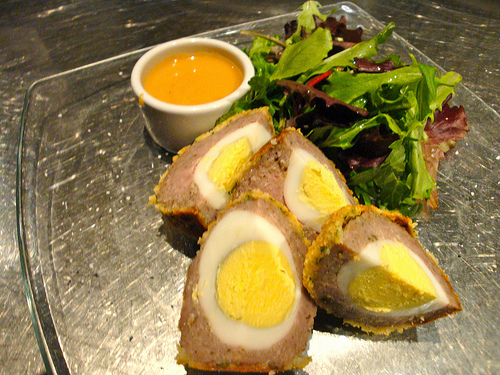
Scotch EggsLove breakfast foods but get tired of making the same scrambled eggs and sausages? Try a Scotch egg. They’re easy to make and can be served with fruit or oven potatoes for a filling and simple meal.

Never had a Scotch egg? Essentially, it’s a boiled egg wrapped in breakfast sausage and then breaded and deep fried. It’s easy to make gluten-free, and many people enjoy the eggs with mustard.

Scotch Eggs

  • 6 organic, very fresh eggs
  • 1 pound organic bulk gluten-free breakfast sausage
  • 1 cup almond meal
  • 1 teaspoon dried thyme
  • 1/2 teaspoon black pepper
  • 1 tablespoon sea salt
  • 1 teaspoon mustard powder
  • 1/4 cup duck fat or another paleo-friendly fat
  1. Preheat your oven to 350 degrees. Line a baking sheet with parchment.
  2. Place four eggs in a saucepan and cover them with cold water. Place the pan on the stove and bring to a boil.
  3. As soon as the water boils, remove from heat and cover. Allow to sit off the heat for four minutes.
  4. Plunge eggs in a bowl of ice water. Refrigerate and allow to cool completely.
  5. Carefully peel eggs.
  6. Pat sausage into four thin patties.
  7. Place an egg in the center of each patty, and wrap patty around the egg, sealing carefully.
  8. In a small bowl, combine almond meal, thyme, pepper, salt, and mustard powder.
  9. Whisk two remaining eggs in a small bowl.
  10. Dip each sausage/egg ball into egg wash and then into the almond meal mixture.
  11. In a large pot, heat the duck fat over medium-high until it shimmers.
  12. Add the eggs and cook until browned on all sides, about four minutes per side.
  13. Put the eggs on the prepared baking sheet and transfer them to the preheated oven. Cook until sausage is cooked through, ten to 15 minutes more.

Warm Spinach Salad

baby spinachI have a certain person in my family who despises green food, and it’s not me or one of the kids. Still, I can get him to eat his spinach when I make this warm spinach salad. You can vary it in a number of ways, which I’ll include after the recipe. For the salad, I prefer baby spinach, which is more tender and flavorful; however, you can use other types of spinach, as well. The recipe below serves four.

  • 8 ounces of baby spinach
  • 2 Tablespoons duck fat
  • 5 slices thick cut bacon, chopped
  • 2 shallots, sliced thinly
  • 1/4 cup red wine vinegar (or raw apple cider vinegar)
  • Fresh cracked black pepper, to taste
  1. Wash and drain baby spinach. Place dry spinach in a large, heatproof bowl.
  2. Heat olive oil in pan and cook chopped bacon until crispy.
  3. Remove bacon from fat with a slotted spoon and put in bowl with spinach.
  4. Add shallots and cook until soft.
  5. Add red wine vinegar, scraping browned bits off bottom of pan.
  6. Pour dressing from pan over the top of spinach and bacon and toss. The bacon will wilt slightly.
  7. Top with fresh pepper and serve immediately.

Variations:

  • Change vinegar to sherry vinegar or balsamic
  • Add pine nuts
  • Add zest from one orange to dressing when you add sugar

Crab Artichoke Dip

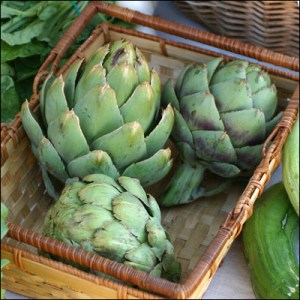
artichokeThis is great on crostini, bagel chips, or even on a baguette. You can also make it and bake it in rolls for a crab artichoke sandwich.

To make, use equal parts:

  • Cooked crab meat
  • Artichoke hearts

Add:

  • 1/2 onion, minced
  • 1-2 bulbs of garlic, roasted
  • 1 cup regular mayonnaise per 2 cups crab/artichoke
  • 1/2 cup parmesan or asiago cheese, grated per 2 cups crab/artichoke
  • Salt and fresh cracked pepper to taste

Bake in an oven-safe dish at 400 degrees until warmed through and bubbly – about 15-20 minutes.

Shrimp Tequila Chowder

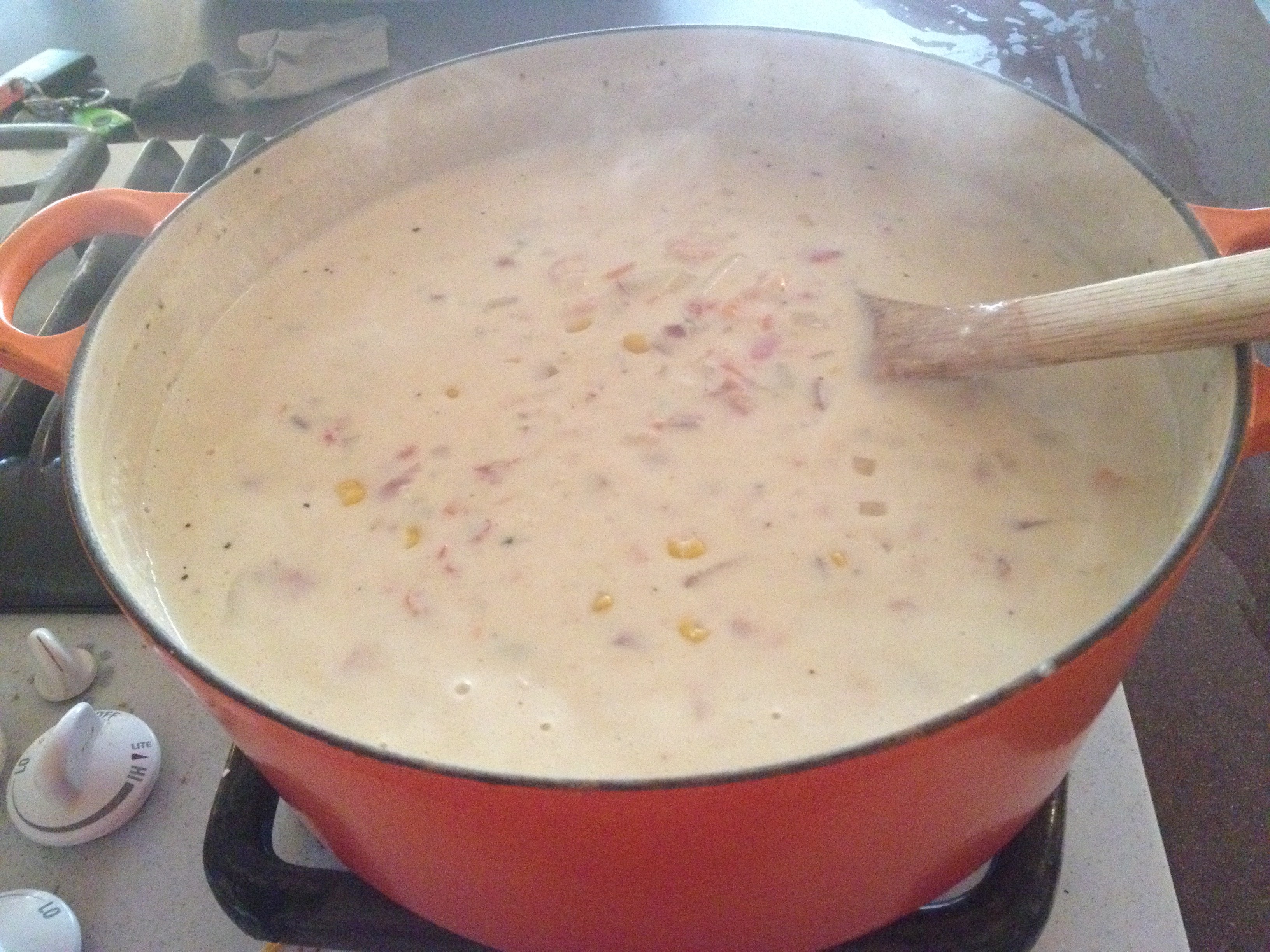
shrimp tequila chowderI reverse engineered this from Azteca Restaurants Shrimp Diablo Chowder. I think it’s pretty close, and very delicious!

Shrimp Tequila Chowder

  • 1 lb shrimp, peeled, deveined, tails removed, and cut into fourths
  • 1/2 cup tequila, divided
  • Juice of 2 limes
  • 3 cloves garlic, put through a garlic press
  • 3 tablespoons oil or butter
  • One onion, diced
  • 1 jalapeno, seeded and minced
  • 1 carrot, peeled and diced
  • 3 tablespoons flour (use sweet rice flour for gluten-free)
  • 4 cups gluten-free chicken stock
  • 1 can Rotelle (tomatoes and peppers)
  • 1 can crisp summer corn, drained
  • 1 lb red potatoes, cubed
  • 2 cups heavy cream
  • 1/4 teaspoon chipoltle
  • 1/2 teaspoon dried cumin
  • 3 tablespoons corn starch, dissolved into 3 tablespoons chicken stock
  • Salt and fresh cracked pepper to taste
  1. Combine 1/4 cup tequila, lime juice, and garlic in a small bowl. Toss with shrimp and set aside.
  2. Heat oil or butter in a soup pot.
  3. Add onions, jalapeno, and carrots. Saute until carrots are soft, about 5 minutes.
  4. Add flour and stir until raw flour flavor is gone – about four minutes.
  5. Stir in remaining 1/4 cup tequila, scraping up any bits on bottom of pan.
  6. Add chicken stock, Rotelle, corn, potatoes, cream, cumin, and chipoltle.
  7. Bring to a simmer and cook until potatoes are tender.
  8. Stir in corn starch slurry.
  9. Remove shrimp from marinade and stir into soup.
  10. Taste for seasoning and add salt, pepper, and additional chipoltle to taste.

Here’s the chowder with a paleo makeover (although tequila is not technically paleo). If you’re watching carbs, this version has about 12 grams of carbs per serving (it serves 8). Leave out the celeriac and it has about 10 grams of carbs per serving.

  • 1 lb shrimp, peeled, deveined, tails removed, and cut into fourths
  • 1/2 cup tequila, divided
  • Juice of 2 limes
  • 3 cloves garlic, put through a garlic press
  • 3 tablespoons fat (I use duck fat)
  • 1 pound grass fed chorizo (I use bison chorizo from US Wellness Meats)
  • One onion, diced
  • 1 jalapeno, seeded and minced
  • 1 carrot, peeled and diced
  • 4 cups homemade chicken bone broth
  • 1 can organic, sugar-free tomatoes and peppers (or organic canned crushed tomatoes plus 1 small can organic diced jalapeños)
  • 1 lb celeriac, peeled and cubed
  • 1/4 teaspoon chipoltle
  • 1/2 teaspoon dried cumin
  • 1/4 cup arrowroot powder, dissolved into 1/4 cup water
  • Salt and fresh cracked pepper to taste
  1. Combine 1/4 cup tequila, lime juice, and garlic in a small bowl. Toss with shrimp and set aside.
  2. Heat fat in a soup pot.
  3. Add chorizo and cook until it is browned. Remove it from the fat with a slotted spoon and set it aside on a platter.
  4. Cook the onions, jalapeno, and carrots in the fat that remains in the pan. Saute until carrots are soft, about 5 minutes.
  5. Stir in the remaining 1/4 cup tequila, scraping up any bits on bottom of pan.
  6. Add chicken broth, tomatoes and peppers, celeriac, cumin, and chipoltle.
  7. Bring to a simmer and cook until celeriac is tender.
  8. Stir in the arrowroot slurry.
  9. Remove shrimp from marinade and stir into soup. Return the chorizo to the pot.
  10. Taste for seasoning and add salt, pepper, and additional chipoltle to taste.

Guacamole

guacEver since I was a kid, I have loved avocados. My favorite way to eat them is naked in all their glory, sliced. They are creamy, sweet, and a little grassy with a soft, smooth texture. This past weekend, I mixed up a batch of my second favorite way to eat avocados for a Super Bowl party.

Learning to make great guacamole is not difficult. Many people have turned to premade seasoning packets, but to quote my son, “Those are no good.”

While it seems like opening a spice packet and mixing it in to a bunch of smooshed avocados is, indeed, easier than making it homemade, it really isn’t so much less time consuming that it makes up for the vast difference in flavor between what Tanner calls, “the homemade stuff and the fake stuff.”

Before I give you my guacamole recipe, here are some tips:

  • Hass avocados make the best guacamole. Those are the ones with the dark green, pebbly skin.
  • Avocados should be heavy, but when you place a gentle pressure with the thumb, the flesh underneath should yield but not sink.
  • The skin should be dark green – almost black, but not wrinkled or shrunken. This chart shows you the differences between unripe, perfect, and overripe.
  • I include jalapenos or Anaheim peppers in my guacamole. Anaheim are slightly milder than jalapeno, and both can be made milder by carefully removing the inner ribs and seeds.
  • I like to roast my peppers before putting them in the guacamole, which makes them milder and adds complexity. Roasting is easy. Brush the outside of the peppers with a little olive oil and place under a broiler. As skin browns, turn the peppers a quarter turn and then another and another until the entire pepper is browned. Cool, and then peel the skin and remove seeds and ribs.
  • For a smokier guacamole, replace your peppers with minced chipotle chile.
  • Carefully clean and dry the cilantro. Wet cilantro can make your finished product watery. Remove as many of the stems as possible before chopping.
  • Mix up the guacamole a few hours ahead and let rest in the refrigerator to allow flavors to blend. To keep the guacamole bright green, place plastic wrap directly on its surface, and then cover the entire bowl with plastic.
  • I like to leave my guacamole a little chunky. It makes it far more interesting with chunks of veggies and avocado. I semi-mash about half to 3/4 of the avocados, leaving a few lumps, and then I cube the rest and toss them in at the end.
  • Many people like tomatoes in their guacamole. I don’t add them. I think it makes the guacamole too watery, and I only like tomatoes when they are in season. If you want to add them, go for it, but remove the inner juice and seeds before adding to avoid watering down your finished product.

Here’s the recipe.

Guacamole

  • 2 Hass avocados, peeled and pitted
  • 1/4 of a red onion, finely minced
  • 1/2 of a bunch of cilantro, washed with stems removed, and finely chopped
  • 1-2 peppers (jalapeno or Anaheim), seeds removed and finely minced
  • 1 clove garlic, pressed through a garlic press
  • Juice of 1 lime
  • Sea salt to taste
  1. Place avocados, onion, cilantro, peppers and garlic in a bowl and mix to combine, lightly mashing with a fork to the desired consistency.
  2. Squeeze lime juice over the top and mix in thoroughly.
  3. Add a little salt and taste for seasoning. Continue to add salt a little at a time, tasting after each addition until you reach the desired level.